Renting in Vancouver
Student Housing in Metro Vancouver: Beds, Rents and Rights
UBC holds 13,883 student beds; every other campus here has a fraction of that. What residence costs, what renting costs, and which rules cover you.
Updated 2026-08-12 · 53 min read
UBC Vancouver has 13,883 student housing beds. That is more than every other public post-secondary institution in Metro Vancouver holds between them, and it is still nowhere near enough — the same campus enrolled 62,115 students in 2025/26, which is about one bed for every four and a half people.
Which campus you are tied to narrows the map far more than the region-wide comparison can, and an international student arriving for September is running the same ninety-day sequence as anyone else moving here. That ratio is the best in the province. Everywhere else it is worse, and at Langara, Douglas, Kwantlen, VCC and Emily Carr it is zero, because as of 11 August 2026 none of those five institutions runs a student residence of its own. So the realistic starting position for a student in this region is that you will rent privately, from a landlord who does not care what your term dates are, in a market that prices twelve months at a time.
The good news, and it is genuinely new, is that the private market is looser than it has been in nearly four decades. CMHC recorded 3.7% vacancy in purpose-built rental across the Vancouver census metropolitan area in October 2025, up from 1.6% a year earlier and the highest reading since 1988.
Everything below reflects institutional fee schedules, CMHC's October 2025 Rental Market Survey, the Residential Tenancy Act, the Residential Tenancy Regulation and RTB policy guidelines as they stood on 11 August 2026. Fees quoted are the ones published for the 2026/27 academic year. Where a figure moves, the date it was measured is attached, and where no figure exists, that is said rather than guessed.
The bed count, campus by campus
Here is what the institutions themselves publish, with the retrieval date, because bed counts get quoted from press releases years after the building changed.
| Institution | Campus | Beds you can apply for | Source |
|---|---|---|---|
| UBC | Vancouver / UEL | 13,883 as of August 2024 | UBC News, 20 Aug 2024 |
| SFU | Burnaby | "2,300+ residents live on campus" | SFU Residences, retrieved 11 Aug 2026 |
| BCIT | Burnaby | 470 in Tall Timber, a 12-storey building of studios and singles, plus 375 in the townhouses — BCIT's own summary is "more than 800 beds" | BCIT Housing, retrieved 11 Aug 2026 |
| Capilano University | North Vancouver, and separately Squamish | Residence operating at both campuses; no bed count published on the pages we could reach | CapU Student Housing, retrieved 11 Aug 2026 |
| Langara College | Vancouver | None operated by the college | Langara, retrieved 11 Aug 2026 |
| Douglas College | New Westminster and Coquitlam | None operated by the college | Douglas, retrieved 11 Aug 2026 |
| Kwantlen Polytechnic University | Surrey, Richmond, Langley, Cloverdale | None operated by the university | KPU, retrieved 11 Aug 2026 |
| Vancouver Community College | Broadway and Downtown | None operated by the college | VCC, retrieved 11 Aug 2026 |
| Emily Carr University | Vancouver | None operated by the university | Emily Carr, retrieved 11 Aug 2026 |
Four things in that table are worth stopping on.
No institution other than UBC houses even one student in ten. SFU's 2,300-plus, set against an enrolment in the mid-thirty-thousands, is under seven per cent. BCIT's 845, against the tens of thousands it teaches across full-time, part-time and continuing studies in a year, is a rounding error. These are not failures of individual campuses; they are what happens when a region adds students faster than it adds beds for thirty years.
Announced beds are not beds. There is a large provincial building programme underway and the money behind it is real: UBC alone has 1,508 beds funded at $559.9 million, of which $300 million is provincial, with construction starting in fall 2026 and occupancy phased from fall 2028 through fall 2029. The province's stated goal is at least 17,300 on-campus beds across UBC's two campuses, up from roughly 14,000. Not one of those beds houses anybody in September 2026. Several other institutions in the region have projects at various stages between a council approval and a hole in the ground, and the honest advice is to ask the institution's housing office for a firm occupancy date in writing before you plan around one. A project with a budget and a ribbon-cutting photograph is still a project.
The new stock is on the wrong side of the region for a lot of people. The building is happening in Burnaby, New Westminster, Surrey and on the North Shore. If you are at Langara, VCC or Emily Carr — three institutions inside the City of Vancouver, in some of the most expensive rental submarkets in Canada — nothing your institution is building will reach you, and the purpose-built student buildings going up near those campuses are private operations at private prices.
None of this appears in the vacancy statistics. CMHC explicitly excludes student residences from the Rental Market Survey. So the 3.7% figure and every average rent below describe the market students compete in, not the beds they compete for. A campus adding 450 beds does not show up as loosening anywhere in the published data. It shows up as 450 fewer people at the viewing.
What residence costs, and why no two institutions price it the same
Institutional housing is subsidised and the numbers show it. What makes the comparison hard is that the three largest providers in the region price it three different ways: UBC bundles a mandatory meal plan into an eight-month contract, SFU charges by the term with the meal plan attached to some buildings and optional in others, and BCIT charges by the night.
Published 2026/27 rates, all retrieved 11 August 2026:
| Institution | Room type | Rate as published | Monthly equivalent |
|---|---|---|---|
| UBC | Totem Park single, Winter Session, 5 Sep 2026 – 28 Apr 2027 | $7,935 room + $7,712.32 mandatory meal plan = $15,647.32 for eight months | ~$1,956, all food included |
| SFU | North Towers single, Fall 2026 | $3,780 + $3,727 required meal plan = $7,507 a term | ~$1,877, food included |
| SFU | East/West Towers or Courtyard single, Fall 2026 | $4,600 + $3,727 required meal plan = $8,327 a term | ~$2,082, food included |
| SFU | Townhouse single, Fall 2026 | $4,400 a term, meal plan optional | ~$1,100 |
| SFU | Graduate and family housing | $1,425 studio / $1,700 one-bed / $2,250 two-bed | monthly, twelve months |
| BCIT | Townhouse bedroom, long stay, Fall 2026 | $28.85 a night | ~$866 |
| BCIT | Connected single, long stay, Fall 2026 | $38.00 a night | ~$1,140 |
| BCIT | Studio, long stay, Fall 2026 | $45.50 a night | ~$1,365 |
Sources: UBC Student Housing fee tables, SFU residence fees, BCIT housing rent and fees. The monthly column is our arithmetic on a 30-night month and an eight-month Winter Session. It exists so the rows can be compared with each other and with a lease; it is not an amount anybody bills.
Read the BCIT rows twice, because that is the most useful line in the table and hardly anybody outside the institute knows it exists. A townhouse bedroom at $28.85 a night, for a stay of twelve weeks or more, comes to about $866 on a 30-night month — below what a room in a shared house asks almost anywhere in Burnaby. The pricing rewards committing to a term: the same bedroom is $36.50 a night on a stay under twelve weeks, stays of fewer than 30 nights attract 16% tax on the full amount, and the minimum stay is five nights. Parking is $4.75 a day on top of all of it.
The SFU graduate and family housing row is the honest one. A studio at $1,425 against the Vancouver CMA average of $1,667 is about 15% below market; a one-bedroom at $1,700 against $1,807 is about 6% below. That is a discount rather than a rescue, and it comes with Burnaby Mountain attached. A graduate student weighing it should price the commute before assuming campus housing wins on cost alone, because the saving is smaller than the reputation of subsidised housing suggests.
The UBC number looks enormous until you do the comparison properly. Eight months of a one-bedroom at the October 2025 Vancouver CMA average of $1,807 is $14,456 in rent alone — before hydro, before internet, before a single grocery shop, and before the four months of the year you are still paying rent because a lease is twelve months long and a residence contract is not. At $15,647.32 all-in with every meal, Totem Park is the cheaper product for the period it covers. The catch is availability, which our UBC off-campus housing guide sets out in full: UBC guarantees a room only to first-years entering directly from high school or CEGEP who applied by 1 May and accepted their offer by 1 June. Upper-year Winter Session applications close 1 February and rooms are allocated at random in mid-February, with waitlist offers running from April to August.
The mandatory meal plan is the part that catches transfer and mature students out. At UBC it is not optional in the first-year residences, so a comparison against a private rental is only fair if you also budget the food you would otherwise buy. At SFU it is attached to the tower and Courtyard rooms and optional in the townhouses, and the gap between an East/West Towers single with the plan at $8,327 a term and a townhouse single without it at $4,400 is $3,927 a term. That is not a difference in housing quality. It is a difference in whether somebody else cooks.
Three legal worlds, and you need to know which one you are in
This is the single most consequential thing about a student housing arrangement in Metro Vancouver, it is decided before you hand over money, and almost nobody hears about it until something goes wrong.
Section 4 of the Residential Tenancy Act lists eleven kinds of living arrangement the Act does not apply to, and three of them are aimed squarely at how students live.
Section 4(b) excludes "living accommodation owned or operated by an educational institution and provided by that institution to its students or employees." A room in a UBC, SFU, BCIT or Capilano residence is not a tenancy at all.
Section 4(c) excludes accommodation "in which the tenant shares bathroom or kitchen facilities with the owner of that accommodation." That is homestay, and it is a room in the landlord's own house — two of the commonest arrangements for first-year and international students in this region.
Section 4(a) excludes a not-for-profit housing co-operative renting to its own member. Metro Vancouver has student and mixed co-ops, and a member's housing is governed by the co-op's own rules rather than by the Act.
None of the three is a technicality an arbitrator can be talked out of. Each is a jurisdictional bar: the Residential Tenancy Branch declines the file, the $100 application fee is spent, and your remedy is whatever your contract says plus whatever you can prove in Small Claims Court.
| Where you are living | Covered by the Act? | Why |
|---|---|---|
| Campus residence operated by your institution | No | s. 4(b) |
| Homestay, or any room where you share the owner's kitchen or bathroom | No | s. 4(c) |
| A co-op unit you occupy as a member of the co-op | No | s. 4(a) |
| Basement suite with its own kitchen and bathroom | Yes | it is a rental unit like any other |
| Room in a house shared with other tenants, owner living elsewhere | Yes | s. 4(c) turns on the owner, not on housemates |
| Private student building operated by a company, not your institution | Yes, usually | s. 4(b) needs both limbs and neither is met |
| Market rental on campus land, let through a property manager to the public | Usually, but check the landlord's legal name | s. 4(b), both limbs again |
| Sublet from another student | Yes, between you and the head tenant | you are the head tenant's subtenant |
Three of those rows decide most real arguments.
It is the owner, not any occupant. Sharing a kitchen with three other renters does not exclude you. Five students in a five-bedroom house who each signed with an off-site landlord are ordinary tenants, and probably co-tenants. Share the kitchen with the person on title and you are outside the Act.
It is bathroom or kitchen, not laundry, not the hallway, not the driveway. A self-contained basement suite is covered even though the washing machine, the hot water tank and the front walk are shared with the family upstairs. And a kitchenette counts as a kitchen: your own sink, fridge and cooking appliance, never using the owner's kitchen, means you are not sharing kitchen facilities whatever the agreement is titled. Our guide to renting a room in Vancouver works the test through case by case.
Section 4(b) has two limbs and both have to be met. The institution must own or operate the accommodation, and provide it to you as its student or employee. A private operator running a student-branded building three blocks off campus satisfies neither, so you are an ordinary tenant with the full deposit cap and the full notice periods, and a "student licence agreement" saying otherwise runs straight into section 5, under which any attempt to contract out of the Act "is of no effect." A purpose-built rental block on university-held land, let through a property management company on a standard tenancy agreement to anyone who applies, does not obviously satisfy the second limb either. Read the landlord's legal name on what you signed rather than the postcode.
Work out which of the three worlds you are in before you hand over money. A student can move between all three inside eighteen months — residence in first year, a homestay over the summer, a shared house in second year — and the legal position changes completely each time while the person paying rent notices nothing at all.
Nothing in the Act reaches a campus residence, and here is what that removes
Because section 4(b) is a complete exclusion rather than a partial one, it is worth setting out exactly what disappears. The rest of this guide describes rights that a student in residence simply does not have.
| Institution-run residence | Private tenancy off campus | |
|---|---|---|
| Governing rules | The residence contract plus institutional policy, both written and amended by the institution | The Act and the Residential Tenancy Regulation |
| Where a dispute goes | Internal housing appeal, then the student ombudsperson, then Small Claims Court for money | Residential Tenancy Branch dispute resolution |
| Deposit | Whatever the contract sets, often called a confirmation or acceptance payment | Half of one month's rent, and no more |
| Getting the deposit back | On the contract's terms | 15 days after the later of the tenancy ending and your written forwarding address, with double owing if the landlord misses it |
| Annual increase | Set by the institution's board; no statutory ceiling and no prescribed form | 2.3% for an increase taking effect in 2026, once every twelve months, three clear months' notice on form RTB-7 |
| Non-refundable fees | Application and cancellation charges are normal | A closed list in the Regulation, which does not include application fees |
| Entry to your room | On the contract's terms, including health-and-safety inspections | 24 hours' written notice stating date, time and purpose, between 8 a.m. and 9 p.m. |
| Being removed | Contract termination through the conduct process | Notice in the approved form, with a fixed window to dispute it |
The rent-increase row is the one to stare at. A private landlord raising your rent by more than 2.3% in 2026 is acting unlawfully. A university raising residence fees by six per cent is doing budget arithmetic, and there is no cap, no form and no appeal to an outside body. Whether that matters depends on how long you are there: a first-year in residence for eight months never sees a second price.
Two consequences of the exclusion catch people out every spring.
A residence contract ends on its stated date and does not roll over. A private fixed term in BC continues month-to-month when it expires. A residence contract does not. UBC's Winter Session contracts end 28 April 2027 and the buildings close; UBC's own Important Dates page tells students moving into Year Round housing after that date to "inquire about interim accommodation arrangements," which is an institution documenting its own gap in writing.
Being removed from residence is a conduct process, not an eviction process. There is no Ten Day Notice, no dispute window, no hearing before an arbitrator who does not work for the landlord. The termination clause in the contract is the only protection you have, so read it before you sign it rather than after somebody complains about a party.
Homestay sits in the same position for different reasons, and it is a legitimate product rather than a lesser one: meals included, utilities included, no furniture to buy, no deposit dispute at the end, and a household that will explain how the recycling works. It also means house rules, someone else's schedule and someone else's kitchen, with none of the Act behind you. For a first term in a new country it is frequently the right answer; for a third year it almost never is. If you are outside the Act, the mitigation is documentary: get the monthly amount, what it includes, the notice period and the refund terms into an email that the other person answers "yes" to, because that email is your entire case.
What the private market costs a student in August 2026
Start with the measured numbers, then adjust for the fact that almost no student rents a whole unit alone.
CMHC's Rental Market Survey was taken in October 2025 and published on 11 December 2025. It covers purpose-built rental buildings of three or more units — 129,351 of them in the Vancouver CMA — reports whole units rather than bedrooms, and excludes student residences:
| Unit type | Vancouver CMA average, Oct 2025 | Eight months at that rate |
|---|---|---|
| Studio | $1,667 | $13,336 |
| One-bedroom | $1,807 | $14,456 |
| Two-bedroom | $2,364 | $18,912 |
| Three-bedroom or larger | $2,820 | $22,560 |
| All units | $1,970 | $15,760 |
| Vacancy, all units | 3.7% | — |
The direction of travel matters as much as the level. Vacancy was 1.6% in October 2024 and 3.7% a year later, and Rentals.ca had the Vancouver one-bedroom asking rent at $2,377 in July 2026, down 4.8% year over year. Part of that is supply completing and part of it is demand withdrawing, because federal study permit policy tightened sharply and the number of international students in the country fell with it. Fewer arrivals is the largest single change in student rental demand in this region in a decade, and it is why the market you are searching in is not the one your older sibling described.
Do not over-read the softening. CMHC's 2026 Mid-Year Rental Market Update of 9 June 2026 found the cheapest quartile of the stock still persistently tight while incentives multiplied at the top. Students shop in the first quartile. One-month-free offers are in the new glass towers, not in the $1,350 walk-up near a station, and our breakdown of what average rent figures actually measure explains why the headline number and the number you will be quoted differ by several hundred dollars.
The arithmetic that decides whether a student budget works is the one that accounts for the four months you are not in class:
- A twelve-month lease at $1,807 costs $21,684 a year. The academic year is eight months. Unless you sublet with the landlord's written consent, you are paying $7,228 for the summer whether you are in the province or not.
- A room at $1,100 on a twelve-month lease costs $13,200 a year, which is less than eight months of a one-bedroom.
- Residence at UBC, at $15,647.32 with food included, covers eight months and then closes. The four months after 28 April are your problem and your cost.
One number sets the floor for international students specifically. IRCC requires a study permit applicant outside Quebec to show a set amount for living expenses on top of first-year tuition and return travel. That amount is indexed and revised each 1 September, so the only sensible instruction is to read the current figure off IRCC's own financial support page while you are assembling the paperwork rather than trusting any secondary source, including this one. It is worth reading for what it is: the federal government's own estimate of what a year of living in Canada costs a student before tuition, and it lands close to eight months of the regional average one-bedroom plus a modest food budget. A student budget built at half of it will not survive contact with a Metro Vancouver lease.
Rent by campus catchment, and the five readings that matter
Every figure in this table is a CMHC Rental Market Survey average for October 2025, for occupied purpose-built rental apartments, from the CMHC Housing Market Information Portal. CMHC surveys zones rather than neighbourhoods, so the zone is named on every row.
| Campus | CMHC survey zone | Average one-bedroom |
|---|---|---|
| UBC Vancouver, Wesbrook Village, UEL | University Endowment Lands | $2,469 |
| Emily Carr, VCC Downtown | Downtown Vancouver | $2,112 |
| Capilano University | North Vancouver (City) | $1,918 |
| UBC via Kitsilano and West Point Grey | Kitsilano / Point Grey | $1,915 |
| UBC via Dunbar, Kerrisdale, Arbutus Ridge | Westside / Kerrisdale | $1,905 |
| BCIT and SFU via Metrotown | Central Park / Metrotown | $1,813 |
| Vancouver CMA, all zones | — | $1,807 |
| SFU and BCIT via Brentwood and Holdom | North Burnaby | $1,710 |
| VCC Broadway, Emily Carr via East Vancouver | Mount Pleasant / Renfrew Heights | $1,704 |
| KPU Richmond | Richmond | $1,676 |
| Douglas College New Westminster | New Westminster | $1,645 |
| KPU Surrey | Surrey | $1,602 |
| SFU via Edmonds and Royal Oak | Southeast Burnaby | $1,564 |
| Langara College via Marpole | Marpole | $1,494 |
Five readings from that table are worth more than the table itself.
The campus premium is the worst deal on the board. The University Endowment Lands zone, which covers the UBC campus and Wesbrook Village, averages $2,469 — about 37% above the regional average — and CMHC recorded 1.3% vacancy there against 3.7% across the CMA. You pay a third more for the privilege of competing hardest. The zone contains only 2,082 purpose-built rental units in total, which is why the loosening everywhere else has not reached it.
Marpole is the cheapest zone inside the City of Vancouver, and it is one stop from Langara. At $1,494 it undercuts Surrey, and Marine Drive Station and Langara–49th Avenue are adjacent on the Canada Line. If you are at Langara, at VCC, or anywhere else on that line, this is the best pairing of rent and commute in the region, and almost nobody frames it that way.
Inside Burnaby, station adjacency costs $249 a month. Central Park/Metrotown averages $1,813 and Southeast Burnaby averages $1,564. Over an eight-month academic year that gap is $1,992, which is real money for a walk to a platform you may not need, given that a bus ride is a one-zone fare no matter how far it goes. Which side of the trade makes sense depends on where your campus is, and our Burnaby neighbourhoods guide sets out what each district is like to live in rather than what it costs.
These are occupied rents, not asking rents, and the gap is large. CMHC averages in the tenant who signed in 2017 and has only ever had the capped annual increase applied. Rentals.ca, measuring live listings in the City of Vancouver in July 2026, put the one-bedroom at $2,377 — $570 above CMHC's regional average. If you are signing a lease this month, the second number is the one you will be quoted, and the first one is only useful for telling you whether a quote is out of line.
The softening has not reached the bottom of the market, which is where students shop. Regional vacancy at 3.7% was the highest since 1988 and the cheapest quarter of the stock stayed tight through it, because new supply is not filtering down. Plan around the market you will actually be shopping in.
Studios renting in Burnaby
130 matches as we last checked, confirmed today. This block is rebuilt from the live feed, so it is never the list that was here when the article was written.


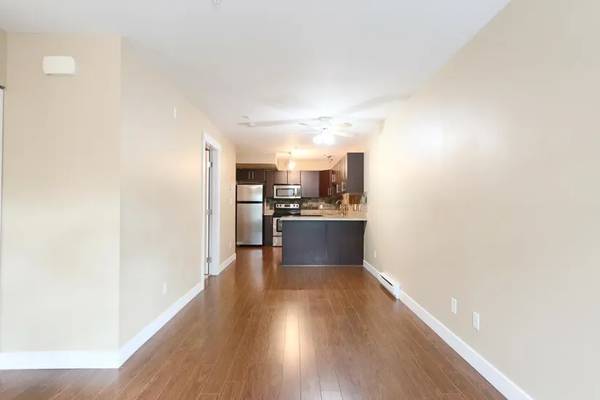


Off campus there are five products, and they do not price the same way
The cheapest legitimate way for a student to live in this region is a bedroom in a shared unit, and the arithmetic is not close. That three-bedroom-or-larger average of $2,820, split three ways, is $940 a head — $727 a month under the studio average of $1,667, or $5,816 across a September-to-April year. Nothing else you do to your housing costs will move the number that far.
| Product | What you are renting | Utilities | Usual term | Landlord |
|---|---|---|---|---|
| A room in a shared house or suite | One bedroom plus shared kitchen, bathroom and living space | Almost always inside the room rate | Month to month, or four to eight months | An individual owner, or the existing tenants |
| A bed in private purpose-built student accommodation | A room or a shared room in a building run for students, usually furnished | Included, plus internet | Fixed academic-year or twelve-month contracts | A private operator |
| A whole studio or one-bedroom, alone | A self-contained unit | Hydro usually yours; heat and hot water often included in older buildings | Twelve months, frequently a fixed term | A property manager or an individual condo owner |
| A two- or three-bedroom split with roommates | A self-contained unit shared with people you chose | Hydro yours, split however you agree | Twelve months | The same, but the screening is harder |
| Homestay | A room in a family home, usually with meals | Included | Term-length placements | A host household, matched by an agency or the institution |
Four distinctions inside that table decide most of the money.
Utilities move with the product, not with the price. A room rate is a single number, because there is one meter and one account for the whole dwelling. Rent a whole unit and the BC Hydro account goes into your name, and the bill is then a function of the building envelope rather than your habits — a 1968 walk-up with electric baseboards and single-glazed windows will beat you in January no matter how many jumpers you own. Section 13 of the Act requires the written agreement to state which services and facilities are included, and section 27 stops a landlord terminating or restricting one mid-tenancy without a matching rent reduction. If a listing does not say, ask before you view rather than after you apply.
Furnishing is a real cost the first time and only the first time. A furnished room or a student-accommodation bed removes a bed, a desk, a chair and a kitchen's worth of equipment from your September, and that outlay otherwise lands in the same week as first month's rent and the deposit. It is also why furnished units command a premium that stops making sense in year two.
Shared units are where the screening happens. A landlord letting a two-bedroom to two undergraduates is assessing a group with no rental history and frequently no Canadian credit file. A room in an existing household is assessed by the people already living there, on a completely different basis, which is why the room market clears faster than the unit market for students.
The academic year is eight months and the lease is twelve. September to April is about 34 weeks. A standard tenancy agreement runs a year. That mismatch is the single biggest reason students end up in rooms, in student accommodation with academic-year contracts, or in a group house where the summer is covered by whoever stays — and it is worked through properly further down, because the way landlords paper over it is usually unlawful.
What sits on top of the advertised rent
The advertised rent is somewhere between 75% and 100% of what a student unit costs each month, and which end you land on is decided by the product rather than by the price.
Hydro. Inside the rate in a shared room, in homestay and in most purpose-built student accommodation. Your account in a whole unit. Heat and hot water are frequently included in older purpose-built rental buildings because there is one boiler and one bill; in a rented condo they usually are not. Get the answer written into the agreement, because section 13 requires it to be there.
Internet. Included in nearly every room, homestay and student-accommodation rate. In a whole unit it is a separate contract, and the twelve-month promotional pricing that makes it look cheap expires about two months after you graduate.
Laundry. Coin or card laundry in an older building is a per-load cost that adds up over 34 weeks. In-suite laundry in a newer one is inside the rent. Check it on the viewing rather than guessing from the photographs; it is one of the few genuine advantages newer stock has at the same price.
Tenant insurance. Not required by the Act, frequently required by the agreement, and cheap. More on what it actually pays for below.
The deposits. Half a month's rent, plus a further half month where pets are permitted, and nothing else. On an $1,800 one-bedroom that is $900 due in the same week as first month's rent. Save for it before you start looking rather than after you are offered a unit, because the offer will have a short deadline on it.
The rent increase, if you stay. Within an existing tenancy the 2026 cap is 2.3%. Between tenancies there is no cap at all, which is the whole reason a four-year student who moves every August pays market rent four times while one who stays put pays the old rent plus compounding.
Transit belongs in the same budget, and it is the one line where this region is unusually generous. That is the next section, and it changes where it makes sense to look.
The U-Pass makes distance nearly free, in money
This is the fact that should reorganise a student housing search in Metro Vancouver, and most people find it out after they have signed.
U-Pass BC costs $47.85 a month from 1 September 2026 to 31 August 2027, and it is valid on all TransLink bus, SkyTrain and SeaBus service in every fare zone. There is no distance component. A student living in Surrey and a student living four blocks from campus both pay $382.80 for the eight months from September to April.
| Fare product | Price | Effective | Source |
|---|---|---|---|
| U-Pass BC, 2026/27 | $47.85 a month, $191.40 a term | 1 Sep 2026 – 31 Aug 2027 | TransLink |
| U-Pass BC, 2025/26 | $46.90 a month | to 31 Aug 2026 | TransLink |
| U-Pass BC, scheduled | $48.80, then $49.80, then $50.80 | 2027/28, 2028/29, 2029/30 | TransLink |
| Adult monthly pass, 1 zone | $117.20 | 1 Jul 2026 | TransLink |
| Adult monthly pass, 2 zones | $156.70 | 1 Jul 2026 | TransLink |
| Adult monthly pass, 3 zones | $211.65 | 1 Jul 2026 | TransLink |
| Compass stored value, 1 / 2 / 3 zones | $2.85 / $4.20 / $5.40 | 1 Jul 2026 | TransLink |
Ten public post-secondary institutions participate: UBC, SFU, BCIT, Capilano University, Langara College, Douglas College, Kwantlen Polytechnic University, Emily Carr University of Art and Design, Vancouver Community College and the Nicola Valley Institute of Technology. That list is the whole programme. Private colleges are not on it, which means a student at a private career college or a language school buys retail: $937.60 for eight months of a one-zone pass, $1,253.60 for two zones, $1,693.20 for three. Against $382.80, a private-college student on the two-zone rate is $870.80 a year worse off before rent enters the conversation. If that is you, distance is not free and it belongs in the housing decision.
Three rules keep the pass working for everyone else. A bus ride is always a one-zone fare whatever the distance, so a long bus trip from a cheaper municipality is the least expensive commute in the system for anyone paying cash. All travel starting after 6:30 p.m. on weekdays, and all weekend and holiday travel, is one-zone system-wide. And the pass is not automatic at every institution — UBC requires you to request it through the U-Pass BC portal on or after the 16th of the month for the following month, and missing that in August means paying full fare through September. The full commuting arithmetic for UBC, including the $1,153.93 undergraduate parking permit that no U-Pass holder should be buying, runs the comparison to the dollar.
So a room in Burnaby at $900 with a forty-five-minute commute is a real financial option in a way it would not be in a city with distance-based fares. What it costs instead is hours.
And expensive, in hours
Money is flat across the region. Time is not, and time is the constraint that actually breaks people in March.
Here is the rail position of each campus, which is the thing that determines whether a commute is one seat or three:
| Campus | Nearest rail | The last leg |
|---|---|---|
| Langara College | Langara–49th Avenue | Station at the campus edge; one stop from Marine Drive on the Canada Line |
| Douglas College, New Westminster | New Westminster | Campus sits above the Expo Line station |
| KPU Richmond | Lansdowne | Campus adjacent; one stop from Richmond–Brighouse |
| VCC Broadway, and Emily Carr | VCC–Clark | Millennium Line, short walk; one stop from Commercial–Broadway |
| SFU Burnaby | Production Way–University | The 145 bus, up the mountain, on every single trip |
| BCIT Burnaby | None | Bus from Brentwood, Metrotown or Patterson |
| Capilano University | None | SeaBus or a bridge bus, via Lonsdale Quay or Phibbs Exchange; North Vancouver has no SkyTrain at all |
| UBC Vancouver | None until 2027 at the earliest | The 99 B-Line or a downtown express, from Broadway |
The SFU row is the one to study, because Burnaby Mountain is the only major campus in the region that rail does not reach. Every SFU trip ends with the 145 from Production Way–University or a connecting bus from Lougheed, the climb takes materially longer than the map suggests, and the descent is scheduled longer still. Check the current timetable on TransLink's own route page before you commit to a lease at the bottom of the mountain, and budget the bus leg on top of every SkyTrain figure you have been quoted. In snow it is a different bus altogether.
Now the arithmetic nobody does. A September-to-April year is roughly 28 teaching weeks. At four days a week on campus that is 112 round trips. Every extra fifteen minutes each way costs 56 hours over the academic year — 3,360 minutes, or a week and a half of waking life, spent standing. A twenty-minute commute costs about 75 hours a year; a forty-minute one costs about 150. Set that against the $249 a month that station adjacency costs in Burnaby, or the $975 a month between the UEL average and the Marpole average, and it is a trade with real numbers on both sides rather than a vague preference.
Two things skew it further. Pass-ups are real on the busiest corridors: the 99 B-Line carried 10,655,000 boardings in 2025, TransLink's busiest route, and UBC's own off-campus guide warns that buses near campus are "sometimes too full to stop for more passengers." A scheduled fifteen-minute ride you cannot board is a thirty-minute ride. And the Broadway Subway, a 5.7 km extension of the Millennium Line from VCC–Clark to Arbutus with six underground stations, will run end to end in about eleven minutes — but it is scheduled for 2027 and has been delayed before. Do not sign a 2026 lease on the strength of a 2027 station.
The application, and four things a landlord may not do
Section 15 is short and absolute. A landlord must not charge a person anything for accepting an application, processing it, investigating the applicant's suitability, or accepting the person as a tenant. Not a $50 credit-check fee, not a $25 administration fee, not a holding deposit to take the unit off the market while they decide. Section 7 of the Residential Tenancy Regulation is a closed list of the non-refundable fees a landlord may charge, and no application fee appears on it. Section 5 says neither party can contract out of any of this.
The second is your Social Insurance Number. The Office of the Information and Privacy Commissioner's position is that a SIN is reasonable to collect only where a credit check is actually being run and name plus date of birth will not identify you to the bureau — which, for most people, they will. The third is banking access before a tenancy exists. The fourth is keeping or photographing your identification. All four, and the substitutions that work when you refuse, are in our guide to what a landlord can ask for on a rental application.
Students hit a specific version of this problem: the credit check returns nothing because there is nothing to return. An eighteen-year-old from Kamloops and a twenty-two-year-old master's student from Seoul are in the same position, and the answer is the same for both. Supply what the report was supposed to prove — a scholarship or funding letter with the amount and the term dates, a GIC confirmation, bank statements with the account number blacked out, a letter of employment, a previous landlord's contact — and offer a guarantor.
A parent co-signing needs care, because nothing in the Act mentions guarantors and what a co-signing parent has actually done depends entirely on which document they signed. Sign the tenancy agreement itself and they are a co-tenant, jointly and severally liable for the whole rent, with the power to end the tenancy and the requirement that they sign to end it. Sign a separate guarantee and they guarantee your obligations without being a party to the tenancy or having any right to enter your unit. Landlords in this market frequently do the first while describing the second.
What a landlord may not do instead is ask for extra deposit money to offset a thin file. That is the next section, and it is the most commonly broken rule in the student market.
Deposits: half a month, and nothing that behaves like a deposit escapes the cap
Section 19(1) caps a security deposit at half of one month's rent and caps a pet damage deposit at a further half month. One month's rent is the ceiling for both together, and section 20 allows one pet damage deposit per tenancy agreement no matter how many animals. Where more than the cap was taken, section 19(2) lets the tenant "deduct the overpayment from rent or otherwise recover the overpayment" — put it in writing before you short a payment, or it reads as arrears.
BC has no last month's rent deposit. "First and last" is an Ontario practice and it does not survive the crossing. The Act's definition of a security deposit is money held as security for any liability or obligation of the tenant, which is exactly what a last-month's-rent holdback is, and its only carve-outs are post-dated cheques for rent, the pet damage deposit and prescribed fees. So a landlord may ask for eight post-dated cheques and that is lawful; a landlord may not hold April's rent from September, because that is a second deposit. A demand for six or twelve months of rent up front, which international students without Canadian credit history get routinely, is worse than unlawful — it is unprotected, because money that is neither current rent nor a capped deposit sits outside the deposit machinery entirely and recovering it means a claim rather than a deadline.
| On this rent | Security deposit maximum | Both deposits maximum |
|---|---|---|
| $1,100 room in a shared house | $550 | $1,100 |
| $1,807 one-bedroom, the Vancouver CMA average | $903.50 | $1,807 |
| $2,820 three-bedroom split three ways | $1,410, or $470 each | $2,820 |
Two deadlines matter more than the cap itself. Under section 47(1) a landlord can end the tenancy for cause if the deposit is not paid within 30 days of the date the agreement says it is due, so a deposit you agreed to and then forgot about over the summer is an eviction ground rather than an oversight. And under section 38 the landlord has 15 days after the later of the tenancy ending and receiving your written forwarding address either to return the deposit with interest or to file a claim against it, with double owing if they do neither. No written address, no clock — so send it by email on the day you leave, dated, and keep the sent copy. Deposit interest for 2026 is 0%, so a deposit paid and returned inside the year earns nothing, while one held since 2023 is owed several years of compounding. Everything that can and cannot come off a deposit, including the depreciation table arbitrators use to knock damage claims down, is in damage deposits in BC.
The move-out inspection decides all of it, and it is the step students skip because their flight leaves on 30 April. Under section 24(1) the right to the return of the deposit is extinguished outright if the landlord offered two opportunities to inspect and you took neither. Book it, attend it, or appoint an agent in writing — the Regulation allows one, provided you tell the landlord beforehand and the agent is not the landlord.
One-bedrooms in New Westminster under $1,800
25 matches as we last checked, confirmed today. This block is rebuilt from the live feed, so it is never the list that was here when the article was written.


Co-tenant, occupant or subtenant, decided before anyone moves in
Three people on one lease is the default student arrangement in this region and almost nobody who signs one understands what it does. RTB Policy Guideline 13, last revised May 2024, sets out the consequences, and it is worth quoting because the wording is stronger than the summaries.
Co-tenants are two or more tenants renting the same unit under the same agreement. They are "jointly and severally responsible for meeting its terms," which the guideline defines as responsible "both as one group and as individuals." Not for your share — for all of it. The guideline's own example runs on $1,800: if one co-tenant cannot pay her portion, the other "must pay the full amount," and if he pays only his half "the landlord could serve a 10 Day Notice to End Tenancy for Unpaid Rent and Utilities and evict both." Damage works the same way. The landlord can claim "against either co-tenant, regardless of whether John was solely responsible for causing the damage."
Then the part that ends friendships. Notice to end a tenancy given by any one co-tenant ends it for everyone: "If the tenant gives proper notice to end the tenancy, the tenancy agreement will end on the effective date of that notice and all tenants must move out, even where the notice has not been signed by all tenants." The housemate who transfers to another university in February can, by handing the landlord a one-month notice, put the other two out. Their only route to staying is a new written agreement with the landlord — at whatever rent the landlord now wants, because a new tenancy resets the rent, and in a house held below market since 2022 that is the moment the discount disappears.
A co-tenant who simply leaves without giving notice is a different case and a better one. The guideline is explicit that the original agreement "remains in full effect," the person who moved out "remains liable for the tenancy agreement until the tenancy ends, regardless of whether or not they reside in the unit," and whoever stays can carry on as long as the full rent keeps arriving. Silence, oddly, protects the people who are still there.
An occupant is a third category. Someone a tenant lets move in "has no rights or obligations under the tenancy agreement" unless the landlord agrees to amend it. They cannot be evicted by the Branch and cannot apply to it either, and the tenant on the agreement "is responsible for any actions or neglect of any persons permitted on to the property." Guideline 13 also flags a default that surprises landlords more than tenants: where the agreement says nothing about additional occupants, "it is implied that the tenant may have additional occupants move into the rental unit."
Which category you are in is not decided by what you call yourselves. "Where multiple people live in a rental unit and pay part of the rent to the landlord, there is a presumption that they are co-tenants unless there is compelling evidence to the contrary" — separate agreements, separate rent receipts, separate deposits.
And the Branch will not referee any of it. Disputes between co-tenants "are not within the jurisdiction of the RTA nor the MHPTA and cannot be resolved through the Branch." Whatever you agree among yourselves is a private contract enforceable in Small Claims Court and nowhere else, which is precisely why it should be written down in week one rather than argued about in March. A roommate agreement covering rent shares, deposit shares, whose name is on the hydro account, notice to the group before notice to the landlord, how a replacement gets chosen and who owns the sofa is the cheapest legal document a student will ever produce.
One deposit detail follows from all this and catches the person who paid it. The landlord "may return the deposit(s) plus any applicable interest to any tenant who is named on the tenancy agreement, regardless of who paid the deposit." If you paid the whole deposit in August and your name is one of three, the landlord can lawfully hand the entire refund to one of the others.
The eight-month lease you were promised probably does not exist
Winter session runs roughly September to April. Leases run twelve months. That is the defining financial problem of off-campus student housing here, and the way landlords paper over it is usually unlawful.
A fixed term ending 30 April does not put you out on 30 April. Under section 44(3), where a fixed term that does not require the tenant to vacate expires and no new agreement has been signed, "the landlord and tenant are deemed to have renewed the tenancy agreement as a month to month tenancy on the same terms." Same rent, same everything, until one side gives notice. Good news if you want the summer; bad news if you assumed the lease evaporated, because you owe May's rent unless you gave notice. It also means a landlord who says the flat is back on the market in September unless you re-sign at $200 more is describing a bargain they are not entitled to, and back-to-back one-year fixed terms at a new rent each year is a way around the increase cap.
A clause requiring you to vacate at the end of the term is valid in exactly one prescribed circumstance. Section 13.1 of the Regulation permits it where the landlord is an individual who, or whose close family member, will occupy the unit at the end of the term, and that occupancy has to last six months. Nothing else qualifies. "Term ends 30 April, tenant must vacate, unit is re-let to next year's students" is not a prescribed circumstance, and a vacate clause written for that purpose has no effect. If a landlord uses a valid vacate clause and then does not follow through, section 51.1 requires them to pay twelve times the monthly rent unless they can establish that steps were taken within a reasonable period and the unit was actually used that way for the full six months. On a $2,000 flat that is $24,000. The director can excuse it for extenuating circumstances and sometimes does, but the starting point is the full twelve months.
Going the other way is harder than students expect. Section 45 lets you end a month-to-month tenancy on written notice effective not earlier than one month after the landlord receives it and not earlier than the day before rent is next due — so to be out on 30 April, the landlord must have your notice by 31 March, and notice given on 2 April ends the tenancy on 31 May whether you are in Kelowna by then or not. On a fixed term, notice cannot make the tenancy end before the term does. There is no student exception, no exchange-programme clause, and no penalty payment that buys you out unless the landlord agrees to one in writing. Sign to 31 August with a programme that finishes in April and you owe four months, which at the CMA one-bedroom average is $7,228 for an empty flat, subject to the landlord's duty to mitigate by re-letting.
Summer: sublet, assign, or pay for an empty room
Given all that, most students face a choice in the spring, and there are four lawful ways to handle the mismatch.
| Option | How it works | The catch |
|---|---|---|
| Twelve-month fixed term, sublet the summer | You stay the tenant; someone else occupies May to August with written consent | You remain liable for rent and damage throughout |
| Twelve-month fixed term, assign it in spring | A replacement takes over the agreement and you come off it | Also needs written consent, and landlords are rarely enthusiastic |
| Month-to-month from the start | End it on one clear month's written notice whenever you like | Higher advertised rent, and an annual increase you will actually see |
| An actual eight-month term | Rare, and mostly in student-oriented buildings | Nothing in BC law requires anyone to offer one |
Section 34(1) is the operative provision for the first two: a tenant must not assign or sublet without the landlord's written consent. Section 34(2) says that where a fixed term has six months or more left to run, the landlord "must not unreasonably withhold" that consent — which is exactly why the timing works against you. Ask in March about a May-to-August sublet on a term ending 31 August and there are under six months left, so the landlord's discretion is close to unfettered. Ask in February, when a September-start lease still has seven months on it, and the reasonableness standard bites. Section 34(3) separately bars any charge for considering, investigating or consenting to it: no credit-check fee for your proposed subtenant, no lease-transfer fee, nothing.
The difference between the two options is who is exposed. In a sublet you remain the tenant, unpaid rent is your arrears, damage comes off your deposit, and the landlord has no contract with the person actually living there. In an assignment you hand over the whole agreement and leave, which is the usual route out of a term you cannot finish. Both, plus the drafting that keeps a sublease from being found to be an accidental assignment, are covered in subletting and assignment in BC.
Two things are specific to the student version. First, a sublease has to end at least one day before your own term; hand over the entire remaining term and an arbitrator may later find you assigned, with consequences for your deposit and your right to return in September. Second, once you move out and grant exclusive occupancy, you are the landlord in that relationship — half a month's rent maximum, the fifteen-day return clock, and a condition inspection at both ends. A student who takes a $1,500 deposit from a summer subtenant has broken the same rule they would complain about upstream.
Doing any of it without consent is cause for a One Month Notice, with ten days to dispute. Posting your room to a Facebook group in April without asking is not a small administrative shortcut. Institutional residence is a separate matter again: UBC stopped permitting sublets of its own residences during the Winter Session on 1 September 2025, so any September-to-April "UBC residence sublet" being offered to you is not one the university will recognise, whatever paperwork arrives with it.
Two-bedrooms in Richmond within reach of KPU
66 matches as we last checked, confirmed today. This block is rebuilt from the live feed, so it is never the list that was here when the article was written.
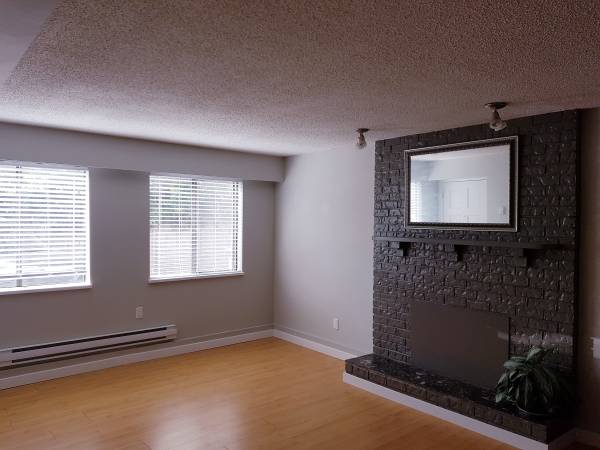


Rent increases, occupancy clauses and the September reset
Inside an ongoing tenancy the numbers are fixed. The maximum increase taking effect in 2026 is 2.3%. Section 42 requires at least twelve months since rent was first payable or since the last legal increase, at least three full months' written notice, and the approved form RTB-7. A text message is not the approved form, and neither is a letter on a management company's letterhead.
None of that constrains the rent on a new tenancy. The cap limits increases within a tenancy rather than asking rents, which is why a building full of students turning over every August behaves like a building with no rent control at all. Three years in one tenancy compounding at two or three per cent is a materially different outcome from three consecutive one-year tenancies at market. The strongest argument for signing a twelve-month lease and holding it over the summer is not convenience. It is that leaving resets your rent to whatever the market says in August, and it is worth weighing against a slightly worse unit in first year.
Watch for a clause that varies rent with the number of occupants. It is lawful in principle, but section 22.1 bars a landlord from increasing rent on that basis for an occupant who is a minor, or who was a minor and an occupant when the agreement was signed. Separately, "an unreasonable number of occupants in a rental unit" is cause to end a tenancy under section 47(1), which is what a landlord reaches for when four people are living in a two-bedroom.
One more that catches first-years: section 3 says a person under nineteen may enter a tenancy agreement, and that the agreement, the Act and the regulations "are enforceable by and against the person." A landlord who says a seventeen-year-old needs a parent on the lease is stating a preference. A landlord who says the lease is void because of age is wrong.
Strata bylaws cannot keep students out, and have not been able to keep out renters since 2022
A large share of the flats students rent in Burnaby, New Westminster, Richmond and Coquitlam are individually owned strata units, and the bylaws come with the unit whether or not you were shown them.
What the bylaws cannot do is stop the owner renting. Section 121(1)(c) of the Strata Property Act makes a bylaw unenforceable to the extent that it "prohibits or restricts the right of an owner of a strata lot to freely sell, lease, mortgage or otherwise dispose of the strata lot," and since 24 November 2022 section 141 has read that a strata corporation "must not screen tenants, establish screening criteria, require the approval of tenants, require the insertion of terms in tenancy agreements or otherwise restrict the rental of a strata lot." The sections that authorised rental-restriction bylaws were repealed outright. Nor can a strata restrict occupancy by age except in the single permitted form under section 123.1, which requires one or more residents to have reached a specified age "that is not less than 55 years." There is no lawful "no students" bylaw, and an owner who tells you the strata caps rentals so you might have to leave is describing something with no force.
What the bylaws can do is everything else: noise hours, guest limits, bike storage, parking allocation, balcony contents, and whether a unit may be let for a fortnight. A strata may still limit or ban short-term accommodation, which is why a downtown tower will rent you a furnished unit for a semester but not for a weekend. Section 7 of the Residential Tenancy Regulation also lets a landlord pass a strata's move-in or move-out fee to you as a non-refundable charge, which is the one strata fee that legitimately lands on a tenant. Ask for the current bylaws before signing, and ask specifically about the move-in fee and the elevator booking rules, because 1 September is the busiest moving day of the year in this region and an unbooked lift on that date is a genuine problem.
Money that comes back the other way
Three sources exist on the other side of the ledger, and students miss the first one almost universally.
| What | Amount | Who qualifies |
|---|---|---|
| BC renter's tax credit | Up to $400, refundable | Occupied an eligible rental unit for at least six one-month periods in the year, resident in BC on 31 December, and 19 or older on that date or a parent or living with a spouse |
| BC Rent Bank | Interest-free loan, average under $2,000, repaid over 6 to 36 months | 19 or older, arrears under $3,500, and income enough to cover living costs plus the repayment |
| Subsidised and co-op housing | Below-market rent | Long waitlists, and co-ops set their own membership criteria |
The tax credit is the one to act on. It is refundable, meaning it pays out even where you owed no tax, which describes most undergraduates — and college and university residence is an eligible rental unit provided rent was actually paid for it. Living in Totem Park or an SFU tower does not disqualify you. For the 2025 tax year the credit is reduced by 2% of adjusted income above $64,764 and reaches zero at $84,764; for 2026 those figures are $66,189 and $86,189. Rent paid to a parent, grandparent, sibling, child or spouse is excluded, as is rent under a rent-to-own arrangement, and you cannot claim for a unit you own. Four hundred dollars is roughly a month of groceries and claiming it takes one line on a return you were filing anyway.
The rent bank is worth knowing about and worth being realistic about. It requires you to be nineteen and it requires income sufficient to cover ongoing living costs and the loan payment. A student with a $600 monthly income and a $1,200 room is not experiencing a temporary shortfall, and an assessor will say so. It bridges a gap that has already closed — the shift you lost, the loan instalment three weeks late — rather than a rent that was never affordable, and our guide to how much rent you can actually afford in Vancouver runs that calculation against income before you sign rather than after.
The scams are aimed at you specifically
Student housing fraud is not a general risk that happens to catch students. It is a targeted business, and the reasons are structural: you are searching from another city or another country, you cannot view in person, you are competing against forty other applicants, and you have a hard start date the fraudster knows about.
The best-documented local case is instructive. The Ubyssey reported on 7 February 2023 that eight UBC students each lost between $700 and $1,700 to fraudulent sublets of rooms in Ponderosa Commons that did not exist. Every listing was found through a Facebook housing group. The scammers, using three different names, sent photographs of forged UBC Student Housing room-assignment emails and near-identical sublease agreements, then moved the conversation to WhatsApp. Every element of that is repeatable and most of it is repeated weekly.
The patterns, in the order you will meet them:
- A price meaningfully below everything comparable. The benchmarks are in the tables above: $1,807 for a one-bedroom across the CMA, $2,469 in the zone containing the UBC campus. A furnished one-bedroom near campus at $950 is not a bargain, it is bait.
- The landlord cannot meet you. They are working overseas, they are a missionary, the keys will be couriered. There is always a reason and it is always the same reason.
- Payment by e-transfer, wire, crypto or gift cards, before a viewing. The Canadian Anti-Fraud Centre's description of rental fraud is exactly this: below-market ads using stolen photos, with pressure to pay fast.
- Documents that look official. A forged residence assignment email, a screenshot of a strata form, a scanned passport. Documents prove nothing about who controls a door.
- The same photographs on three sites at three prices. A reverse image search takes twenty seconds and settles it.
The countermeasures are dull and they work. Never pay before someone lets you inside the actual unit — not the lobby, the unit. If you are abroad, send a friend, pay a local service to attend, or wait. Ask for the landlord's full legal name and match it against the title or the strata records. Pay by a traceable method to a named individual whose name is on the agreement. And know that no legitimate BC landlord needs money before you have seen the place, because a deposit under section 19(1) is paid in respect of a tenancy agreement that does not yet exist. Our guide to rental scams in Vancouver sets out the address-checking sequence in full.
If it has already happened, speed is the only variable you control. Call your bank and ask for a recall, then report to the Canadian Anti-Fraud Centre on 1-888-495-8501 and to local police. The Residential Tenancy Branch cannot help, because no tenancy ever existed.
Insurance, and the claim students actually make
Tenant insurance is not required by the Act, though a term of your agreement may require it, and in a shared student house it is the cheapest risk transfer available — usually somewhere in the range of a month of transit fares, depending on coverage, location and deductible.
The part that matters is not the contents cover. It is the liability cover. A pot left on a hob in a five-bedroom house, or a bathroom overflow that reaches the suite below, produces a claim measured in tens of thousands, and the landlord's building policy covers the building rather than you. Basement suites, which is where a large share of students live, add water at grade to the list.
Two specifics for student households. A policy covers named insureds, so four housemates on one policy is not the default and each person holding their own is cleaner than arguing later about whose laptop was on the schedule. And a parent's homeowner policy sometimes extends to a dependent student living away from home, often at a reduced limit and often only while the student is enrolled full-time and financially dependent. That is an insurer-by-insurer question with a real answer, so ask before buying twice. Tenant insurance in BC covers what the policies actually pay for.
When it goes wrong: the Branch, and the clock you are on
An Application for Dispute Resolution costs $100, whether it is a participatory hearing or a written direct request, and a review of a decision costs $50. The fee can be waived on financial grounds, and if you win you can ask the arbitrator to order the other side to repay it — but you have to tick that box on the original application. For deposits and money claims you have two years from the end of the tenancy to file, which is generous. The notice-dispute deadlines inside that period are not: ten days to dispute a One Month Notice for cause, five days to pay or dispute a 10 Day Notice for unpaid rent. Miss those and the Act treats the tenancy as ending by your own acceptance. What the Branch can and cannot order, and how long the wait actually runs, is in our guide to the Residential Tenancy Branch.
Three student-shaped filings fail before they are heard, and all three were set out earlier in this guide: a dispute against a roommate, a dispute about a campus residence contract, and a dispute by someone who shares a kitchen with the owner. In each case there is no jurisdiction, the file is declined, and the $100 is spent. Check which of the three worlds you are in before you file, not after.
If you are leaving the province in April, deal with the paperwork before you fly. Give your forwarding address in writing and keep proof of sending it, because the fifteen-day clock does not start without it and the claim dies entirely one year after the tenancy ends if no address was ever provided. Attend the move-out inspection or appoint an agent. Hearings are held by telephone and can be attended from anywhere in the world, but a deposit claim you never filed is a deposit you have given away.
Rights that survive a bad landlord are worth reading in full before you need them, and the rights the Act gives every covered tenant in BC is the shortest route to the ones this guide has not touched — quiet enjoyment, repairs, entry and the rest.
One-bedrooms near SFU and BCIT
60 matches as we last checked, confirmed today. This block is rebuilt from the live feed, so it is never the list that was here when the article was written.

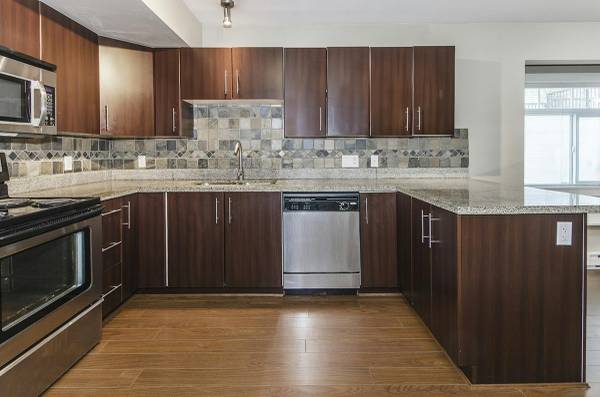


The first week, and what this guide cannot fix
Six things, in order. They take about an hour in total and they decide most of what can go wrong later.
- Get the written agreement. Section 13 requires the landlord to prepare one, include the standard terms and the parties' legal names, and give you a signed copy within 21 days of entering into it. If it never arrives, email a plain list of what you both understood — rent, what it includes, deposit paid, parking, laundry, start date — and get a "yes, that's right" back. That thread is evidence.
- Do the move-in inspection and keep your copy. Photograph everything, date-stamped. A landlord who never offers the inspection extinguishes their own right to claim against your deposit for damage.
- Photograph the meters and write down which utilities are included and on what basis. In a suite this is usually a percentage share, and it needs to be in the agreement at the start rather than negotiated in February.
- Pay by e-transfer with the month in the memo field. If you pay cash, section 26(2) requires a receipt, and a landlord refusing one is worth an email saying so.
- Write the roommate agreement while everyone still likes each other.
- Diarise the notice date. For a 30 April move-out, the notice has to be in the landlord's hands by 31 March.
None of that changes the arithmetic. A one-bedroom in the zone containing the UBC campus averaged $2,469 in October 2025 and vacancy there was 1.3% while the region sat at 3.7%. Institutional residence is cheaper than the private market almost everywhere in this region and there is nowhere near enough of it, which is why most students end up in the market anyway — usually in a shared house, usually on a twelve-month term for an eight-month need, and frequently in one of the two arrangements the Act does not cover at all.
What the Act does, for those it covers, is set hard limits on the parts of the deal that get abused most: the deposit, the increase, the notice, the fees and the entry to your room. Those limits only work for people who know they exist and can point to the section. So the last piece of advice is the same as the first. Establish which of the three positions you are in — a tenancy under the Act, a residence contract outside it under section 4(b), or a shared-kitchen arrangement outside it under section 4(c) — because they are three different legal worlds, the paperwork rarely says which one you are in, and the difference only becomes visible on the day you need it to be.
Keep reading
The rest of what we have written about renting here.
Renting in Vancouver
Types of Rental Housing in Metro Vancouver: A Renter's Map
Purpose-built, condo, suite, co-op, non-profit, pad or residence. Which of Metro Vancouver's rental types you sign for decides which law protects you.
Renting in Vancouver
Where to Rent in Metro Vancouver
Every Metro Vancouver survey zone compared on rent, fare zone, commute time, building age and vacancy, with the trade-offs the averages quietly hide.
Renting in Vancouver
Affordable Housing in Metro Vancouver
Eleven routes to below-market rent in Metro Vancouver, ranked by how many households each one reaches and how long the wait runs, with every income test.
How to rent
UBC Sublets: When They Appear, Where to Find One, and What Is Real
UBC's Winter Session contract is eight months, most leases are twelve. When UBC sublets appear, why campus sublets are summer-only now, and how to check one.
How to rent
UBC Winter Session Housing: The Calendar That Runs the Search
UBC term dates, residence move-in and move-out for 2026/27, a month-by-month search calendar, and how to handle an 8-month academic year on a BC lease.
Tenancy law
What a Landlord Cannot Do in BC
Eight things a BC landlord is not allowed to do, each with the Residential Tenancy Act section behind it and the one thing to do about it first.