Renting in Vancouver
Moving to Metro Vancouver: The Renter's Ninety-Day Plan
A ninety-day plan for renting in Metro Vancouver from out of province: the bank account, the application file, the calendar, the deposits and arrival week.
Updated 2026-08-12 · 62 min read
What ninety days actually buys you
Ninety days is not a comfort margin. It is roughly what the slowest item on the list needs, and the slowest item is not the flat.
Three clocks run at once and they do not start together. The first covers everything you can do from where you are sitting now: a Canadian bank account, a scanned document set, three shortlisted search areas, a mover booked, somewhere to land. None of it requires a BC address and all of it is queueing work. The second covers everything gated on physical presence — health enrolment, a licence exchange, a BC Services Card, a hydro account in your name — which the last stretch of this guide covers, and none of which can start early. The third is the tenancy calendar, set by statute, running on the month rather than on your arrival date.
The common failure is spending the ninety days on the second clock's paperwork, which cannot move, and arriving with no bank account, no rental file and no idea which three areas to search.
| Task | Earliest you can start it | What gates it |
|---|---|---|
| Scan and organise identity, income and reference documents | Day 90 | Nothing |
| Open a Canadian chequing account | Day 90, remotely, with a bank that runs a pre-arrival programme | Full access needs you at a branch with original ID |
| Move funds to Canada | Day 90 (account first) | The account, and your bank's transfer limits |
| Choose three search areas | Day 90 | Nothing |
| Book a long-haul mover or container | Day 90 to 60 | Capacity, which is worst May to September |
| Book landing accommodation | Day 90 to 60 | Municipal short-term-rental rules, which differ by city |
| Assemble the rental application file | Day 60 | Landlord requirements, not the calendar |
| View and apply for a flat | Roughly 30 days before the start date you want | s. 45(1) of the Residential Tenancy Act |
| Health enrolment, driver's licence, BC Services Card, utilities | The day you arrive | Physical presence in BC |
Everything in the first block of that table is doable from Toronto, Calgary, Manila or Manchester. Everything in the last row is not doable a day early.
Everything here was checked on 11 August 2026. Rents and vacancy come from CMHC's Rental Market Survey for October 2025, published 11 December 2025, and the Rentals.ca and Urbanation National Rent Report for July 2026; fares are TransLink's, effective 1 July 2026; statute is quoted from BC Laws.
The money question, answered from out of province
Before you can choose an area you need two numbers that are frequently confused with each other, and a third that decides whether either matters.
| Measure | Figure | As of | Source |
|---|---|---|---|
| Vancouver CMA average studio | $1,667 | October 2025 | CMHC Rental Market Survey, published 11 December 2025 |
| Vancouver CMA average one-bedroom | $1,807 | October 2025 | CMHC RMS, 11 December 2025 |
| Vancouver CMA average two-bedroom | $2,364 | October 2025 | CMHC RMS, 11 December 2025 |
| Vancouver CMA median two-bedroom | $2,295 | October 2025 | CMHC RMS, 11 December 2025 |
| City of Vancouver asking rent, one-bedroom | $2,377 | July 2026 | Rentals.ca / Urbanation National Rent Report |
| Surrey asking rent, one-bedroom | $1,794 | July 2026 | Rentals.ca / Urbanation |
| North Vancouver asking rent, one-bedroom | $2,588 | July 2026 | Rentals.ca / Urbanation |
The $570 gap between the CMHC one-bedroom average and the City of Vancouver asking rent is not a data error and not a regional difference: BC caps rent increases inside a tenancy and caps nothing when a unit turns over, so a survey of occupied units blends a 2015 lease with one signed last month, and our guide to what the average rent figures actually measure sets the two series side by side. The working rule is short — use CMHC survey averages to rank areas against each other, and asking rents to build the budget. Anyone who budgets off $1,807 will be shopping at $2,300 and will conclude the market is broken rather than that the number was the wrong number.
The third figure decides whether the first two apply to you at all. Purpose-built vacancy across the CMA was 3.7% in October 2025, the highest CMHC has recorded since 1988. Split by what the units cost:
| Rent quartile, Metro Vancouver | Vacancy, October 2025 | Source |
|---|---|---|
| Cheapest 25% of units | 1.1% | CMHC RMS, Oct 2025 |
| Second quartile | 2.2% | CMHC RMS, Oct 2025 |
| Third quartile | 5.0% | CMHC RMS, Oct 2025 |
| Most expensive 25% | 6.7% | CMHC RMS, Oct 2025 |
| All units | 3.7% | CMHC RMS, Oct 2025 |
All of the slack is at the top. CMHC's 2026 Mid-Year Rental Market Update of 9 June 2026 describes the first quartile as persistently tight. A newcomer at the bottom of the market is searching a 1% market whatever the headline says; a newcomer at the top is searching a 6.7% one where landlords are offering free months. Which of those you are running is the most useful thing to establish in week one, and it is settled by your budget rather than your preferences — how much rent your take-home actually supports is the calculation that decides it.
What it actually costs to land
The rent is the number people plan around and it is not the number that empties the account. On the day you sign, a BC landlord may lawfully collect first month's rent, a security deposit capped at half a month, and — where pets are permitted — a pet damage deposit of up to another half month. That is one and a half months' rent leaving your account inside a week without a pet, two months with one, before you have paid a mover. The statutory detail behind those caps is set out under the money rules further down, because it is also the thing landlords get wrong most often.
Set against a $2,300 one-bedroom, the arrival month looks like this.
| Item | Cost on a one-bedroom at $2,300 | Refundable? |
|---|---|---|
| First month's rent | $2,300 | No |
| Security deposit, half a month | $1,150 | Yes, with interest |
| Pet damage deposit, if pets are agreed | $1,150 | Yes, with interest |
| Strata move-in fee, where the building charges one | Varies; no statutory cap | No |
| Tenant insurance, first month | High teens to low thirties | No |
| BC Hydro account deposit, where required | Set against estimated consumption | Yes |
| Compass Card | $6 | Yes |
| Long-haul move or container | The largest variable on the list | No |
| Temporary accommodation between flight and start date | Whole nights, at nightly rates | No |
Two things about the top of that table catch people out. It is due before any deposit on the place you are leaving comes back, so it has to exist in cash rather than in theory, and it has to be in a Canadian account in a form a BC landlord accepts, which is what the bank-account section below is for. Budget the rest against our cost-of-living breakdown for the region, because hydro, a phone plan, insurance and a transit pass all start in the same fortnight.
Where you are moving from changes half the plan
"Moving to Vancouver" is four different projects depending on the border you cross, and the differences are not cosmetic. A move from Calgary and a move from Manila share a search strategy and share almost nothing else.
| From Alberta or another province | From Ontario | From outside Canada | |
|---|---|---|---|
| Credit file | Follows you unchanged; both bureaus are national | Follows you unchanged | Does not exist here; no score transfers |
| Landlord references | Do not follow you in any formal sense; the landlord phones | Same | Same, plus a time-zone problem |
| Health coverage | Old plan generally covers the BC wait period | Same, but Quebec is outside the reciprocal billing arrangement | No outgoing plan; buy private cover before you fly |
| Driver's licence | Straight exchange, no tests, old licence surrendered | Same | Depends whether BC has a reciprocal agreement with the issuing country |
| Deposit rules you arrive expecting | One month's rent as a single security deposit | Last month's rent, plus no damage deposit at all | Anything |
| Deposit rules that actually apply | Half a month, plus half a month for pets, one month combined ceiling | The same | The same |
| Rent increases | No provincial cap on the amount in Alberta | A guideline with an exemption for newer buildings | Varies |
| Rent increases in BC | 2.3% for 2026, on every covered tenancy, with no new-build exemption | The same | The same |
The BC rows are sourced to BC Laws and the Residential Tenancy Branch and are the ones this guide stands behind. The other rows describe what people most commonly arrive believing; confirm your own jurisdiction's current position before relying on it, because none of it survives the border anyway.
Three consequences worth acting on. From Ontario, unlearn the last month's rent deposit before you sign anything — it is ordinary and lawful there and does not exist here, and a BC landlord asking for first and last plus a security deposit is asking for roughly two and a half months' rent against a statutory ceiling of one and a half. From Alberta, the shock is the cap rather than the deposit: a tenancy here comes with an annual limit on what can be added to the rent, 2.3% for 2026, served three full months in advance on the approved form, and it applies to new buildings as well as old ones. From outside Canada, the binding constraints are the credit file and the health gap, in that order, and neither is solved by arriving earlier — only by starting the substitutes earlier.
One thing does not change with origin: a landlord here cannot refuse you because of where you came from, since place of origin and ancestry are protected grounds.
One-bedrooms in Burnaby under $2,000
149 matches as we last checked, confirmed today. This block is rebuilt from the live feed, so it is never the list that was here when the article was written.


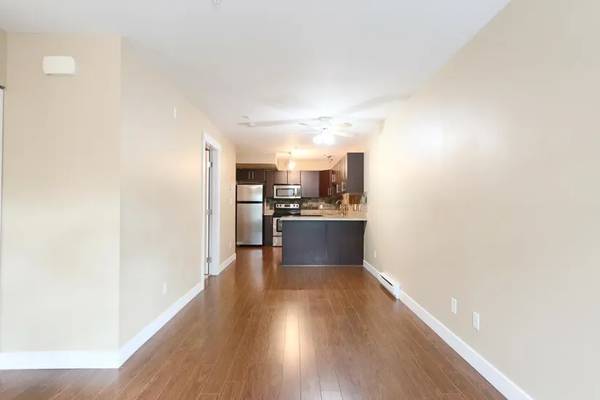


Timing your arrival against BC's turnover calendar
Metro Vancouver's rental supply does not trickle. It arrives in monthly waves, and the cause is a single subsection of statute.
Section 45(1) of the Residential Tenancy Act requires a tenant ending a month-to-month tenancy to give notice effective no earlier than one month after the landlord receives it, and on the day before rent is next due. Rent is next due on the first. So almost every periodic tenancy in this province ends on the last day of a month, and almost every listing you will ever see is for the first of something. The pool available for 1 October is largely known by the first week of September and thin by the third. Search four weeks ahead of your target start date and you are early; search two weeks ahead and you are picking over what nobody took.
There is no published monthly listing-count series for this region, so the table below ranks the months by the mechanisms driving them rather than by a count somebody scraped.
| Target start date | What is driving it | Supply | Competition | Source |
|---|---|---|---|---|
| 1 December and 1 January | Nobody moves at Christmas | Thinnest of the year | Lowest of the year | s. 45(1); seasonal pattern |
| 1 February to 1 April | Ordinary turnover only | Below average | Below average | s. 45(1) |
| 1 May | Second peak: leases signed the previous May, student year-end | High | High | s. 45(1); post-secondary term end |
| 1 June to 1 August | Summer moving season, families moving between school years | Above average | Above average | s. 45(1) |
| 1 September | Largest turnover of the year: term-one intake at UBC, SFU, BCIT, Langara, Douglas and Capilano | Highest of the year | Highest of the year | s. 45(1); post-secondary term start |
| 1 October and 1 November | September's failures and second-round listings | Above average | Moderate | s. 45(1) |
Said plainly: aim your arrival at a 1 November, 1 December, 1 January or 1 February start if you have any choice at all, and treat 1 September as the date to avoid. September has the most listings and is the worst month to be a newcomer in, because the competition concentrates in exactly the cheap, transit-adjacent stock a person without a BC credit history is already at the back of the queue for. December and January give you a thinner selection and the best negotiating position of the year — the only months in which a Metro Vancouver landlord is meaningfully worried about a unit sitting empty.
Within the target month, land in the first ten days rather than the last three. Two weeks on the ground before the wave breaks is enough to walk the areas, register with buildings, and be the applicant who can view on two hours' notice. The one countervailing factor, worth holding in mind while booking flights, is that the health enrolment clock runs on the calendar month rather than on days elapsed — the MSP section sets out why landing on the 28th rather than the 2nd of the next month is worth a month of coverage.
Choosing three search areas without seeing them
Three, not one and not the whole region. One area is a bet on a market whose cheapest quartile sits at 1.1% vacancy; the whole region is thirty survey zones across 21 municipalities, and you cannot view across it in a compressed trip.
An anchor. The area whose survey average sits closest to your budget, on rapid transit, with a commute you can accept. Rank candidates on the CMHC October 2025 zone averages, which run from $1,426 in Maple Ridge/Pitt Meadows to $2,469 in the University Endowment Lands — a $1,043 spread on the same unit type, larger than any other lever you have as a renter here. Our companion guide on where to rent in Metro Vancouver has every zone with its rent, fare zone, commute time, building age and vacancy in one place, and it is the homework to do before the bank account rather than after.
A cheaper fallback in the same fare zone or one further out. Not "somewhere cheaper" in the abstract, but a specific second area, because the anchor may not produce a unit at your price in the four-week window and you need somewhere to redirect to without restarting the research. Burnaby, Surrey and New Westminster most often play this role for people coming from out of province: Southeast Burnaby averaged $1,564 on a one-bedroom in a two-zone fare and Surrey $1,602 in a three-zone one, both on the Expo Line with no transfer downtown.
A stretch. One area you would take at the top of your budget if a good unit appeared, so a listing $200 over plan is a decision rather than a scramble.
Then apply three filters that are hard to judge from a distance and change everything about living at an address:
- Is it on rapid transit, today? Not a station announced, funded or under construction. A station carrying passengers on the day your lease starts.
- What is the building stock made of? Pre-1980 stock usually means heat and hot water inside the rent, coin laundry and no dishwasher. Post-2000 usually means in-suite laundry and a hydro bill in your name. The posted rent will not tell you which is cheaper, and the utilities section explains how large the difference gets in January.
- Is it purpose-built or a rented condo? Rented-condo vacancy across the CMA was 1.5% against 3.7% purpose-built, and the two-bedroom rented-condo average was $2,900 against $2,364. From out of province, where a listing photo is all you have, this is the distinction most worth learning to read.
Set alerts on all three areas the day you finish this exercise, not the week you land. Watching a market for eight weeks before you enter it is the cheapest education available in what your budget really buys.
Opening a Canadian bank account before you land
You cannot rent here without one. A BC landlord will ask for a void cheque or a pre-authorised debit form, first month and deposits are usually taken by bank draft, certified cheque or Interac e-Transfer, and none of those exist without a Canadian chequing account. Start it on day 90.
Know what the law gives you. Under section 627.17 of the Bank Act, a member bank must open a retail deposit account on request made in person at a branch or point of service, on presentation of two documents from a reliable source, one showing name and address and one showing name and date of birth, and the bank "shall not require the natural person to make an initial minimum deposit or maintain a minimum balance." That is a strong right and an in-person one. Anything you do from abroad is a commercial programme rather than a statutory entitlement.
All of the large Canadian banks run a newcomer programme, and what they will and will not do remotely is consistent enough to plan around:
- What a pre-arrival application generally gets you: an application on file, and often an account number that can receive an incoming international transfer before you land, so your deposit money is already in Canada on the day you sign.
- What it generally does not get you: a debit card, cheques, or unrestricted access. Expect to finish the identity check at a branch with original documents, and expect that appointment to be the first thing you book after you arrive.
- What to have scanned before you start: passport photo page, permanent resident confirmation or work or study permit, the immigration document number, proof of your current address abroad, an employment letter or offer, and — once you have it — your Social Insurance Number. A SIN is not required for a plain chequing account; it is required for accounts that earn interest, because the bank reports the interest to the Canada Revenue Agency.
- Deposit insurance: eligible deposits at a CDIC member institution are protected to $100,000 per depositor per insured category per member. Two months' rent is comfortably inside that; a larger relocation float is worth splitting.
Then the part that costs real money. A bank wire has two prices and people only look at one: the fee is visible and usually modest, and the exchange-rate spread is invisible and usually is not. Every percentage point of spread on a $15,000 transfer is $150. A retail bank spread on a personal transfer commonly runs two to three per cent; a dedicated FX broker or licensed money-services business is commonly well under one. The only way to see the difference is to ask both providers for the total number of Canadian dollars that will arrive, not for the fee.
Two constraints on the transfer itself. Incoming international transfers do not clear instantly, and a new account may hold large first deposits, so move the money weeks before you need it rather than days. And physical cash of $10,000 or more, in any currency, must be reported to the Canada Border Services Agency when you enter Canada — carrying it is lawful, failing to report it gets it seized. What you can send out of the account on the day you sign is a separate problem, dealt with at the point in this guide where you are actually paying.
What a moving quote does and does not include
Three words on a mover's paperwork decide who absorbs the surprise, and they are not interchangeable.
A binding estimate fixes the price for the inventory listed. Add items and the price changes; leave the inventory alone and it does not. A non-binding estimate is a prediction, and the amount you owe is calculated afterwards from the actual weight and the actual services performed. A weight-based tariff is the rate card a non-binding estimate is guessing at: cents per pound per mile, applied to what the truck weighs loaded minus what it weighed empty. If the paperwork does not say which of the three you have, assume you have the second one.
Then the accessorial charges, which is where a competitive quote becomes an uncompetitive invoice. Get each of these priced in writing before you sign:
- Stair carries and long carries, charged per flight and per distance from the truck to the door. Metro Vancouver has a great deal of walk-up stock and a great many buildings where the truck cannot get within fifty metres.
- Shuttle service, when a tractor-trailer cannot reach the address and the load has to be transferred to a smaller vehicle. Common in the West End, on Vancouver's older residential streets, and up the North Shore slopes.
- Elevator and move-in booking windows. Most strata buildings require a booked lift slot with fixed hours, and a mover held for three hours because the slot was double-booked will bill for the wait.
- Storage-in-transit, when your goods arrive before your tenancy starts. This is the charge a September arrival most often walks into.
- Packing, materials, bulky-article handling and appliance servicing, each a separate line.
Ask for the delivery spread in writing as well. A long-haul household-goods move is quoted against a window of days rather than a date, because the trailer is shared, so plan the tenancy start around the far end of that window.
Liability is the choice people get wrong at the counter. Released value is the default and is calculated by weight rather than value — a fixed amount per pound per article, generous for a heavy cheap thing and close to nothing for a light expensive one. Replacement value protection is a declared-value product with a deductible and a premium. Read the figure off your own bill of lading, and ask what happens to items you packed yourself, because owner-packed cartons are routinely excluded from damage claims unless the box is visibly damaged. Then take three written quotes on the same inventory, and refuse any quote produced without a video or in-home survey: a number given over the phone from a bedroom count is the number that gets revised on loading day.
Getting your belongings here: van line, container, or nothing
| Option | What you do | Best for | The catch |
|---|---|---|---|
| Full-service van line | They pack, load, haul, deliver, unload | Large households, a company-paid move, anything over about two bedrooms | Most expensive by a wide margin; delivery spread of days; accessorials |
| Portable container or LTL freight | They drop a container, you load it, they haul it, you unload it | One to two bedrooms, a flexible date, physically able movers | You need somewhere legal to park the container at both ends |
| Ship boxes, sell the rest | Courier or post for what matters, buy the rest used here | Studios and one-bedrooms, anyone under about a fifteen-cubic-metre load | Replacement cost lands in the same month as two months' rent |
The container option has a Metro Vancouver-specific problem worth checking before you book: at the delivery end you need a driveway, a loading bay or a permitted piece of street. Several municipalities here require a street-use permit to place a container on a public road, and in a strata building there may be nowhere on the property to put one at all. Ask the building manager and the municipality before the container is on a truck from Calgary.
The comparison against replacing everything is arithmetic most people refuse to do. Price the ten heaviest things you own and ask whether you would pay Metro Vancouver used-market prices for them today. Anything you would not re-buy costs you twice: once in the quote, once in the space it occupies where the two-bedroom average is $2,364 and square footage is what you are buying. Two things earn their freight regardless: documents — passports, certificates, transcripts, references, veterinary records — travel in a bag on your own shoulder rather than in a container on a spread of days, and so does a fortnight of clothes, bedding, a kettle and a set of plates, because your goods arrive after you do.
The car and the cat
Two categories of cargo have their own rules, and both narrow the search rather than just the load.
The vehicle. Basic insurance in British Columbia is a single-provider system run by ICBC under the Enhanced Care model introduced on 1 May 2021, so the comparison shopping you may be used to applies only to optional coverage on top. Before you leave, ask your current insurer for a letter of experience setting out your claims-free years: easy to obtain while the policy is live, awkward once it has lapsed, and exactly what ICBC will want when it rates you. A vehicle from outside the province has to be registered and insured here once you are a resident and generally needs a provincial inspection first. The harder question is whether it should come at all, because a parking stall is a separate cost in most of this region and unavailable at any price in some older buildings.
The pets. A landlord here may refuse pets outright — nothing in the Act obliges anyone to accept one — so the share of listings open to you drops immediately, and it drops furthest in exactly the older, cheaper stock a first-quartile budget points at. Where pets are agreed, the pet damage deposit of up to half a month's rent is the difference between one and a half and two months of cash at signing. Strata bylaws may also cap the number, size or species of animal independently of whatever your landlord agreed, and a bylaw the landlord did not mention is still enforceable against you. Scan the veterinary records and any municipal licence into the same file as your rental documents.
What none of this addresses is the part of the move that actually decides whether you get a flat: what a BC landlord asks for, and what a person with no Canadian credit history can put in front of them instead.
Days 60 to 31 belong to the file, not to the search
There is nothing to view yet. The units that will be advertised for a 1 October start do not exist as listings in early August, and the ones on screen today will be gone. What you can do in this month is make yourself the applicant a BC landlord picks without meeting you, which is a different exercise from finding a flat and takes about as long.
A landlord screening a stranger 3,500 km away is pricing two risks and nothing else: whether the rent arrives every month, and how hard it would be to get the unit back if it stops. Every document in a rental packet answers one of those two questions, and documents that answer neither are noise.
The income test is arithmetic and worth doing before you look at a single listing. Most Metro Vancouver landlords and every screening platform used here run one of two rules: rent at or under 30% of gross household income, or gross annual income of at least forty times the monthly rent. Those are the same rule — twelve divided by 0.30 is forty — so there is no point shopping for the landlord with the friendlier one. On the City of Vancouver one-bedroom asking rent of $2,377 the screen wants $95,080 of gross household income; on CMHC's CMA average of $1,807 it wants $72,280.
Set that against BC's minimum wage of $18.25 an hour, which took effect on 1 June 2026 and pays $35,587.50 a year at 37.5 hours a week. Two people both on it clear $71,175 between them, which is $1,105 short of the screen on an average one-bedroom. That is not a reason to give up: the screen is a default, and defaults are negotiable when the rest of the file is strong, which is what the next few sections are about.
Which credit problem you have
"No credit history" is three different problems with three different fixes. Work out which one is yours before you spend money on a solution for somebody else's.
| Where you are moving from | What Equifax Canada and TransUnion of Canada hold on you | What it means for a BC application |
|---|---|---|
| Another Canadian province | Your full file, unchanged. Both bureaus are national; nothing resets at the BC border | Nothing to build. Update your address with both bureaus so the file matches the application |
| Outside Canada | Nothing. A score from another country does not transfer and no Canadian bureau will look at it | You will apply with no score for at least your first few months here |
| Canada, but thin — young, cash-only, or recently returned | A file with too few reporting accounts to score reliably | Same practical position as a newcomer, with a shorter runway to fix it |
Both bureaus score on a 300 to 900 scale in Canada and both must give you a copy of your own file on request at no charge, by post if not online. Do that in the first week of this month rather than the last, because an error takes weeks to correct and the correction has to be made with each bureau separately — they do not share amendments.
The line that matters for anyone reading this from Toronto or Calgary: your file follows you and the landlord here will pull the same report a landlord in your current city would. What does not follow you is your landlord references, which is the part people assume is portable and is not.
Building a Canadian file from a standing start
Nothing you start in this window produces a usable credit score before you hand in an application. A bureau generally needs an account reporting for several months before it will generate a score at all, and a score built on one three-month-old account is not going to carry a $2,400 application. The point of starting now is the tenancy after this one, and the phone plan and the car insurance in between.
| What to open | When you can open it | When it starts helping |
|---|---|---|
| Secured credit card, typically $500 to $1,000 held on deposit | After you land and have a Canadian address and bank account | Several months of reported statements before a score appears |
| Newcomer unsecured card through a bank's newcomer package | Some banks will approve one at account opening without a Canadian file | Same reporting lag as above |
| Transferring an existing card relationship from a major international issuer | Before you land, with some issuers, if you already hold their card abroad | Immediately as a Canadian tradeline, where it is offered |
| Mobile phone account | Week one | Canadian carriers report account performance, so this is usually a newcomer's first tradeline |
| Rent reporting to a bureau | Only if your landlord enrols with a reporting service | Not available to you as an applicant, and not something to plan around |
Two things not to do. Do not apply for four cards in a fortnight to see which one takes — each application leaves an inquiry on a file with nothing else on it, and a file with five inquiries and no accounts reads worse than an empty one. And do not pay anyone to "build" or "repair" a credit file; there is nothing a paid service can do that opening one account and paying it does not. The rest of this month goes on the substitutes, because the score is not arriving in time.
One-bedrooms in New Westminster to price your file against
38 matches as we last checked, confirmed today. This block is rebuilt from the live feed, so it is never the list that was here when the article was written.
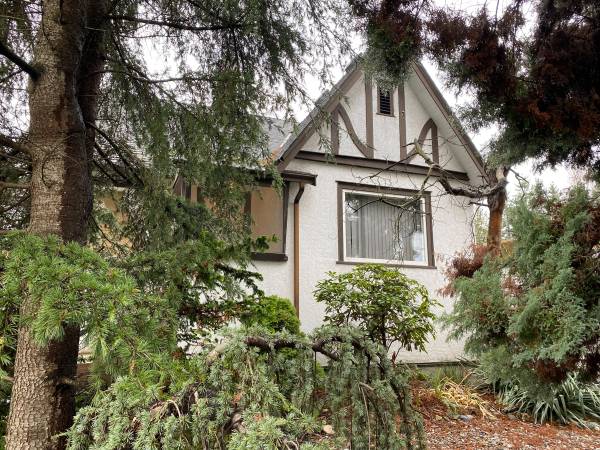


The packet, assembled once, sent as one file
Metro Vancouver listings move in days, and in the bottom half of the market in hours. The applicant who wins is frequently not the strongest; it is the one who answered the ad with everything attached while the others were emailing their old landlord for a reference. Build this once, as a single PDF, and update the bank statement monthly.
| Document | The question it answers | Lead time to get it |
|---|---|---|
| Government photo ID | You are a real person | None |
| Letter of employment on letterhead: role, start date, salary, whether permanent, signed, with a phone number | The rent arrives | Days to weeks, depending on HR |
| Two most recent pay stubs | The letter is true | None |
| Two years of CRA Notices of Assessment, if self-employed or contracting | The income is not a one-off | Immediate through CRA My Account, weeks if you have to request copies |
| Bank statement showing the deposit and first month already sitting there | You can complete | None |
| Your own credit report, bought once and attached | Saves the landlord a step | Same day |
| Two landlord references with a name, a number and the years occupied | You will be got rid of easily if it comes to that | Days — ask now, not when the listing appears |
| Veterinary and licence records, if a pet is coming | The animal is real, vaccinated and somebody else's problem before it was yours | Days |
| A one-page cover sheet | Everything else | An hour |
The cover sheet is the part almost nobody does and it is the cheapest advantage in the process. One page: who is moving, arrival date, the possession date you want, employer and start date in BC, pets, whether you need parking, and a line saying where you are moving from and that you can view by video at any hour. A landlord reading forty replies is looking for a reason to shortlist five; give them the five facts they would otherwise have to ask for.
On references from outside Canada: a BC landlord will phone, and will phone at 10 a.m. Pacific. Put the time zone next to the number and tell your former landlord to expect a call in a stated window, or the reference is a voicemail that never gets returned. How a BC application form is structured is set out in our guide to rental applications in BC.
What a landlord may ask for, and what you can decline
Rental screening in this province is governed by the Personal Information Protection Act rather than the Residential Tenancy Act, and the standard it sets is a reasonableness test rather than a list. Section 11 allows an organisation to collect personal information "only for purposes that a reasonable person would consider appropriate in the circumstances," section 14 repeats the test for use, and section 4 applies it to the Act as a whole. Section 7 is the useful one: an organisation "must not, as a condition of supplying a product or service, require an individual to consent to the collection, use or disclosure of personal information beyond what is necessary to provide the product or service." That gives you a workable position on the four requests that come up most.
Your Social Insurance Number. No statute forbids a landlord asking and none requires you to give it. The bureaus match on name, date of birth and address history, and a credit check runs without it. Decline politely, offer date of birth and address history instead, and if the landlord insists, note that you have declined and give them everything else. A landlord who will not proceed without a SIN is telling you how the rest of the tenancy will run.
A photocopy of your passport or licence. Showing it answers the identity question. Leaving a scan of it in a leasing office's inbox does not, and it is the most valuable thing in the file to whoever eventually breaches that inbox. Show it on video, or send a copy with the number obscured.
Your bank account or card number. Never, at any stage of an application. Pre-authorised debit is set up after you sign, on a form, with a void cheque.
Consent to a credit check. Reasonable, and you should give it — but ask first whether you can supply your own report instead. Buying it once and attaching it means one inquiry rather than one per application, which matters most to the people whose files are thinnest.
If a landlord or agent collects far more than the tenancy needs and will not stop, the complaint route is the Office of the Information and Privacy Commissioner for BC, which oversees PIPA. It is slow and it will not get you the flat. The point of knowing it exists is that you can say so.
Where the Human Rights Code stops the screen
Screening is lawful. Screening on a protected ground is not. Section 10(1) of the Human Rights Code says a person must not deny occupancy, or discriminate on a term or condition of tenancy, because of "the Indigenous identity, race, colour, ancestry, place of origin, religion, marital status, family status, physical or mental disability, sex, sexual orientation, gender identity or expression, age or lawful source of income" of that person or class of persons.
Three of those grounds do most of the work for someone moving here.
Lawful source of income means a landlord cannot refuse you because the money is income assistance, disability assistance, a pension, a student loan or a parental transfer rather than employment. They may still test whether the amount covers the rent. The distinction is between the size of the income and its origin.
Place of origin and ancestry are what a "no newcomers" or "must have Canadian references" rule usually runs into. Requiring references is fine. Requiring Canadian references, when the applicant has offered verifiable references from elsewhere and the landlord will not consider them, is a rule that only ever excludes one group of people.
Age is defined in section 1 of the Code as "an age of 19 years or more," so the Code does not protect a seventeen-year-old applicant, and family status covers households with children. Section 10(2)'s exceptions are narrow: shared sleeping, bathroom or cooking facilities with the person offering the space; premises reserved for people 55 and over or another prescribed class; and premises offered exclusively to people with disabilities. "Adults only" is not among them, and a strata bylaw does not create an exemption the Code does not give.
A complaint to the BC Human Rights Tribunal must generally be filed within one year of the conduct complained of. The practical difficulty is proof, and the practical answer is boring: keep the advertisement, keep the messages, and write down what was said on the phone the same day. Our guide to what a landlord cannot do in BC covers the conduct side of the same rules once a tenancy is running.
The money asked for before you sign is where the rules are hardest
This is the point at which an out-of-province applicant is most likely to be separated from real money, partly by fraud and partly by landlords repeating rules from other provinces. BC's rules are short.
| What you are asked for | Lawful? | Authority |
|---|---|---|
| Security deposit, up to half of one month's rent, on entering the agreement | Yes | s. 19(1), s. 20(a) |
| Pet damage deposit, up to a further half month, one per agreement regardless of the number of pets | Yes, where pets are agreed | s. 19(1), s. 20(d) |
| Both deposits together above one month's rent | No | s. 19(1) |
| A "holding deposit" to take the unit off the market before there is an agreement | Not a category the Act contains; a deposit accepted outside the moment of entering the agreement offends s. 20(a) | s. 20 |
| A non-refundable application or processing fee | No — the permitted non-refundable fees are a closed list and this is not on it | s. 7, Residential Tenancy Regulation |
| Direct cost of keys or extra access devices | Yes | s. 7(1)(a), s. 7(1)(b) |
| A move-in or move-out fee charged to the landlord by a strata corporation | Yes | s. 7(1)(f) |
| "First and last month's rent" | No. BC has no last-month's-rent deposit | s. 19(1) |
Rent genuinely paid in advance is a different thing from a deposit, and one of the few real substitutes for a credit score — but only if the tenancy agreement names the months the money pays for. Money handed over with no months attached is a deposit by another name, section 19(1) caps it at half a month, and section 19(2) lets you deduct the overpayment from rent. Offer three or six months of named rent in writing, or do not offer it at all. On the $2,377 asking rent, the lawful maximum leaving your account in the week you sign is $2,377 in rent plus $1,188.50 in security deposit — $3,565.50, or $4,754 with a pet deposit. The rules on getting it back are in our guide to damage deposits in BC.
The other substitute is a guarantor, and BC has no statutory guarantor regime, so the wording decides everything. A guarantor who signs the tenancy agreement as a tenant is a tenant: liable for the whole rent, named on the deposit, inside the Residential Tenancy Branch's jurisdiction. Someone who signs a separate guarantee without becoming a tenant has made an ordinary contract, enforceable in the Civil Resolution Tribunal or Provincial Court rather than at the RTB. Landlords know which they prefer. If a parent is guaranteeing, expect to be asked for their income documents too, and scan them in this window rather than the week you apply.
The scams are built for people who are not here yet
The whole point of a rental fraud is that the target cannot walk to the address, which describes you exactly for the next two months. Four shapes cover almost all of it.
The cloned listing. Real photographs lifted from a sold listing or a legitimate ad, a real building, a rent about 20% below anything comparable, and a contact who is not the owner. Reverse image search two or three photographs before replying to anything priced below the market.
The landlord who is out of the country. A missionary, an oil worker, a doctor on assignment, who will courier the keys once the deposit clears. There are no keys. Nobody legitimate rents a Metro Vancouver flat to a stranger without either a viewing or a video call in which they are visibly in the unit.
Money before an agreement. A deposit demanded to "hold" a unit you have not seen and have not signed for is unlawful even when the person is real, because section 20(a) only permits a security deposit at the point the agreement is entered into. If the sequence is money first and paperwork later, the sequence is wrong regardless of who is asking.
The verification page. A link asking you to run a "free tenant credit check" or upload identity documents to a site you have never heard of. It harvests exactly the documents this part told you to assemble.
Two habits cover the rest. Pay nothing by e-transfer, cryptocurrency or gift card, because none of them reverses. And verify ownership before any money moves — a title search through the Land Title and Survey Authority's myLTSA service returns the registered owner's name for a few dollars, and if the name on title is not the name on the agreement you want a coherent answer about a property manager you can look up in the BC corporate registry. The mechanics, and what to do if money has already gone, are in our guide to rental scams in Vancouver.
Where you should be on day 31
Documents scanned into one PDF with a cover sheet, references warned and time-zoned, your own credit report bought and attached, both bureaus holding your correct address if you already have a Canadian file, a bank account open, and the deposit money somewhere it can move in twenty-four hours. Three areas shortlisted, with alerts running on all three so that you are reading the market for four weeks before you have to act in it.
What you should not have by day 31 is a signed tenancy agreement for a flat nobody in your household has seen. A BC agreement binds you from the day it is entered into rather than the day you arrive, so a remote signature is not a placeholder. If the calendar is tight, the safer commitment is a month in a room or a furnished unit while you view properly, and renting a room in Vancouver sets out what that costs and where the Act does and does not cover you.
Days 30 to 1: viewing, applying and signing from another province
The first sixty days were spent on things nobody could take from you — an account, a file, a shortlist. The last thirty are spent competing, on a schedule set by other people's notice periods, for units that appear and disappear inside a week. Two of the decisions in this part are irreversible: signing a tenancy agreement binds you from the moment it is signed, and the move-in condition inspection happens once, on a unit you have never physically stood in, and decides who pays for every mark on the walls for the rest of the tenancy. Everything else is recoverable from.
The supply wave described earlier, in operational terms: for a 1 October move-in the useful listings appear roughly 1 to 12 September, and what is still advertised on the 22nd is either overpriced, poorly presented, or has something wrong with it that three sets of viewers already found. That compresses the decision window to between forty-eight hours and a week per unit, and to the same day in September, because a landlord with eleven enquiries does not wait for the applicant who needs to sleep on it.
So the sequence for the final month is: watch listings daily rather than in bursts, request a viewing within an hour of one appearing, hold a live video call the same evening, submit a complete file immediately after it, and move money the next morning. Any one of those five links being slow costs you the unit. Assume you will look at fifteen to twenty-five listings seriously, video-view six to ten, apply on three to five, and be refused on at least one for reasons nobody explains — three to four weeks of active searching, not one.
Viewing a flat you cannot stand in
A pre-recorded tour is marketing. Insist on a live video call made by a person standing in the unit, and treat a refusal as information: someone who will not walk a unit on camera in real time either does not have keys to it or does not want you controlling the camera.
On the call you are directing, not watching. Ask for these, in this order, and stay on each long enough to see it:
- Run the kitchen tap and the shower at the same time. Pressure collapse in an older wood-frame building is common, permanent and invisible in photographs.
- Open the electrical panel. Breakers are normal. Screw-in fuses mean wiring that predates about 1960 and has probably not been fully updated, which shows up later as a tenant-insurance question and a limit on what you can run at once.
- Show the heat source and the thermostat. Electric baseboards with individual thermostats mean heat is on your bill. A radiator or wall convector with no thermostat means one building boiler and heat almost certainly inside the rent. That single answer can be worth more than $50 a month in a Vancouver January, and it belongs in the agreement rather than in a conversation.
- Open every window, then hold the camera at the frame. You are looking for single glazing, black staining at the sill and rubber seals gone hard. You are also listening: aircraft over west Richmond and Marpole, arterial traffic on Kingsway, Hastings and No. 3 Road, and SkyTrain guideway noise are all real and none appear in a listing.
- Point the camera at the ceiling in every room, especially in a ground-floor or basement unit. Brown haloes around a light fitting are a leak that was painted over.
- Show the bathroom fan running, and hold a tissue to it. No extraction in a bathroom without an opening window is how a suite grows mould in its first winter.
- Show the laundry, the parking stall, the storage locker, the bike room and the mailbox — the actual ones you would use, with the walk between them, not the amenity photos.
- Walk from the unit door to the building's front door, then to the nearest stop or station, without stopping the video. This is the fact listings distort most. "Steps from SkyTrain" is a nine-minute walk more often than not, and a nine-minute walk twice a day is 6.5 hours a month.
Then ask for a second short call after dark on a weekday, because street lighting, how the parking area feels at 9 p.m., whether the neighbours' televisions come through the wall and whether the front door latches are all evening facts.
One legal check while you are booking viewings. If the unit is still occupied, the landlord needs the current tenant's agreement or written notice of at least 24 hours under s. 29, stating the purpose and a time between 8 a.m. and 9 p.m. A "landlord" offering to show you an occupied suite in the next hour is either not following the Act or not the landlord.
Sending someone in your place
A camera cannot smell a suite, feel how cold the floor is, or tell you the lobby is a shortcut for people who do not live in the building. If you can get a human being into the unit, do: a friend or relative who already rents here, a colleague at your new employer, a paid rental viewing service, or a licensed home inspector. Brief them in writing with no more than ten items, because a proxy asked for an overall impression brings back an overall impression. Give them the list above and add the three things a camera cannot carry — damp or painted-over cigarette smoke, sound from the corridor, lift shaft, parkade gate or the unit above, and the walking time to the station timed on a phone.
One-bedrooms in Surrey to shortlist for a video viewing
273 matches as we last checked, confirmed today. This block is rebuilt from the live feed, so it is never the list that was here when the article was written.


What you can lawfully be asked to pay before the keys
The deposit ceilings are set out above. Two further rules govern money at the moment of application, and both are broken often enough here that a newcomer should know them cold.
Nothing may be charged for the application itself. Section 15 says a landlord must not charge a person anything for accepting an application for a tenancy, processing it, investigating the applicant's suitability as a tenant, or accepting the person as a tenant. Credit-check fees, "administration fees", viewing fees and application fees are all unlawful in British Columbia regardless of what the listing says.
A deposit may only be taken at the moment the agreement is entered into. Section 20(a) prohibits requiring or accepting a security deposit at any time other than when the landlord and tenant enter into the tenancy agreement. There is no such thing in BC law as a lawful holding deposit or a payment to take the unit off the market. If someone wants money before there is a signed agreement, the answer is that you will sign first and pay on signature, in the same hour if they like.
The operational problem for a newcomer is not willingness to pay, it is transfer limits. Interac e-Transfer ceilings are set by your bank rather than by Interac, and accounts opened in the previous few weeks commonly carry lower per-transaction, daily and weekly limits than established ones. Ask your bank in writing for all three numbers on your specific account and compare them against first month's rent plus both deposits, which in this region routinely means $3,500 to $6,000 leaving in a single day. If the limits do not clear it, a certified cheque or bank draft does, for a small fee and one branch visit — and a draft is also what a cautious landlord prefers from someone with no local history. If you pay any part in cash, s. 26 requires a receipt.
Signing does not require you to be in the province. BC's Electronic Transactions Act treats an electronic signature as satisfying a signature requirement, and the Residential Tenancy Branch's standard agreement is routinely signed that way. What you should not accept is a scanned photograph of a signature page with no copy of the full agreement attached.
The ten lines that decide the next year
Read the whole agreement, but read these parts twice, because they are the ones that are wrong or missing most often.
Section 13 requires the agreement to be in writing and to state specific things. A gap in this list is not a formality; it is the thing you will have no evidence about in eighteen months.
| The agreement must state | Why it decides money later | Source |
|---|---|---|
| Legal names of landlord and tenant | You cannot file at the RTB against "the property manager" | s. 13(2), RTA |
| Address of the rental unit | Fixes which unit, locker and stall you rented | s. 13(2), RTA |
| Date the agreement is entered into | Starts your obligations under s. 16 | s. 13(2), RTA |
| Landlord's address for service | Where a forwarding address and any notice must go | s. 13(2), RTA |
| Date the tenancy starts | Not the same as the day you get keys unless it says so | s. 13(2), RTA |
| Whether periodic or fixed, and the end date if fixed | Decides whether you can give notice at all | s. 13(2), RTA |
| Rent, and the day of the month it is payable | Sets the s. 45(1) notice date for the whole tenancy | s. 13(2), RTA |
| Services and facilities included in the rent | Heat, hot water, parking, locker, internet, laundry | s. 13(2), RTA |
| Amount of any security and pet damage deposit, and date paid | The half-month caps are measured against this rent | s. 13(2), RTA |
| Landlord must give the tenant a copy | Within 21 days of entering into the agreement | s. 13(3), RTA |
Four further points, all of which cost newcomers money in this region.
The standard terms are in your agreement whether or not they are printed in it. Section 12 makes them terms of every tenancy agreement, and s. 5 says landlords and tenants may not avoid or contract out of the Act. A clause purporting to remove one is of no effect, and s. 6(3) makes a term unenforceable if it is inconsistent with the Act, unconscionable, or not expressed in a way that clearly communicates the rights and obligations under it. You do not have to argue a bad clause out of the document before signing, but you do need to know which ones are already dead, and our plain-English walk through a BC tenancy agreement sets out the ones that show up most. A verbal side deal about parking or storage is not a term of the tenancy; anything added has to be in writing and initialled.
You are the tenant from the signing date, not the arrival date. Section 16 says the rights and obligations of a landlord and tenant take effect from the date the agreement is entered into, whether or not the tenant ever occupies the unit. Sign on 12 August for a 1 September start and your rent obligation runs from 1 September regardless of a cancelled flight, a delayed container or a change of mind.
A fixed term does not end your tenancy, and the landlord usually cannot make it. Under s. 44, when a fixed term ends without a new agreement the parties are deemed to have renewed as a month-to-month tenancy on the same terms. A clause requiring you to move out at the end of the term is valid only in the circumstances prescribed by s. 13.1 of the Regulation — essentially where the landlord is an individual who, or whose close family member, will occupy the unit, and then only where that occupancy lasts at least six months. A leasing agent explaining that rent will be "renegotiated at renewal" is describing something you can decline.
The fixed term binds you, though. A twelve-month term cannot be ended early by a s. 45(1) notice. If your job falls through in month four, your routes out are assignment or sublet with the landlord's consent, or a mutual agreement to end the tenancy. A newcomer with any uncertainty about the job or the neighbourhood should push for month-to-month, and should treat a lower rent offered in exchange for a fixed term as the priced trade it is.
One last clause to check: parking, the storage locker and laundry. Listed as included, they are protected by s. 27, which the utilities section explains. Not listed, they can be withdrawn or repriced and you have no argument.
What has to exist before you get keys
Three things are commonly demanded at or before key handover, and all three take longer than a day.
Proof of tenant insurance. No statute requires it, but a great many Metro Vancouver leases do, and the certificate naming the landlord as an interested party is what the leasing office wants. Arrange it as soon as you have an address and a start date; what it should cover is set out at the end of this guide.
A booked move-in slot. In a strata building the loading bay, the lift and the move-in window are controlled by the strata rather than the landlord, and are commonly restricted to weekday daytime hours with the lift padded and reserved in advance. Ask the day you sign, not the week you arrive. Strata move-in fees are real and are one of the few charges a landlord may lawfully pass to you under s. 7(1)(f) of the Residential Tenancy Regulation — but there is no statutory dollar cap on them. Section 6.9 of the Strata Property Regulation requires only that a user fee be reasonable, and permits "a fixed amount or an amount determined on a reasonable basis" set out in a bylaw or ratified rule. Anyone quoting you a fixed legal maximum is quoting something that does not exist; ask for the bylaw and the number in it.
Somewhere to sleep if the dates do not meet. Possession dates in this region cluster on the 1st and the 15th, and flights and containers do not. If there is a gap, book it before you land and check the municipality first: Richmond and New Westminster do not permit entire-home short-term rentals at all, so a listing there is not a lawful option however it is advertised. The municipality-by-municipality position on furnished and short-term rentals is worth ten minutes before you book anything.
The inspection is the most valuable hour of the tenancy
You have rented a unit you have never stood in. Every scuff, burn, chip and stain in it right now is either recorded on a form or treated as yours.
Section 23 requires the landlord and tenant to inspect the unit together on the day you are entitled to possession or another mutually agreed day, and requires the landlord to offer at least two opportunities to do it — the second in the form approved under s. 17 of the Regulation, not by text message. Both parties sign, and s. 18 gives the landlord seven days to hand you a copy.
| Step | Deadline | Consequence of missing it | Source |
|---|---|---|---|
| Joint inspection at move-in | Day of possession, or a mutually agreed day | Neither side has a baseline | s. 23, RTA |
| Landlord offers a second opportunity, in the approved form | Before completing the report alone | Landlord's right to claim against the deposit for damage is extinguished | s. 24(2), RTA; s. 17, RTR |
| Tenant attends one of the two | — | Tenant's right to the deposit is extinguished if both are missed | s. 24(1), RTA |
| Landlord gives tenant a signed copy | Within 7 days of the inspection being completed | Landlord's right to claim for damage is extinguished | s. 18, RTR |
Four practical rules for the hour itself.
Do the inspection before the truck is unloaded. Boxes against a wall are boxes over a hole in the wall, a furnished unit hides the scuffed baseboard behind the couch, and you will not get a second baseline.
Write on the form. The report has space for the tenant to record disagreement with the landlord's assessment, and a signature under a column of "good" ratings is worth nothing to you later. Describe the mark, the room and the size of it in plain words. Our guide to filling in a condition inspection report so it protects you goes room by room.
Photograph everything the same day, timestamp intact, and email the photographs to yourself and to the landlord so there is a dated record outside your phone. Include the inside of the oven and fridge, the underside of the sinks, the window seals, the floor at the entry, the bathroom grout and the carpet.
Ask for the locks to be rekeyed, in writing, at the inspection. Section 25 says that at the request of a tenant at the start of a new tenancy the landlord must rekey or otherwise alter the locks so the previous tenant's keys no longer work, and must pay all the costs. Almost no one asks. It takes one sentence.
Then count the keys and access devices you were given and write the number on the report, because replacing them is one of the few charges the Regulation lets a landlord bill you for at the end.
Day zero starts clocks you did not set
Two things about arrival week catch people who otherwise planned well. The longest wait in the whole move — health coverage — is counted from the day you establish residence rather than the day you file, so filing late costs you nothing and filing early buys you nothing but a card in your hand. Almost everything else is counted from the day you move, and those deadlines are short.
| Clock | Starts on | Runs for | Source |
|---|---|---|---|
| MSP coverage wait | The day you establish residence in BC | The balance of that month, plus two full months | Health Insurance BC, coverage wait period |
| Driving on an out-of-province licence | The day you become a BC resident | 90 days | ICBC, moving to B.C. |
| Telling ICBC your new address | The day you move | 10 days | ICBC |
| Your copy of the tenancy agreement | The day it is entered into | 21 days | RTA s. 13(3) |
| Your copy of the move-in inspection report | The day of the inspection | 7 days | Residential Tenancy Regulation s. 18 |
| Deposit returned, or a claim filed against it | The later of the tenancy ending and your written forwarding address | 15 days | RTA s. 38(1) |
The MSP row is the exception flagged back in the calendar section. Arrive on 30 September and coverage begins 1 December; arrive on 1 October, one day later, and it begins 1 January. Landing in the last week of a month rather than the first week of the next moves your coverage start a full month earlier for free, and nobody at either end of the move will point this out to you.
Getting the keys: one o'clock, and the two pieces of paper
Your right to possession is the start date written into the agreement, but the outgoing tenant has until 1 p.m. on the day their tenancy ends under s. 37(1) unless the parties agree otherwise. If your dates butt up against each other, one o'clock is the earliest realistic handover, and in a strata building the lift booking decides the rest.
Then do the inspection before a single box crosses the threshold, on the terms set out above. If the signed copy does not arrive inside seven days, ask in writing — the unanswered request is the evidence, and a landlord who never gives you that copy has extinguished their own right to claim against your deposit for damage under s. 24(2)(c). The second piece of paper is the agreement itself, which s. 13(3) gives the landlord 21 days to hand you; chase it on day 22 rather than in month six, and read it against the copy you signed.
One thing to collect on the first day and put in your phone: the emergency repair contact. Section 33 lets you arrange an emergency repair yourself and bill it back, but only after at least two attempts to telephone the number the landlord designated for emergencies, and only against a written account and receipts. If no number was designated, get one in writing at 4 p.m. on a Tuesday rather than at 2 a.m. with water coming through a light fitting.
Arrival week, in the order that works
Seven days is enough for all of this if you know the order, and a month if you do not, because three of these appointments are inputs to each other.
- Finish the bank identity check at a branch, with original documents, on day one or two. Everything financial is downstream of it, including the pre-authorised debit form your landlord wants.
- Apply for a Social Insurance Number if you do not have one. Service Canada issues it online, by mail or in person, and you need it before your employer's first payroll run rather than before your first day.
- Apply for MSP the day you arrive, because the wait period runs from residency rather than from the application.
- Book the ICBC driver licensing appointment, which is also the appointment that produces the photo BC Services Card. Book it in week one even if the licence exchange is not urgent, because the queue is.
- Open the BC Hydro account a few business days before the tenancy starts, not on the morning of it.
- Buy a Compass Card and a mobile phone plan. The phone account is usually a newcomer's first Canadian tradeline, so the sooner it exists the sooner the credit file does.
- Change your address everywhere — the Canada Revenue Agency, your bank, the province you left, any professional body, and Canada Post mail forwarding for the six months of post that will keep arriving at an address you no longer control.
The utilities that are actually in your name
Water, sewer and garbage are billed to the property owner by the municipality across Metro Vancouver, so a renter almost never sees them. Electricity usually is yours. Gas depends on the building.
BC Hydro wants the service address, the exact move-in date and identification, and a few business days' notice, because a transfer scheduled for the day you arrive can slip. A customer with no Canadian credit file may be asked for a security deposit under BC Hydro's BCUC-approved Electric Tariff; the amount is set against your estimated consumption rather than being a flat figure, so ask when you open the account instead of budgeting a guess. In a rented house or townhouse with a gas furnace, FortisBC is a second account and a second deposit conversation.
What the bill looks like depends on the building's age more than on your habits. In older purpose-built stock — and in the West End, 98% of purpose-built rental units were built before 1980 — one boiler heats the whole building, the suites were never individually metered, and heat and hot water sit inside the rent, so your hydro account covers lights, plugs and a stove. A 2019 concrete tower with baseboards or a heat pump in the suite bills the heating to you, and the January bill is where the difference shows up. The figure to check in the agreement is not the rent, it is the list of included services, because that list is an agreed term.
That term has teeth. Section 27 bars a landlord from terminating or restricting a service or facility essential to the tenant's use of the unit as living accommodation, or one that is a material term of the agreement. For anything else the landlord must give 30 days' written notice in the approved form and reduce the rent by an amount equivalent to the reduction in value. A building manager announcing that parking is now $75 a month has changed a term, not set a price.
MSP: the balance of the month, plus two more
Enrolment is free. BC eliminated MSP premiums on 1 January 2020, so there is no monthly bill and no reason to delay. Apply as soon as you arrive, online, by mail on the Application for Health and Drug Coverage, or in person at a Service BC office.
| Date you establish residence | Coverage begins | Months uncovered |
|---|---|---|
| 2 September 2026 | 1 December 2026 | Just under 3 |
| 30 September 2026 | 1 December 2026 | 2 |
| 1 October 2026 | 1 January 2027 | 3 |
| 15 January 2027 | 1 April 2027 | Just over 2 |
Source: Health Insurance BC, coverage wait period, as at 11 August 2026.
Eligibility has three parts: you are a Canadian citizen or lawfully admitted for permanent residence, you make your home in BC, and you are physically present in the province at least six months in a calendar year. Holders of study or work permits valid for six months or more may be treated as residents, which covers most people on a working holiday or a post-graduation work permit. Each family member has an individual wait period counted from their own arrival date, so a household arriving in two waves has two coverage start dates.
Cover the gap. Moving from another Canadian province, your outgoing plan generally keeps covering you through the wait period — confirm the end date in writing before you cancel anything, and note that Quebec does not participate in the reciprocal billing arrangement, so a RAMQ holder pays a BC doctor and claims it back rather than showing a card. Arriving from outside Canada there is no outgoing plan, and private coverage for the wait period is the only thing standing between you and a private bill for an emergency department visit. Buy it before you fly; it is cheaper as travel-and-relocation cover than as a domestic policy bought on day three. Most adults then finish enrolment at the ICBC counter described below, which is where the Personal Health Number is issued.
Two-bedrooms in Richmond on the Canada Line
3 matches as we last checked, confirmed today. This block is rebuilt from the live feed, so it is never the list that was here when the article was written.


The BC Services Card is the document everything else asks for
The photo BC Services Card is the province's general identity document as well as the carrier of your health number, and the appointment that produces it is the same appointment that produces a driver's licence. If you drive, ask for the combined card — one piece of plastic that is both. If you do not drive, ask for the standalone photo card. Under-19s and people on temporary immigration documents are generally issued a non-photo card by post instead.
The card is also a login: BC Services Card Login reaches a My Health record, ICBC services and a growing list of provincial systems, so set up the mobile card while you are at the counter. Bring more identification than you think you need, and put your lease in the folder — it is useful evidence of residency even when it is not the document being asked for.
Ninety days to change the licence, ten days to change the address
You may drive on a valid out-of-province or out-of-country licence for 90 days after moving to BC. After that you need a BC licence, and the route depends on where yours came from.
From another Canadian province or territory, it is a straight exchange: no knowledge test, no road test, and you surrender the old licence, because you cannot hold two. The same applies to a list of jurisdictions BC has reciprocal agreements with, which has long included the United States, the United Kingdom, Ireland, Germany, Austria, Switzerland, France, the Netherlands, Australia, New Zealand, Japan, South Korea and Taiwan — check ICBC's current list rather than this one, because it is amended from time to time. From anywhere else you take a knowledge test and a road test. Book the road test the week you arrive rather than in week eleven: Lower Mainland offices run the longest waits in the province, and the ninety days do not pause because the calendar is full.
Separately, and more urgently, ICBC wants your new address within 10 days of moving. This is not administrative tidiness — your policy is rated on where the vehicle is kept, and an address ICBC does not have is a coverage argument you do not want to have after a collision. Bring the letter of experience you asked your old insurer for back at day 90; without it, your claims-free years are a claim you cannot evidence.
Transit before you decide about a car
A Compass Card costs a $6 refundable deposit at a vending machine, a retailer or the customer service centre at Waterfront, and it is also how you pay for the SeaBus and the West Coast Express.
| Fare, adult | 1 zone | 2 zones | 3 zones | Source |
|---|---|---|---|---|
| Stored value | $2.85 | $4.20 | $5.40 | TransLink, effective 1 July 2026 |
| Monthly pass | $117.20 | $156.70 | $211.65 | TransLink, 1 July 2026 |
| DayPass | $12.55, all zones | TransLink, 1 July 2026 |
Do not buy a monthly pass in your first month. The one-zone pass is worth about 41 stored-value taps, which at two taps a working day is roughly 21 days in an office — a full five-day week is 21.7 — so at four days a week stored value wins in every zone. Two rules also cut the cost of a distant address: every bus trip is a one-zone fare regardless of distance, and every trip starting after 6:30 p.m. on a weekday or at any hour at the weekend is charged as one zone. Zones only bite on weekday-daytime SkyTrain, SeaBus and West Coast Express travel, which is why a Coquitlam or North Vancouver address costs a two-zone fare on a commute and nothing extra on a Saturday.
Give it a month before committing to a car. Insurance, a parking stall that may or may not be included in your rent, and the ninety-day licence clock all argue for deciding in November.
Tenant insurance, in the first fortnight
No BC statute requires it. The Act does not mention it, and the province's standard form, RTB-1, has no insurance clause anywhere in its six pages. What binds you is an added term in your own agreement, and the RTB lists tenant's insurance requirements as an example of a term a landlord may add. Read your clause: it usually specifies a liability limit, most often $1 million, and requires proof on request.
Buy it anyway. The contents portion is the small half of the policy. The liability portion is not: leave a pan on the element in a mid-rise and the building's insurer repairs the building, then looks for someone to recover from, and your landlord's policy specifically excludes a tenant's property and a tenant's liability. Advertised entry premiums start around $15 a month as of August 2026, and a realistic figure for a one-bedroom with $1 million liability and replacement-cost contents is high teens to low thirties monthly — roughly one per cent of the $2,364 average two-bedroom rent. The third piece, additional living expenses, pays for somewhere to stay when the unit becomes unliveable. The coverage details are in tenant insurance in BC.
The thirty-day review of the place itself
Month one is when the unit stops being a viewing and starts being a building. Section 32 puts the obligation to maintain the property in a state of decoration and repair that complies with the health, safety and housing standards required by law on the landlord, whether or not you knew about the defect when you signed and whether or not the rent is cheap. Section 28 gives you reasonable privacy, freedom from unreasonable disturbance and exclusive possession, subject only to the landlord's right of entry under s. 29.
Put every repair request in writing from the first one, even the trivial ones. Text and email both work and both carry a date. A polite paper trail costs nothing while things are going well, and it is the entire case if they stop.
One last thing, because newcomers who read the strata move-in fee rules earlier draw the wrong conclusion from them. Regulation s. 7 is a closed list. A strata move-in fee is on it. Cleaning fees, pet rent, application fees, "key money" beyond the direct cost of the keys and monthly administration charges are not on it at all, and a clause in your lease does not put them there.
What the next ninety days are for
The rental file you will need for your second BC tenancy is being built right now, and none of it happens by default. Rent paid on time does not appear on an Equifax or TransUnion file unless something is deliberately reporting it. A secured credit card opened in your first month, used lightly and paid in full, produces a Canadian credit history around the six-month mark — which is exactly when a twelve-month lease signed in September starts thinking about next September. Nothing else you do in year one improves your next application as much for as little money. The other thing to diarise is the rent increase: it has to be served three full months in advance on the approved form and is limited to the annual cap, so the notice that arrives in your first winter is a document to check rather than a bill to pay.
The honest part
Ninety days does not make Metro Vancouver cheaper. It changes which version of the market you meet. The renter who started in month three lands with a bank account that can move a deposit the same day, a file a landlord can verify without a BC credit score, a place booked in a month they chose rather than the month that chose them, and health coverage starting on the first of the month rather than the first of the month after. The renter who starts in week two meets exactly the same listings with none of that, and the difference shows up as a worse unit at the same price.
Two things here cannot be compressed by any amount of organisation: the MSP wait, which is a statutory count from your arrival date, and a Canadian credit file, which needs six months of history and cannot be bought. Everything else can be pulled forward, which is the whole argument for ordering a move by what is possible when rather than by what feels urgent. And the part no plan fixes: if your budget puts you at the bottom of this market you are searching the 1.1% quartile rather than the 3.7% headline, and ninety days buy you readiness rather than choice. Readiness is still worth having — it is what lets you say yes within an hour of a viewing, which in a one per cent market is the only thing that has ever worked.
Nothing here is legal advice. The Residential Tenancy Branch takes calls at 1-800-665-8779, or 604-660-1020 in the Lower Mainland, and Health Insurance BC answers MSP questions through the provincial MSP pages.
Keep reading
The rest of what we have written about renting here.
Renting in Vancouver
Pet-Friendly Rentals in Metro Vancouver
BC gives a tenant no right to keep a pet, and most apartments here sit under a strata bylaw as well as a lease. Where the one-yes stock is, and what it costs.
Renting in Vancouver
Renting a House, Suite or Townhouse in Metro Vancouver
Four kinds of house-form rental in Metro Vancouver: how rent, utilities, repairs and eviction risk differ between a house, a suite, a laneway and a townhouse.
Renting in Vancouver
Every SkyTrain Station, With the Rent and the Fare Zone
All 54 SkyTrain stations with the fare zone, the CMHC rent average and the ride to Waterfront, plus what the monthly pass really costs a renter.
Tenancy law
Subletting and Assignment in BC: What Section 34 Requires
A sublet keeps your tenancy, an assignment ends it. Section 34 rules on written consent, unreasonable refusal, liability and sublet scams in BC.
Money
Tenant Insurance in BC: What It Costs and Whether You Need It
No BC law makes tenant insurance mandatory, but your tenancy agreement can. What it costs in Metro Vancouver, what liability covers, and what it excludes.
How to rent
UBC Sublets: When They Appear, Where to Find One, and What Is Real
UBC's Winter Session contract is eight months, most leases are twelve. When UBC sublets appear, why campus sublets are summer-only now, and how to check one.