Renting in Vancouver
Furnished, Short-Term and Month-to-Month Rentals in Metro Vancouver
Ninety days puts your stay outside BC's short-term rental law, 27 days ends the accommodation tax and one month ends the GST. What each threshold costs you.
Updated 2026-08-11 · 53 min read
A booking of 90 consecutive days or more is not a short-term rental in British Columbia. It falls outside the Short-Term Rental Accommodations Act entirely — no registry number, no principal-residence limit, no municipal short-term rental licence. Two smaller thresholds sit underneath it: at 27 days the provincial accommodation taxes come off the bill, and at one month the GST does. Those three numbers set the price of a temporary place to live in Metro Vancouver more than neighbourhood, season or furniture ever will.
Furnished stock is one of several quite different things a rental here can be — the tenure guide sets the rest against it — and the ninety days it buys you are usually the opening move of a longer arrival plan. The person reading this usually has a fixed problem: they arrive in six weeks, they need somewhere for roughly ninety days, and they cannot sign a twelve-month unfurnished lease from another country or another province. Metro Vancouver serves that badly. The long-term market wants a year and a bed you supply yourself. The nightly market is priced for tourists and was rewritten by the province in 2024. What is left between them is a thin band of four genuinely different products that all get advertised under the same words, and a set of tax and licensing lines that decide which one you can afford.
Rules, rates and rents below are as they stood on 11 August 2026, each attributed.
The three numbers that decide what a short stay costs
| Threshold | What it changes | Source |
|---|---|---|
| Billed for a continuous period of 27 days or more to the same person | No 8% PST on accommodation, and no MRDT — up to 3%, plus Vancouver's 2.5% Major Events levy | Bulletin PST 120; B.C. PST — Accommodation |
| One month of continuous occupancy by the same individual | The supply becomes GST-exempt residential rent; 5% comes off | Excise Tax Act, Schedule V, Part I, s. 6(a) |
| 90 consecutive days per booking | Falls outside the definition of a "short-term rental accommodation service", so the whole provincial regime stops applying | Short-Term Rental Accommodations Act, SBC 2023, c. 32, s. 1 |
| A strata bylaw limiting short-term accommodation | Can block a nightly or weekly stay, with fines to $1,000 a day; cannot restrict the rental of a strata lot generally | Strata Property Act, s. 141; Strata Property Regulation, s. 7.1 |
Take the tax lines together. A nightly stay in the City of Vancouver carries 8% PST, 3% MRDT and the 2.5% Major Events MRDT that runs from 1 February 2023 to 31 January 2030, plus 5% GST — 18.5% on top of the advertised rate. Cross 27 days and 13.5 points of that vanish. Cross a month and the rest goes. Nobody at the front desk volunteers this, and the full arithmetic, with a worked example at three different lengths, is set out further down in the section on the tax cliff.
The 27-day rule turns on the billing period, not on how long you happen to stay. If you book three weeks and then extend past 27 days, the operator does not have to hand the tax back; the province's guidance is that you may be entitled to a refund but you have to apply for it yourself. Book the 28 nights in one arrangement and the question never arises. Ask, in writing, before paying a deposit: is this quoted as a single billing period of 27 days or more? A serviced-apartment operator will know exactly what you mean. A host on a nightly platform frequently will not.
The GST line needs the calendar watched. "At least one month" of continuous occupancy is a month, not 28 days — so a 28-night stay clears the PST threshold and misses the GST one in every month except February. Twenty-eight nights is also the point at which several booking platforms switch a reservation to their own long-stay terms, which is a platform policy and has nothing to do with either tax.
The strata line catches people who assume a condo is a condo. Since 24 November 2022, when Bill 44 received royal assent, a strata corporation may not restrict the rental of a strata lot: section 141 of the Strata Property Act now reads that the corporation must not screen tenants, establish screening criteria, require approval of tenants, require terms in tenancy agreements "or otherwise restrict the rental of a strata lot." Rental-restriction bylaws that survived on paper are unenforceable. What stratas kept is the power to limit or ban short-term accommodation by a 3/4 vote, with fines up to $1,000 per contravention, imposed daily, under section 7.1 of the Strata Property Regulation. So in a building with a strict short-term accommodation bylaw, a four-night stay can be prohibited and a four-month tenancy cannot. The bylaw is the reason a downtown tower will rent you a furnished unit for a semester but not for a fortnight.
Ninety days is the one that reorganises the whole market, and it is worth understanding on its own before anything else.
The ninety-day line, and why it moved under your feet
Section 1 of the Short-Term Rental Accommodations Act defines a "short-term rental accommodation service" as the service of accommodation in the property of a property host, in exchange for a fee, provided to members of the public "for a period of time of less than 90 consecutive days." Less than 90 days and you are booking a regulated short-term rental. Ninety days or more and the Act does not apply to your stay at all — no registration number, no host business licence, no principal-residence test.
Until October 2024 Vancouver drew that line at 30 days. The city then amended its licence bylaw to adopt the provincial definition. The consequence is the single most under-reported change in this market: a 60-day furnished stay in Vancouver, which two years ago was an ordinary furnished let that needed no special permission from anybody, is now a short-term rental. It requires a host who lives in the unit, a City of Vancouver short-term rental business licence, and a provincial registration number displayed in the advertisement.
| Length of your stay | What it is in Vancouver | What the host needs |
|---|---|---|
| 1–29 nights | Short-term rental | Provincial registration + city STR licence + principal residence |
| 30–89 nights | Short-term rental (since Oct 2024; formerly an ordinary furnished let) | Same as above |
| 90 nights or more | Outside the Short-Term Rental Accommodations Act | Ordinary long-term rental rules |
| 90 nights or more, furnished, purpose-built or condo | Outside the Act | Ordinary long-term rental rules |
Read the table as a shopping instruction rather than a legal curiosity. If you are arriving in six weeks and need somewhere for roughly three months, the difference between asking for 85 days and asking for 92 days is the difference between competing for a handful of licensed principal-residence listings at nightly pricing and competing in the ordinary furnished rental market. That is not a marginal difference in supply. It is one market that shrank by design in 2024 and another that did not.
There is a second reason to cross the line deliberately, and it has nothing to do with supply. A stay of 90 days or more is normally a tenancy, with a tenancy agreement behind it, and the terms of that agreement are worth more to a newcomer than a cleaning service. A booking confirmation is not a tenancy agreement and does not behave like one. Which of the two you are signing is a question with a real answer, and it is worked through below.
One caution before you treat 90 as a magic number everywhere. The province's definition is 90 days, and most municipalities have adopted it, but not all of them: West Vancouver's own bylaw defines a short-term rental as a stay of less than 30 consecutive days. Strata bylaws are drafted locally too, and a building's short-term accommodation bylaw may draw its line anywhere its owners voted for. Ninety days is the provincial floor and the safe number. It is not universally the only number in play.
What the 2024 rewrite did to the supply you can actually book
The Short-Term Rental Accommodations Act received royal assent in late 2023 and its central provisions came into force on 1 May 2024. Three things happened at once, and the supply you are searching today is the residue.
Section 14 confined short-term rental activity, in the communities where it applies, to the host's principal residence plus at most one secondary suite or accessory dwelling unit on the same property. Principal residence means the place the person lives in for more days of the calendar year than anywhere else. That took the investor-owned second condo out of the nightly market across most of Metro Vancouver by operation of statute rather than by enforcement.
Section 36 removed legal non-conforming use protection. Ordinarily a use that predates a bylaw can carry on; the Act stripped that shelter specifically for short-term rental accommodation services under both the Local Government Act and the Vancouver Charter. Operations that had been grandfathered for years stopped being grandfathered on a single date, which is why a listing that says "we've been doing this since 2016" is making an argument that stopped working two years ago.
Then enforcement got teeth. The maximum municipal ticket a local government may set for a bylaw infraction rose from $1,000 to $3,000 per infraction, per day, and the maximum fine a regional district may set on prosecution under the Offence Act went from $2,000 to $50,000. On the provincial side, administrative monetary penalties under the Act reach $5,000 per day per contravention for an individual and $10,000 per day for a corporation.
The registry closed the loop. Every short-term rental host, platform and strata hotel platform operating in BC must hold a provincial registration number, displayed on the listing, from 1 May 2025. Registration is not free: the province charges $100 a year where the host lives in the unit, $450 where they do not — a secondary suite, a cottage, a laneway home — and $600 for an entire strata hotel. From June 2025 platforms had to validate those numbers, stop advertising and stop taking new bookings for listings without one, and from 23 June 2025 cancel future bookings from unregistered hosts.
This is the single most useful consumer-protection fact in the article. For any stay under 90 days, a lawful listing carries a provincial registration number, and in most of Metro Vancouver a municipal business licence number as well. A listing with neither is not merely informal — it is a booking a platform can cancel out from under you, sometimes weeks after you have paid and given notice on your last place.
A short list of accommodation sits outside the regime by design, and it is worth knowing because it explains what you can still book by the night. Hotels and motels were never in scope. Section 4 of the Short-Term Rental Accommodations Regulation exempts time share property, home exchanges, student accommodation, accommodation provided primarily for visitors of residents on strata common property, accommodation supplied in connection with an outdoor recreational activity, and seasonal accommodation not equipped for year-round use. Section 3.1 deals with strata-titled hotels: where the building meets a set of hotel-like criteria and the unit is offered through the strata hotel's own platform, the individual host is outside the registration requirement, but if that same owner lists the same unit independently on a general platform, they must register like anyone else. That is why an aparthotel in Coal Harbour can sell you four nights and the identical-looking tower next door cannot — and why an "aparthotel" unit that turns up on a third-party platform with no registration number deserves a question rather than a booking.
The market-level effect is less dramatic than the rhetoric on both sides suggested and more specific: fewer whole-home nightly units, a visible shift of hosts into 90-day-plus bookings to step outside the Act, and a nightly product that is increasingly either a room in someone's home or a purpose-built strata hotel. If you want an entire self-contained flat for six weeks in Metro Vancouver, you are shopping in the narrowest part of the market that exists, and the pricing reflects that.
Two layers of permission, and the municipal layer is the one that bites
The province describes its own principal-residence requirement as "the minimum requirement, or a 'floor'," and says plainly that local governments may adopt more restrictive short-term rental bylaws. That sentence does most of the work in this section. Nothing the province permits creates a municipal right. A host can hold a valid provincial registration number and still be operating illegally because their city forbids the thing entirely.
So a lawful short-term listing in Metro Vancouver carries three separate things, and all three must be true at once:
- A provincial registration number, displayed in the advertisement, from the registry described above.
- A municipal business licence, of the specific class that municipality issues for this use — which in several municipalities is not a "short-term rental" licence at all but a bed-and-breakfast or boarding licence.
- A host for whom the unit is a principal residence, plus at most one secondary suite or accessory dwelling unit on the same property — and in several municipalities, not even that.
The enforcement mechanism is what makes this your problem rather than the host's. Platform obligations are discharged by the platform, without reference to how far in advance you booked or how close your flight is.
Sit with the sequence. You book in July for a 1 October arrival. In August the host's registration lapses, or the registrar finds the unit is not their principal residence. The platform delists and cancels. You are refunded, which is not the same as being housed, and you are now looking for somewhere in the last three weeks of September from another country. That is a materially different failure mode from a landlord who is merely unpleasant, and it is the strongest single argument for booking outside the short-term regime if your stay is long enough to permit it.
The province's Compliance and Enforcement Unit runs a track of its own alongside municipal ticketing: compliance orders, administrative penalties whose maximums escalate for repeat contraventions, injunctions, and publication of decisions online. A host facing a per-day penalty has an incentive to end your stay abruptly. A host who is unregistered has an incentive to keep you off the paperwork entirely. Both of those incentives point away from you.
What each municipality actually allows
Twenty-one municipalities set their own rules on top of the provincial floor, and they did not converge. Two of the biggest — Richmond and New Westminster — have no ordinary short-term rental permission at all; the only lawful under-90-day accommodation is a bed-and-breakfast or boarding arrangement with the operator living on site. Coquitlam caps guests at two. Burnaby caps nights. Vancouver, which has the loosest rules of the large cities, still refuses to let anyone short-term rent a secondary suite or laneway house even though the province would allow one.
The table below reflects each municipality's published position as at 11 August 2026. Fees and night caps change at budget time; the structural rules change at council.
| Municipality | Under-90-day stays allowed? | The binding restriction | Source |
|---|---|---|---|
| Vancouver | Yes | Principal residence only, entire home or a room within it. Secondary suites and laneway houses cannot be short-term rented. Definition moved from 30 to 90 days in Oct 2024 | vancouver.ca |
| Burnaby | Yes, capped | Principal residence only; maximum 90 nights per calendar year, of which no more than 28 may be the entire home. Not permitted in rental units, secondary suites or flex units. Guest cap of 4 unrelated people, or 6 within one family | burnaby.ca |
| Surrey | Yes | Host must be the owner, not a tenant. Principal residence plus one secondary suite or ADU, one booking at a time, guest records kept two years. Bylaw amendments approved 10 June 2024; annual licence $350 | surrey.ca |
| Richmond | No entire-home STR, at all | Only bed-and-breakfast (single detached house, owner or immediate family in residence, maximum 3 rooms and 6 guests, 500 m from another B&B) or boarding and lodging. Properties with secondary suites or granny flats are ineligible | richmond.ca |
| New Westminster | B&B licence only | Operator must live on site under a home-based business licence. No other short-term rental permission exists | newwestcity.ca |
| Coquitlam | Yes, very narrowly | Home-based business licence plus inspection. A permanent resident must live in and operate it. Maximum two guests or one family at a time; the rented space must be under 40% of the residential floor area. Not in secondary suites or investment property | coquitlam.ca |
| Port Moody | B&B and boarding only | Bylaw 3483 limits short-term rentals to bed-and-breakfast and boarding uses inside the host's primary residence, under 90 days, only in zones where those uses are already allowed, and not in a secondary suite or accessory dwelling unit. In force from 4 Feb 2025 | portmoody.ca |
| Port Coquitlam | Yes | Requires a short-term rental accommodation business licence | portcoquitlam.ca |
| District of North Vancouver | Yes, since July 2025 | Permitted in all residential zones under licence. You may rent a vacant accessory dwelling unit on the property you live on. Under 90 consecutive days, maximum 6 people, one active booking at a time. Annual licence $350 at the 2025 rate | dnv.org |
| City of North Vancouver | Yes | Business licence required under the city's short-term rental bylaw; principal residence | cnv.org |
| West Vancouver | Yes, on a 30-day definition | District STR licence required before marketing or booking from 1 Jan 2025, enforced from 1 May 2025. Principal residence only; where the parcel also has a secondary or detached suite, only one unit on it may be short-term rented. Maximum 8 guests. Fines $500–$3,000 per infraction per day | westvancouver.ca |
| Delta, Langley City, Langley Township, Maple Ridge, Pitt Meadows, White Rock, Anmore, Belcarra, Bowen Island | Provincial floor applies | The principal-residence requirement applies in all of these. Municipal licence classes and night limits vary and must be checked against the local business licence bylaw before you book | gov.bc.ca, page updated 23 July 2026 |
Two things about that last row deserve saying out loud rather than being left in a cell. The provincial requirement applies to every municipality with a population over 10,000, to smaller communities within 15 kilometres of a larger one, and to communities that opt in — which in practice is all of Metro Vancouver's urban core and most of its edges. But "the provincial floor applies" is a statement about the province, not about the municipality, and the licence class is the thing that varies. In one suburb the licence you are looking for is called a short-term rental accommodation licence; in the next it is a bed-and-breakfast licence; in a third it is a home occupation licence with a short-term rental endorsement. A host who says "I have a business licence" has told you nothing until they say which one.
Second, night caps and guest caps do far more practical damage to a long booking than the licensing question does. Burnaby's 28 whole-home nights per calendar year is the clearest example: a single 60-night booking in an entire Burnaby home is over the annual allowance before the second month starts, no matter how impeccable the host's paperwork is. Coquitlam's two-guest limit rules out a family of four before anyone looks at a calendar. These caps are published, they are short, and they are the fastest way to sanity-check a listing.
Three edges of the map where the rules stop
Electoral Area A. UBC and the University Endowment Lands are not a municipality; they sit in Metro Vancouver's unincorporated Electoral Area A. The Short-Term Rental Accommodations Regulation exempts specified regional district electoral areas from the principal-residence requirement, which puts this pocket of the region on a different footing from everything around it. Campus and UEL accommodation also has its own housing office and its own rules, and if that is where you are heading, our guide to off-campus housing at UBC is the better starting point than a general search.
Tsawwassen First Nation. Treaty land. The Act reaches First Nation territory only through a coordination agreement, so the applicable rules are the Nation's own unless one is in place. A listing there is not covered by the provincial registry story above, and the check you would run on a Richmond listing does not transfer.
Strata bylaws sit on top of all of the above. A strata corporation can prohibit short-term accommodation in its own building regardless of what the city licences, and can fine for it daily. A host with a valid registration number and a valid business licence can still be operating against their strata's bylaws, and the strata's enforcement lands during your stay rather than after it, because the fine accrues per day. Ask which building it is and whether the bylaws permit short-term accommodation, and treat a refusal to answer as an answer.
Checking a listing before you send money
The lawfulness check is three questions long, takes about ninety seconds, and the answers are more diagnostic than anything in the photographs.
Ask for the provincial registration number. It should already be in the advertisement — platforms are required to display validated numbers. If it is not there and the host will not produce one, the booking is at risk of platform cancellation regardless of the host's intentions.
Ask which municipal licence they hold, and in which municipality. The correct answer names a class. "A City of Vancouver short-term rental business licence." "A New Westminster bed-and-breakfast licence." A host who cannot name the class of licence they hold does not hold one. Most municipalities publish a business licence lookup; a licence number that returns nothing is worse than no number given.
Match the answer against the municipality's rules above. An entire two-bedroom offered in Richmond for six weeks cannot be lawful, whatever paperwork is waved at you, because Richmond permits no entire-home short-term rental under any circumstances. An entire apartment offered in Burnaby for 60 consecutive nights exceeds the 28-night whole-home allowance before the second month begins. A laneway house offered anywhere in Vancouver for a 45-day stay is prohibited by the city even though the province would allow one accessory dwelling unit. These are not close calls requiring a lawyer. They are table lookups.
Then there is the move that should end the conversation. "Let's take this off the platform and deal direct — I'll knock a bit off." Sometimes that is a host avoiding platform fees. Often it is a host who cannot pass registration validation, and it strips away the only refund mechanism you had.
Everything in this half of the article establishes whether the accommodation may lawfully exist and be advertised. It says nothing about what happens if it goes wrong once you are living there — whether the operator can raise the price mid-stay, keep your deposit, or ask you to leave on a week's notice. Those answers turn on a completely separate question, and the answer is not the one most people assume from the length of the booking.
One-bedrooms in Downtown Vancouver right now
23 matches as we last checked, confirmed today. This block is rebuilt from the live feed, so it is never the list that was here when the article was written.


Whether the Residential Tenancy Act covers you at all
Almost nobody checks this before paying, and it decides more than the licensing does. If the Residential Tenancy Act applies to your arrangement, your deposit is capped, your notice periods are statutory, your rent cannot move inside twelve months by more than the annual cap, and the Residential Tenancy Branch will hear a dispute. If it does not apply, all of that is replaced by whatever the document says.
Section 4 of the Act lists what it does not cover. Four of those exclusions matter to a furnished short stay:
- Living accommodation occupied as vacation or travel accommodation — section 4(e). This is the one that swallows nightly and weekly bookings, and it does not turn on the number of nights. It turns on the character of the occupation.
- Living accommodation in which the tenant shares bathroom or kitchen facilities with the owner — section 4(c). This is why homestay and most rooms in an owner-occupied house are outside the Act. Sharing with another tenant does not take you outside it; sharing with the owner does.
- Living accommodation provided by an educational institution to a student or employee — section 4(b). University residences are their own regime.
- Accommodation rented by a not-for-profit housing co-operative to a member — section 4(a), which has its own separate law and its own waiting lists.
The most useful thing in section 4 is what is not in it. There is no exclusion for furnished units. There is no exclusion for fixed terms shorter than a year. There is no exclusion for a landlord who lives abroad, or for a tenancy arranged through a relocation agent, or for a suite in a condo tower rather than a purpose-built building. A self-contained furnished flat, let to you as a place to live for three months, with its own kitchen and bathroom, is a tenancy. The furniture is irrelevant and so is the shortness of the term.
Then there is section 5, which is short and does a great deal of work: landlords and tenants may not avoid or contract out of the Act, and any attempt to do so is of no effect. An operator cannot make the Act stop applying by titling the document a "licence to occupy" or a "stay agreement", by calling you a guest, or by inserting a clause saying the Residential Tenancy Act does not apply. If the substance is a tenancy, it is a tenancy. The reverse is equally true: calling something a lease does not make the Act apply to a hotel room.
The line is drawn by facts, and these are the facts that move it:
| Points toward a tenancy | Points toward vacation, travel or licensed accommodation |
|---|---|
| Self-contained unit with its own kitchen and bathroom | Kitchen or bathroom shared with the owner |
| You use the address as your home — mail, bank, driver's licence | You keep a permanent home elsewhere and are here on holiday |
| Exclusive possession, your own key, the operator does not enter at will | Housekeeping enters on a schedule, rooms are serviced |
| Rent is monthly and separately metered or itemised | An all-in nightly rate with hotel services attached |
| A term of months, with a start and end date you negotiated | A reservation with a confirmation number and a cancellation policy |
| No front desk, no daily service | Front desk, linen change, resort or destination marketing |
Nothing in either column is decisive on its own. A serviced apartment with fortnightly cleaning and a monthly invoice can still be a tenancy; a bare unfurnished flat let for two weeks to someone on holiday probably is not. What you should do with the table is settle the question before you pay, in writing, in one sentence: is this a tenancy under the Residential Tenancy Act, or a booking? An operator who runs corporate housing knows the answer and will give it. An operator who will not answer has told you which one they think it is.
If the answer is "a tenancy", the rest of the tenant-protection architecture applies to you the same way it applies to someone on a twelve-month lease: capped deposits, statutory notice, a capped annual increase and a tribunal. If the answer is "a booking", the contract is the whole of your protection and you should read it before the rate.
Four products wearing the same three words
"Short-term rental" and "furnished" get used for four businesses that share almost nothing except furniture. They have different minimum stays, different tax treatment, different deposits and different exits. Get the product wrong and you overpay by a fifth for the same bed.
| Product | Usual minimum | How billed | Typically included | Accommodation tax | Getting out |
|---|---|---|---|---|---|
| Furnished long-term rental | 1–3 months, often a fixed term | Monthly rent, deposits under the Residential Tenancy Act | Furniture; utilities and internet vary | None | Statutory notice |
| Corporate housing / serviced apartment | 30 nights | Per night, invoiced monthly, often to an employer | Utilities, internet, linen, periodic housekeeping | None if billed as one period of 27+ days | Contractual notice, often 30 days |
| Homestay | 4 weeks | Per week or per 4 weeks, usually via a placement agency | A private room, shared kitchen and bathroom, often meals | None | Short notice, typically 2 weeks |
| Aparthotel / strata hotel | 1 night | Nightly or weekly | Everything, plus a front desk | 13.5% in the City of Vancouver under 27 days, plus GST | Walk out |
There is a fifth channel that is not a product: the sublet, which has its own section further down because the thing that makes or breaks it is consent rather than price.
Furnished long-term: a tenancy with a sofa in it
If you sign a three-, six- or twelve-month agreement for a furnished suite from the person who owns it, you have an ordinary residential tenancy. The landlord is usually an individual with one condo, and the furniture is whatever was in the unit when they moved out of it. This is the cheapest per month of the four by a distance, and the one where you have the most law behind you.
The furniture changes nothing about the deposit rules. The security deposit is capped at half of one month's rent by section 19 of the Act, with at most another half month as a pet damage deposit, and a separate "furniture deposit", "furnishings fee" or "inventory bond" on top of that is not among the non-refundable fees section 7 of the Residential Tenancy Regulation permits. That list is closed and it is short: replacement or additional keys at direct cost, a bank's returned-cheque fee, an administration fee of not more than $25 for a returned cheque or late rent, a fee of the greater of $15 and 3% of monthly rent for a tenant-requested move between units in the same property, a strata's move-in or move-out fee, and a fee for services the tenant asked for that the agreement did not require. A furnishings charge is not on it. Our guide to damage deposits in BC sets out what can and cannot come off yours at the end.
What "furnished" includes is unregulated and varies wildly. Before you sign, get a written inventory: bed and frame or a mattress on the floor, sofa, dining table and how many chairs, desk, lamps, cookware, cutlery, linens, television, vacuum. Photograph every item on move-in day and attach the photographs to the condition inspection report, item by item, rather than filing them separately. A furnished tenancy that ends badly ends in an argument about a scratched table, and the person with a dated photograph of the scratch already there wins it.
Three more things to settle before signing.
Whose name the internet is in. If the account is the landlord's and they cancel it, you have no service and no contract with the provider to complain to. If it is yours, budget roughly $60 to $100 a month and check what providers actually serve the building before you assume you can pick one.
What "utilities included" excludes. In older West End and Kitsilano buildings, heat and hot water are usually in the rent because one boiler serves the whole building; hydro, internet and contents cover are not. In a furnished condo let by an individual owner, hydro is often billed separately or capped, with the overage passed on. A cap is the version that bites, because it is written in a warm month and tested in a cold one.
Whether the fixed term ends in a vacate clause, and whether that clause is valid. A fixed term can only require you to move out at the end of it in the narrow circumstance in section 13.1 of the Residential Tenancy Regulation: the landlord is an individual and they, or a close family member, will occupy the unit at the end of the term, for at least six months. Otherwise the tenancy continues month to month by operation of law. This matters most for furnished lets, because the typical furnished landlord is someone posted abroad for a year who has assumed, wrongly, that the agreement self-terminates on their return date.
The premium you pay for furnishing is really the price of a shorter commitment. Test it with arithmetic rather than instinct: take the furnished monthly rent, subtract what the same suite unfurnished would cost, and set the monthly difference against what furnishing it yourself would run — realistically $1,500 to $3,000 new for a bed, table, chairs and sofa, and a fraction of that second-hand. A $400 monthly premium buys a full set of furniture in about six months. Under six months, furnished wins on money as well as effort. Over twelve, it rarely does. Add the cost of getting rid of it all again if you are leaving the country.
Unfurnished one-bedrooms in the West End to price against
122 matches as we last checked, confirmed today. This block is rebuilt from the live feed, so it is never the list that was here when the article was written.


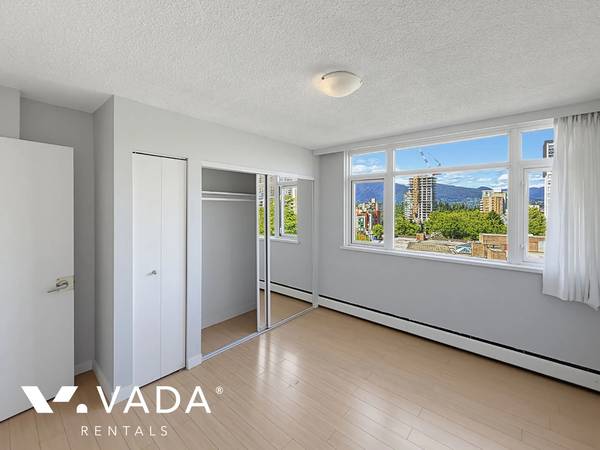
Corporate housing and serviced apartments
The corporate product is a furnished suite sold by the night with a 30-night minimum, invoiced monthly, and priced as though the invoice is going to an employer — because usually it is. What you are buying beyond the furniture is administration: utilities, wifi, linen and towels, a starter kit of kitchen equipment, fortnightly or monthly housekeeping, and often parking and a gym in the building. There is no hydro account to open, no internet installation window to sit through and no deposit argument at the end. What you are also buying is the ability to leave on 30 days' notice without arguing with anyone.
The trade is that you are usually not signing a tenancy agreement. It will be called a licence, a stay agreement or an occupancy agreement; the exit terms will be whatever the document says; and if the arrangement genuinely falls outside the Act on the facts in the table above, there is no Residential Tenancy Branch behind it. Read the notice clause and the cancellation clause before the rate, because that is where the money is. A 30-night minimum with a 30-day notice period means the shortest real commitment is 60 nights, and early-departure clauses commonly forfeit a month.
Deposits work differently too. Instead of a half-month security deposit there is usually a credit-card authorisation for incidentals and damage, released after checkout, and sometimes a first-and-last invoiced up front. There is no 15-day return deadline and no doubling provision, because neither exists outside the Act.
One piece of advice that saves people real money: if you are paying for this yourself rather than expensing it, ask the same operator for their direct monthly rate before you accept the corporate quote. Many operators run two products in the same building — a per-diem corporate rate written for a relocation budget and a monthly residential rate written for a person — and they do not volunteer the second when you enquire through the corporate channel.
Corporate stock in Metro Vancouver concentrates where the employers and the airport are: downtown, the Broadway corridor, Metrotown, Brentwood and central Richmond. It thins out fast beyond them. If your requirement is a 60-to-90 night stay near the airport, corporate inventory is genuinely the deepest option. If it is nine months in East Vancouver, you are paying a per-diem premium for a product you do not need.
Homestay: the cheapest all-in bed in the region, with conditions
Homestay is a room in someone's house with meals, sold mostly to students and short-course language learners through a placement agency, and it is the only product here where the all-in monthly number comes in under what a bare room costs on the open market. Published Metro Vancouver rates as at 11 August 2026:
| Provider | Rate | Includes | One-time fees | Source |
|---|---|---|---|---|
| Vancouver Central Homestay | $1,420 per 4 weeks full board; $1,370 half board; $1,120 room only; $1,430 for a minor; extra nights $60 | Room, meals, utilities, wifi | Placement $475, administration $150, custodial guardianship $525, wire transfer $60, airport pick-up $140 — the fees are subject to 5% GST | Published fee schedule, effective August 2026 |
| ILSC Vancouver | $350/week full board (18+), $325 half board; $390 and $365 in high season, 16 May – 6 Sep | Room, meals | Accommodation administration fee $250; extra nights $80 | ILSC Vancouver price list, August 2026 |
| UBC English Language Institute | $65/night | Furnished room, bed linen and towels, three meals a day including a packed lunch on school days | Non-refundable placement fee, published at $300 for the current intake | UBC ELI homestay pages, 2026 |
Three traps in that table.
First, a rate quoted "per 4 weeks" is not a monthly rate. There are about 13.04 four-week periods in a year, so $1,420 per 4 weeks works out to roughly $1,543 a month, and $350 a week to roughly $1,522 a month. That is an 8.7% gap between the number you think you agreed to and the number that leaves your account each month, and it compounds over a term.
Second, the one-time fees are substantial and mostly non-refundable. An adult booking four weeks of full board at Vancouver Central pays about $2,076 before their first night — $1,420 in accommodation plus $625 in placement and administration fees with GST on top of the fees. A minor requiring custodial guardianship pays about $2,638. Judge homestay against other products on the total you transfer before you sleep there, not on the weekly rate.
Third, placement fees are charged per placement, which means changing families mid-term is not free. Read the provider's change and cancellation policy before you commit to a long booking with a family you have only seen in a profile.
What homestay does not include is autonomy. Kitchen access is usually restricted or scheduled, laundry is often limited to one or two loads a week, overnight guests are normally prohibited, and minors get curfews. Notice to leave is short in both directions, commonly two weeks, which cuts both ways: you can go quickly, and so can they. Because almost all homestays share a kitchen or bathroom with the owner, section 4(c) puts them outside the Residential Tenancy Act, so the house rules and the provider's contract are the whole of the arrangement. The practical consequences of that, including what your position is when a shared arrangement goes wrong, are in our guide to renting a room in Vancouver.
Judged purely on money, full board at roughly $1,540 a month with three meals a day is the cheapest way to be housed and fed in this region, and it is not close. Judged on anything else, it is a set of house rules you did not write.
Aparthotels and extended-stay hotels
The nightly product is worth buying in exactly two situations: your stay is genuinely under 27 nights, or you do not know when it ends. Everything about the pricing is built around length, with tiered discounts that usually step at seven nights and again at 30, a kitchenette, weekly rather than daily housekeeping, and no deposit beyond a card hold.
What you are paying the premium for is cancellability. A furnished tenancy signed for six months costs you the balance of the term if the job falls through; an aparthotel booking costs you a night. If your arrival date is firm but your onward plan is not — the job starts in September but the office location is undecided, the sale closes in October or maybe January — the correct move is a nightly booking for the first two or three weeks, viewings from inside the city, and a longer commitment signed once you have stood in the actual room. Booking twelve months of a suite you have only seen photographed is how people end up paying two rents.
Be careful with anything advertised as an aparthotel inside a residential strata building. A strata may fine up to $1,000 for each contravention of a bylaw limiting the use of a strata lot for short-term accommodation, imposed daily, under section 7.1 of the Strata Property Regulation. Those fines land on the owner, and an owner facing $1,000 a day will end your stay the same week the notice arrives. The purpose-built strata hotels described earlier are a different animal, because the building itself is set up for it and the exemption in section 3.1 of the Regulation exists precisely for them. The tell is whether the front desk belongs to the building or to the host.
Sublets: the May-to-August market
The other route into a furnished three-to-eight month stay is a sublet, and in Metro Vancouver that market is seasonal. It opens in March, peaks in late April as term ends, and is mostly gone by mid-May. The units are furnished, utilities are usually included, and they are priced at whatever the original tenant pays plus nothing, because subletting at a profit is a fast way to lose the underlying tenancy. On price alone it is frequently the best value in the entire market.
The thing to verify is consent. Under section 34 of the Residential Tenancy Act, unless the landlord consents in writing, a tenant must not assign a tenancy agreement or sublet a rental unit — and where a fixed term has six months or more left to run, the landlord must not unreasonably withhold that consent. A sublet arranged without it can be ended by the landlord, and you are the person with boxes in the hallway. Ask to see the written consent before you transfer money. The mechanics, including the difference between a sublet and an assignment and who owes whom what when it collapses, are in our guide to subletting and assignment in BC. If the sublet is a room in a shared flat rather than a whole unit, a written agreement between the occupants governs the part of your life the tenancy agreement does not.
A current tenant advertising "my place for three months while I'm away" is offering exactly this, and three months is precisely the length at which nobody bothers to ask the landlord. Sublets are also the highest-risk category for fraud in this market, because the whole transaction is remote, urgent and conducted with someone who is about to leave the country. No deposit should move by wire, e-transfer or crypto before you have seen the unit or had someone see it for you.
The tax cliff at 27 nights
The biggest single lever on what a short stay costs in Metro Vancouver is not the nightly rate. It is the number of nights, and the first line falls at 27.
Accommodation supplied for a continuous period of 27 days or more to the same occupant is exempt from provincial sales tax and from the municipal and regional district tax. Anything shorter is taxed. These are the rates as they stood on 11 August 2026:
| Tax | Rate | Applies to | Source |
|---|---|---|---|
| PST on short-term accommodation | 8% | Stays under 27 continuous days | B.C. PST — Accommodation |
| MRDT | up to 3% | Participating municipalities and regional districts | Same |
| Major Events MRDT | 2.5% | City of Vancouver only, 1 Feb 2023 to 31 Jan 2030 | Same |
| GST | 5% | Continuous occupancy of less than one month | Excise Tax Act, Schedule V, Part I, s. 6 |
| Combined, City of Vancouver | 13.5% provincial plus 5% GST | Stays under 27 days | Same |
Run $150 a night through it.
| Stay | Base | Provincial | GST | Total | Effective add-on |
|---|---|---|---|---|---|
| 26 nights, City of Vancouver | $3,900 | $526.50 | $195.00 | $4,621.50 | 18.5% |
| 26 nights, a 3% MRDT municipality outside Vancouver | $3,900 | $429.00 | $195.00 | $4,524.00 | 16.0% |
| 27 nights, City of Vancouver | $4,050 | nil | $202.50 | $4,252.50 | 5.0% |
The twenty-seventh night adds $150 of rent and removes $519 of tax. Booking it saves $369 outright, and you get an extra night in the deal.
There is a second line three or four days later, and almost nobody books to it. The GST exemption is not written at 27 days — it is written at one month or more of continuous occupancy by the same individual. So a 28-night booking clears PST and MRDT but still attracts 5% GST. Stretch the same booking to a full calendar month and the GST goes too. Twenty-eight nights at $150 is $4,410 all in; thirty-one nights is $4,650. Three extra nights cost $240 rather than $450, and they buy you a buffer for a move-in date that slips.
GST has one wrinkle that catches people in aparthotels. The exemption in Schedule V, Part I applies to a residential complex or a residential unit in one, and the Excise Tax Act's definition of "residential complex" excludes hotels, motels, inns and similar premises where all or substantially all of the stays are for periods of less than 60 days. So a furnished suite in an ordinary residential building, let to you for a month, is GST-exempt; a room in a genuine hotel for 30 nights generally is not, even though the PST and MRDT have gone. Same 30 nights, same bed, different answer depending on what the building is.
Here is the same point made through the invoice rather than the calendar, at an illustrative $185 a night in the City of Vancouver:
| How it is billed | PST + MRDT | GST | Total for 30 nights |
|---|---|---|---|
| Four weekly invoices | $749.25 | $277.50 | $6,576.75 |
| One 30-day invoice, aparthotel | $0 | $277.50 | $5,827.50 |
| One 30-day invoice, residential suite | $0 | $0 | $5,550.00 |
Just over a thousand dollars — about five and a half nights of the stay — decided by how the invoice is written. When you enquire, ask two things in writing: will you bill this as a single period of 27 days or more, and is the PST and MRDT exemption applied at booking or by refund. Operators who do this routinely answer in one line. Operators who do not are quoting you a nightly rate with 13.5% baked into it.
Two more details worth knowing. If the operator bills in weekly or nightly increments rather than as one continuous stay, the province's guidance is that you can apply for a refund once the stay has run past 26 days, so keep every invoice. And the long-standing exemption for accommodation charged at $30 or less per day, or $210 or less per week, expressly does not apply where the unit is listed on an online marketplace platform, which removes the last theoretical route by which a platform listing might reach you untaxed.
One last translation. When you compare a $2,600 furnished suite let directly by an owner on a monthly agreement against a "$95 a night" listing, the listing is not $2,850 a month. In Vancouver, at 26 nights, it is closer to $2,945 before cleaning and platform fees. Ask for the all-in figure, with taxes and fees, for the exact number of nights you want, in writing. The Major Events levy has a hard end date of 31 January 2030; the 8% and the 3% do not.
The furnished premium is small; the term premium is enormous
Furniture is nearly free in this market. liv.rent's Metro Vancouver rent report for July 2026, built from asking prices collected on 15 July with luxury units over $5,000 and single rooms excluded, put the average furnished one-bedroom at $2,174 a month against $2,089 unfurnished — a premium of $85, or 4.1%. Across liv.rent's monthly reports through the first half of 2026 that gap stayed small, and in several suburbs it inverted, with furnished units averaging below unfurnished ones. Nobody is charging you a fortune for a bed frame.
What costs money is term. Run the arithmetic in the only unit that lets you compare a nightly rate with a monthly one: an average month is 30.44 days, so every dollar of nightly rate is $30.44 a month before tax, and $36.06 after Vancouver's 18.5%. Then invert it. To match a $2,174 furnished one-bedroom, a nightly listing would have to advertise about $60 a night before tax.
| What you are buying | Effective cost of a $2,174/month furnished one-bedroom | Notes |
|---|---|---|
| Monthly, on a 3-month term | $2,174/month | No PST, no MRDT, no GST |
| Per night equivalent | $71.42 | 30.44 days in an average month |
| Nightly rate needed to match, before tax | $60.25 | Grossed down by 18.5% in Vancouver taxes |
Nothing in Metro Vancouver rents for $60 a night. The same physical flat, sold by the night, routinely costs two to three times what it costs by the month, and every dollar of that gap is the price of being allowed to leave.
Set the furnished figure against the unfurnished benchmarks and it stops looking like a luxury product at all. CMHC's Rental Market Survey of October 2025 put the average occupied purpose-built one-bedroom in the Vancouver census metropolitan area at $1,807. Rentals.ca and Urbanation measured the City of Vancouver asking one-bedroom at $2,377 in July 2026. The furnished monthly average sits between the two — below what a new unfurnished lease is asking in the city proper. It is a normal rent with a short fuse. The gap between survey averages and what you will actually be quoted is worked through in our guide to average rent in Vancouver, and it is the single most useful number to have in your head before you accept a furnished quote.
Two costs the monthly figure hides. First, most short-term furnished lets bundle utilities and internet, which on an unfurnished twelve-month lease would run a further $80 to $200 a month depending on the building and whether heat is included — worth adding back before you call the furnished option expensive. Second, a short term means paying moving costs more often, and in a city where a one-way van hire and a day off work is a real number, three moves a year is its own line in the budget. The rest of the arithmetic of arriving here, from hydro to transit to groceries, is in our cost of living guide.
What a furnished monthly rate actually includes
A furnished rate is a bundle, and operators bundle differently. The advertised number is rarely the number that leaves your account. Ask about each of these lines before you commit.
| Line | What to ask | Typical trap |
|---|---|---|
| Cleaning fee | One-off or per stay? Charged again on extension? | A $250 cleaning fee is 8% of a one-month stay and 0.7% of a year |
| Platform service fee | Charged to the guest, the host, or split? | Fee models are in flux; see below |
| Utilities | Included, or included up to a cap? | "Heat and hydro included up to $80/month" bills you for a cold February |
| Internet | Included, and at what speed? | Shared building wifi that cannot carry a video call |
| Parking | Included, or a separate monthly charge? | Downtown stall rates are quoted separately and are not small |
| Linens and towels | Provided, replaced, laundered? | Mid-stay linen service billed per visit |
| Mid-stay cleaning | Optional or mandatory? | Mandatory fortnightly cleans on a 90-day booking |
| Extension | At what rate, and by when must you ask? | A renewal quoted at a new nightly rate you did not budget for |
| Taxes | Which of the four above, at which rate? | A quote that says "plus applicable taxes" and means 18.5% |
The platform fee line deserves a note of its own because it changed during 2026 and a lot of published advice is out of date. Airbnb has been retiring its split-fee model, under which the guest paid a service fee at checkout of roughly 14% of the booking subtotal and the host paid about 3%, in favour of a single host-only fee of 15.5% deducted from the payout, with the migration rolling through hosts country by country across late 2026. Which model a given listing is on determines whether you see a separate service fee at checkout or a higher nightly rate with nothing added. The practical instruction is unchanged and applies to every platform: compare the final checkout total for your exact dates, never the nightly rate.
Long-term one-bedrooms in Richmond, for comparison
56 matches as we last checked, confirmed today. This block is rebuilt from the live feed, so it is never the list that was here when the article was written.





What you hand over before you get the keys
Deposits are where furnished lets go wrong most often, and the reason is structural: only one of the four products has statutory deadlines behind it.
| Product | Typically paid up front | Refundable | Governed by |
|---|---|---|---|
| Furnished long-term tenancy | First month plus a half-month security deposit, plus a half-month pet damage deposit if applicable | Yes, within 15 days | Residential Tenancy Act, ss. 19 and 38 |
| Corporate / serviced apartment | First monthly invoice plus a card authorisation for damage and incidentals | Per contract | The agreement only |
| Homestay | First four weeks plus placement and administration fees | Accommodation yes, fees generally not | The provider's fee schedule |
| Aparthotel | Card hold, sometimes the first night | Released at checkout | Hotel policy |
If the arrangement is a tenancy, the ceiling is fixed by statute and so is the clock. Section 38 gives the landlord 15 days after the later of the date the tenancy ends and the date they receive your forwarding address in writing, to either repay the deposit with interest or file for dispute resolution against it. Miss that and the doubling provision engages, and the deposit guide linked earlier sets out how that works in practice.
If the arrangement is not a tenancy, none of that applies, and what the operator calls a "security deposit" is a contractual sum governed only by what you signed. A pre-authorised hold on a credit card is materially better than an e-transfer here, because a hold can be disputed and released and an e-transfer cannot be recalled.
Two questions settle most of it. Who holds the money, and what document says when it comes back? If the answer to the second is "we'll sort it out at the end", assume you are not getting it.
Then take the total you will have transferred before you sleep there — first period, deposits, non-refundable fees, taxes, platform charges — and compare products on that number rather than on the headline rate. On a four-week stay the one-time fees can be a third of the cost. Leave a line in the budget for contents insurance too, which many furnished landlords and most corporate operators now require in writing and which costs a fraction of what people assume.
"Month-to-month" means one thing in law and another in a listing
A periodic tenancy is a legal status. A monthly booking is a reservation. They behave nothing alike, and the same three words are used for both.
Under section 44(3) of the Residential Tenancy Act, if a fixed term ends, the agreement does not require the tenant to vacate on that date, and the parties have not entered a new agreement, they are deemed to have renewed as a month-to-month tenancy on the same terms. You do not sign anything. You do not ask. It happens.
That matters because the landlord's ability to make a fixed term actually end on its end date is narrow, and it is the point most furnished landlords get wrong. Section 13.1 of the Residential Tenancy Regulation prescribes the circumstance in which a fixed-term agreement may require the tenant to vacate: the landlord is an individual and they, or a close family member, will occupy the unit at the end of the term, for at least six months. A vacate clause in a corporate operator's furnished lease does not meet that test, and neither does one in an individual landlord's lease where nobody is moving in.
Ending it from your side runs on section 45. On a periodic tenancy, notice takes effect no earlier than one month after the landlord receives it, and no earlier than the day before the day rent is payable. In practice, notice in the landlord's hands by 31 August takes you out on 30 September; notice on 2 September takes you out on 31 October, and that one extra day costs a full month's rent. On a fixed term, section 45(2) will not let you end it before the end date at all, which is exactly why people take a furnished ninety days rather than sign a year they are not sure about. The sequencing, and the forms, are in our guide to ending your tenancy in BC.
Rent, if the Act applies, is capped inside the tenancy. The maximum allowable increase for 2026 is 2.3%, once in any twelve months, on three full months' written notice — down from 3% in 2025, and the second year the figure has been tied to the consumer price index. The arithmetic behind it is in our guide to the BC rent increase cap. A furnished operator quoting you a new monthly rate for month four is either outside the Act or serving an invalid increase, and you need to know which before you pay it.
On a platform, none of this is in play. A booking of 28 nights or more usually falls under a long-term cancellation policy rather than the one shown to weekend guests, which typically binds you to the first month and requires 30 days' notice to end. Extending is not a right: the host can decline, or can re-price, and calendars for the following month firm up four to six weeks out. If you need to be housed until the end of November, book until the end of November. Do not plan to extend.
Getting one without being defrauded
Furnished short-term is the highest-fraud segment of this market, for structural reasons. The renter is usually not in the country, cannot view the unit, is under time pressure, and is being asked for a large sum up front — three months' rent plus a deposit in a single transfer is normal in this segment and abnormal everywhere else. That is the exact profile a scammer wants.
The patterns repeat. A listing priced 25% under everything comparable. An owner who is "working overseas" and will courier the keys. A refusal to do a live video walkthrough, or an offer of a pre-recorded one. Photographs that reverse-image-search to a listing in another city. Pressure to transfer today because "someone else is asking". A request for payment by e-transfer, wire, cryptocurrency or gift card — all four are irreversible by design. The full set of patterns, and what to do if you have already sent money, is in our guide to rental scams in Vancouver.
Five checks, in order, after the three lawfulness questions earlier in this article and before any money moves:
- Confirm the address exists as described. Street view, the strata's name on the building, the unit count, the floor. A "garden suite" at an address that turns out to be a 30-storey tower is not a mistake.
- Video call from inside the unit, live, with the caller opening a window and reading the street sign. Recorded tours prove nothing at all. If you cannot be there, pay someone who can — a friend, a colleague at the new job, a paid viewing service. It is the cheapest insurance available.
- Match the name on the agreement to the person collecting the money. If a company is letting, look it up in BC Registries. If an individual is letting, the name should match title or a written authorisation from the owner.
- Pay by a method with recourse. A credit card, or a booking platform's protected payment flow. Never transfer the full stay to a personal account before you hold keys.
- Get the whole thing in one document — dates, all-in price, what is included, deposit amount and return terms, cancellation, extension, and whether it is a tenancy or a booking. Chat messages are evidence, but they are not an agreement.
The legitimate side of the market runs through four channels and each has a different failure mode. Booking platforms are the easiest to search and the most expensive after fees and tax. Corporate housing operators are the most reliable for a 30-to-180-day stay and price accordingly. University and hospital housing offices maintain vetted lists that outsiders rarely think to ask for, and asking costs nothing. Direct-from-owner furnished lets — a strata owner between tenants, an owner away on sabbatical — are the cheapest and carry all of the verification risk described above.
Where to base yourself for ninety days
Pick for transit and groceries, not for the photographs. You will not have a car, you will be doing viewings across the region, and you will be carrying shopping.
Downtown Vancouver and the West End hold the deepest furnished stock and the shortest commutes to almost everywhere. They also sit inside the City of Vancouver, the only municipality charging the extra 2.5% Major Events MRDT until 31 January 2030 — so a sub-27-night stay costs about two and a half percentage points more here than the identical stay one SkyTrain stop into Burnaby. Over 27 nights the difference disappears, which is another reason the length of the booking matters more than the postcode.
Metrotown and Brentwood trade a little walkability for a lot of newer rented-condo stock, most of it on the Expo and Millennium lines, and put you inside about 25 minutes of both downtown and the bus exchanges heading up to SFU.
Richmond is the practical choice if you are arriving with luggage and jet lag. The Canada Line runs from the airport and the trip from YVR to Waterfront takes about 26 minutes, with trains roughly every ten. Remember that Richmond permits no entire-home short-term rental, so anything under 90 days there has to be a licensed B&B or boarding arrangement.
New Westminster is the cheapest of the SkyTrain-served options and the best base if your search is aimed at the southeast of the region — Surrey, Coquitlam, the Fraser side generally.
North Vancouver is the outlier. It has genuine furnished supply and no SkyTrain, so budget the SeaBus at about 12 minutes plus a bus at either end, and view it before you commit to ninety days of it.
If your ninety days are aimed at a September start on campus, the geography question is different again, because the commute rather than the rent is what you are optimising, and the campus housing guide linked earlier is the place to start.
Once you have a base and a commute you know, the search stops being abstract and becomes a list of viewings:
Unfurnished one-bedrooms in Burnaby to line up viewings for
65 matches as we last checked, confirmed today. This block is rebuilt from the live feed, so it is never the list that was here when the article was written.







The ninety-day plan
Treat the furnished stay as a fixed window with a deadline, not as somewhere to live. The work splits into three blocks.
Weeks one and two — build the paperwork a landlord asks for. A Canadian bank account and a Social Insurance Number, if you are newly arrived. A BC address, which the furnished place now gives you. Employment confirmation or an offer letter with a start date and a salary. Written references from previous landlords, ideally with a phone number that will be answered in a Vancouver-friendly time zone. You have no Canadian credit file, and that is the single thing most likely to lose you a competitive unit. The usual answers are a letter from your employer and an offer of a larger deposit — though the deposit cap means a landlord cannot lawfully take more than half a month regardless, so the offer is a signal rather than a transaction. What a landlord may and may not ask for on the form, and what you are entitled to refuse, is in our guide to the BC rental application.
Start the health cover clock in the same fortnight. MSP has a wait period of the balance of the month in which you establish residence plus two further months, so an arrival on 20 September means coverage from 1 December. Apply in week one and buy private cover for the gap.
Also work out, early rather than late, what you can actually sustain. A furnished ninety days at a premium rate is not evidence of what you can pay for twelve months, and people anchor to it constantly. Our rent affordability guide for Vancouver does the arithmetic with local utility, transit and grocery costs rather than a flat 30% rule.
Weeks three to eight — view, and be ready to sign on the spot. The market is looser than it has been in a generation. CMHC's October 2025 survey put purpose-built vacancy in the Vancouver CMA at 3.7%, the highest since 1988 and up from 1.6% a year earlier, and asking rents have fallen accordingly. That loosening is real in new downtown towers and Brentwood completions. It has not reached the cheapest quarter of the stock, where competition is still what it always was. Budget for the possibility that the unit you can afford sits in the tight segment rather than the loose one.
Carry a digital folder with references, employment letter, identification and a completed application, so you can send everything within an hour of a viewing. In a 3.7% market you are not fighting fifty applicants for a $2,400 one-bedroom, but you are still first-come on a $1,600 one.
Weeks nine to twelve — overlap deliberately. Aim to sign a lease starting two to three weeks before the furnished stay ends. Paying a fortnight twice is cheaper than a hotel, cheaper than storage, and much cheaper than accepting a bad unit because your booking runs out on Sunday. If your furnished arrangement is a tenancy under the Act, get the section 45 notice in before rent is due, in writing, dated, and keep proof of when it was served. If it is a booking, give whatever notice the cancellation policy demands and get the acknowledgement in writing.
Do the move-out inspection on the furnished place with the same care you did the move-in one. Furnished tenancies end in arguments about objects, and the inventory and photographs you took on day one are what settle them.
What to do this week
- Price the stay you actually want at 26, 28 and 31 nights, with all four taxes, and pick the cheapest total rather than the cheapest nightly rate.
- Ask whether the same accommodation can be booked at 90 days or more. If it can, you have left the short-term regime and most of the risk in this article with it.
- Get the all-in figure in writing, itemised: base, cleaning, service fee, utilities cap, parking, taxes, extension rate.
- Verify the registration number, the licence class and the identity of whoever is taking your money, before any of it moves.
- Find out, in writing, whether your agreement is a tenancy under the Residential Tenancy Act or a booking. Every deposit, notice and rent-increase rule downstream depends on the answer.
- Diarise the date you have to give notice, count backwards from it, and start viewing unfurnished units in week three.
Figures here are current to 11 August 2026: tax rates from the province's accommodation bulletin and PST publications, statutes from BC Laws, rents from CMHC's October 2025 Rental Market Survey, the Rentals.ca and Urbanation report for July 2026 and liv.rent's July 2026 Metro Vancouver rent report, and the rent-increase cap from the Residential Tenancy Branch. Municipal rules change at council and licence fees change at budget time, so check the municipality's own page before you book. Tax treatment turns on facts specific to your stay, and nothing here is legal or tax advice. The Residential Tenancy Branch answers questions at 1-800-665-8779 and the province's short-term rental registry line is 1-833-828-2240.
Keep reading
The rest of what we have written about renting here.
Renting in Vancouver
Moving to Metro Vancouver: The Renter's Ninety-Day Plan
A ninety-day plan for renting in Metro Vancouver from out of province: the bank account, the application file, the calendar, the deposits and arrival week.
Renting in Vancouver
Pet-Friendly Rentals in Metro Vancouver
BC gives a tenant no right to keep a pet, and most apartments here sit under a strata bylaw as well as a lease. Where the one-yes stock is, and what it costs.
Renting in Vancouver
Renting a House, Suite or Townhouse in Metro Vancouver
Four kinds of house-form rental in Metro Vancouver: how rent, utilities, repairs and eviction risk differ between a house, a suite, a laneway and a townhouse.
Money
How Much Rent You Can Afford in Vancouver
The 30% rule says BC's average wage affords $1,767 a month. The average Metro Vancouver one-bedroom is $1,807. Here is the arithmetic that actually works.
How to rent
The Intent to Rent Form: What It Is and How to Get One Signed
BC has no form called an intent to rent. It is the Shelter Information form HR3037, and the only signature line on it is yours, not your landlord's.
How to rent
Rental Applications in BC: What a Landlord Can Ask For
A landlord in BC can ask for ID, references and proof of income. They cannot require your SIN, your banking details, or a photo of your driver's licence.