Renting in Vancouver
Affordable Housing in Metro Vancouver
Eleven routes to below-market rent in Metro Vancouver, ranked by how many households each one reaches and how long the wait runs, with every income test.
Updated 2026-08-12 · 59 min read
Eleven routes to below-market rent exist in Metro Vancouver. They are not interchangeable, they differ by a factor of a thousand in how many households they reach, and the one that serves the most people has no application form. Ranked honestly, the route at the top of the list is staying in a tenancy that BC's rent control has protected while the market repriced around it. Everything with a queue behind it — the Housing Registry, rent-geared-to-income units, co-ops, the Rental Assistance Program, SAFER, the below-market units secured by rezoning — serves fewer households than the number standing in front of it, the wait runs to years for most of them, and for several it is not published at all.
This page ranks all eleven by reach and by wait, states who qualifies, and sends you to the guide that holds the mechanics of each. Rents and vacancy are CMHC's Rental Market Survey for October 2025, published 11 December 2025; asking rents are Rentals.ca and Urbanation, July 2026; programme figures are BC Housing's own, with the service-plan numbers from the 2026/27–2028/29 Service Plan tabled with Budget 2026; statute is quoted from BC Laws. Everything was checked on 11 August 2026, and the programme thresholds move — check the source before you rely on a number.
The gap you are trying to close, in dollars
Across the Vancouver census metropolitan area in October 2025, CMHC recorded an average studio at $1,667, a one-bedroom at $1,807 and a two-bedroom at $2,364, with a two-bedroom median of $2,295. Those are averages across occupied purpose-built units, and the regional spread on a one-bedroom runs from $1,426 in Maple Ridge/Pitt Meadows to $2,469 in the University Endowment Lands.
Set those against the income tests that govern every subsidy in this province and the size of the problem becomes arithmetic rather than opinion. Thirty per cent of gross income is the line BC Housing, CMHC and Statistics Canada all use to define affordability, and it is written into the eligibility rules for SAFER and the Rental Assistance Program.
| Gross household income | 30% of it, monthly | Short of the CMA one-bedroom average ($1,807) | Short of the City of Vancouver asking one-bedroom ($2,377) |
|---|---|---|---|
| $24,596 — BC Housing deep subsidy limit, under two bedrooms, 2026 | $615 | $1,192 | $1,762 |
| $35,588 — full-time at BC's $18.25 minimum wage, 37.5 hours a week | $890 | $917 | $1,487 |
| $40,000 — SAFER income ceiling | $1,000 | $807 | $1,377 |
| $60,000 — Rental Assistance Program income ceiling | $1,500 | $307 | $877 |
| $72,280 | $1,807 | nil | $570 |
| $95,080 | $2,377 | — | nil |
Sources: income limits from BC Housing's programme pages, checked 11 August 2026; the minimum wage of $18.25 an hour took effect 1 June 2026; rents from CMHC RMS October 2025 and Rentals.ca/Urbanation July 2026. The last two rows are our arithmetic — the income a household needs to pay each of those rents at exactly 30% of gross.
Read the bottom two rows first. Paying the regional average one-bedroom rent at 30% of gross takes $72,280 a year. Paying the City of Vancouver's July 2026 asking rent for the same unit type takes $95,080. A single person earning the full Rental Assistance Program ceiling of $60,000 is $307 a month short of the average, and that household does not qualify for the programme at all unless it contains a dependent child.
The second number that governs this page is vacancy. Purpose-built vacancy across the CMA was 3.7% in October 2025, the highest CMHC has recorded since 1988, and every bit of that slack is at the top. Vacancy in the cheapest quarter of units was 1.1%; in the most expensive quarter, 6.7%. CMHC's 2026 Mid-Year Rental Market Update of 9 June 2026 describes the first quartile as persistently tight. So the households who need the routes on this page are searching a 1% market inside a 3.7% one, and the free-month incentives they read about in the news are being offered in buildings they cannot afford. Every figure below about waits and queues sits on top of that fact, and it is the reason the ranking comes out the way it does.
Market rent is two numbers, and every below-market promise attaches to one of them
CMHC surveys occupied units. Its $1,807 blends a tenancy signed in 2014 with one signed last month. Rentals.ca and Urbanation measure live listings, and in July 2026 they put the City of Vancouver one-bedroom asking rent at $2,377, Surrey at $1,794 and North Vancouver at $2,588.
The $570 gap between those two one-bedroom figures is not a measurement error. It is the mechanism. Section 41 of the Residential Tenancy Act bars any rent increase except under Part 3, and section 43(1) limits the increase inside a tenancy to the amount set by regulation — 2.3% for 2026, 3% in 2025, 2% in 2023, and 0% in the 2021 freeze. Nothing in the Act limits what the next tenant is charged. BC has rent control on tenancies and none between them. That single asymmetry is the engine behind the first-ranked route on this page, and the section on what the protection is worth compounds the caps to put a dollar figure on it.
It also decides what a below-market discount is actually worth, because "20% below market" is meaningless until you know which market number it is measured against. Housing agreements, density-bonus conditions and operating agreements do not use one convention.
| "20% below market" measured against | One-bedroom rent it produces | Base figure and source |
|---|---|---|
| CMHC CMA average, all occupied purpose-built units | $1,446 | $1,807, CMHC RMS Oct 2025 |
| CMHC Downtown Vancouver zone average | $1,690 | $2,112, CMHC RMS Oct 2025 |
| Rentals.ca asking rent, City of Vancouver | $1,902 | $2,377, Rentals.ca/Urbanation Jul 2026 |
Same phrase, $456 apart on the top and bottom rows. When a leasing office tells you a unit is below market, the only question worth asking is which published series the agreement names and which year of it. Our guide to what the average rent figures actually measure sets the two series side by side. Ask for the housing agreement clause, not the brochure — there is a section further down on how to get hold of it.
Non-market, below-market and rent-controlled are three different things
These three phrases get used as synonyms in listings, council reports and news coverage. They describe different legal arrangements with different rent-setting rules, different eligibility, and different consequences if your income changes.
| Term | What it actually is | Who sets the rent | Source |
|---|---|---|---|
| Non-market housing | A unit owned or operated by a public body, a non-profit society or a co-operative, where rent is set by an operating agreement rather than by what the market will bear | BC Housing or the provider, under a funding agreement | BC Housing, subsidised housing programme page, checked 11 Aug 2026 |
| Rent-geared-to-income (deep subsidy) | A form of non-market housing where your rent is a share of your income | 30% of gross household income, subject to a minimum set by household size | BC Housing, subsidised housing programme page |
| Low-end-of-market (LEM) | Non-market housing let at a fixed rent set below the CMHC average for the area. Not income-geared — your income is tested once, at the door, against the Housing Income Limit | The operating agreement | BC Housing |
| Below-market rental secured by zoning | A unit inside a privately owned market building whose rent is capped by a housing agreement registered as a condition of rezoning or a density bonus | The municipal housing agreement, usually as a percentage of a named CMHC figure | Municipal housing agreements; terms vary by city |
| Portable rent assistance | An ordinary market tenancy at market rent, with the province paying you part of it every month. SAFER, the Rental Assistance Program and the Canada-BC Housing Benefit are all this | The landlord sets the rent; BC Housing pays a subsidy against it | BC Housing SAFER and RAP pages, ceilings effective April 2025 |
| Rent-controlled | Any tenancy covered by the Act. The increase inside it is capped; the starting rent is not | The market, once, at the start | RTA s. 43(1) |
| Co-op housing | Membership in a non-profit corporation that owns the building, with a refundable share and a monthly housing charge set to cover costs | The members, by vote on the co-op's budget | RTA s. 4(a) excludes members from the Act |
| Supportive housing | Non-market housing bundled with on-site support services, accessed by assessment and referral rather than application. Rent is commonly set at the shelter portion of income assistance | Programme rules | BC Employment and Assistance rate table, effective 1 Aug 2023: shelter maximum $500 single, $695 for two adults |
Two consequences fall out of that table and they catch people repeatedly. First, a co-op member is not a tenant, so the deposit cap, the notice periods, the annual increase cap and the Residential Tenancy Branch are all unavailable to you. Second, portable assistance is not housing. SAFER and the Rental Assistance Program leave you in the private market, competing for the same 1.1%-vacancy units as everyone else, with a payment that arrives at the end of the month.
The eleven routes, ranked by reach and by wait
Ranked by how many households the route can actually serve, largest first. "Wait" is the time between deciding to use the route and paying a lower rent.
| # | Route | Roughly who it reaches | Wait | Effect on your rent |
|---|---|---|---|---|
| 1 | Stay in the tenancy you have | Every renter household in the region — about 394,710 in the Vancouver CMA at the 2021 Census | None | Holds you 15.8% above your 2019 rent instead of at today's asking rent |
| 2 | Split the unit — a room, a roommate, a shared suite | Anyone, no application, no income test | Days to weeks | A two-bedroom at $2,364 split two ways is $1,182 each, $485 under a studio at $1,667 |
| 3 | Search the cheapest quartile of the open market | About 32,300 of CMHC's 129,351 surveyed units sit in it — but at 1.1% vacancy, on the order of 350 were empty region-wide on survey day | Months of searching | Below the zone average, at whatever turnover priced it |
| 4 | SAFER — Shelter Aid For Elderly Renters | 60 and over, gross income under $40,000, rent above 30% of income, not on income or disability assistance | Weeks; paid monthly, in arrears | Pays against a rent ceiling of $1,150; minimum benefit $50 |
| 5 | Rental Assistance Program | At least one dependent child, gross household income $60,000 or less, assets under $100,000, 12 months in BC | Weeks; paid monthly, in arrears | Pays against rent ceilings of $1,950 for three or fewer people, $2,200 for four or more |
| 6 | Below-market units secured by rezoning | Households under a stated income cap, in specific buildings; no regional list and no shared queue | Only when a building leases up | Typically 10–20% below a named CMHC figure — see the table above |
| 7 | Non-profit and society housing with its own waitlist | Metro Vancouver Housing alone runs 3,400 homes on about 50 sites, housing over 10,000 people; dozens of other societies run separate lists | Years, mostly unpublished | Fixed low-end-of-market rents, or income-geared where the provider holds subsidy |
| 8 | Housing co-operative | Anyone accepted by the members who can raise a share of $1,000–$7,000, typically about $2,000, refundable | Three months to three years or longer just to be interviewed | A cost-recovery housing charge, plus income-geared subsidy in co-ops that hold it |
| 9 | Rent-geared-to-income through the Housing Registry | Income under the 2026 deep subsidy limits: $24,596 for under two bedrooms, $30,745 for two or more | BC Housing will not estimate one | 30% of gross income, subject to a minimum |
| 10 | Canada-BC Housing Benefit | The only programme reaching low-income singles and couples with no children and nobody over 60, up to $2,666 gross a month | Not applicable — referral only, you cannot apply | A monthly cash benefit in a market tenancy |
| 11 | Supportive housing | Assessed need, by referral | Not a queue you can join | Rent commonly set at the income-assistance shelter maximum, $500 a month for a single person |
Sources, in row order: the 2021 Census renter household count; CMHC RMS October 2025 for rents, the 129,351-unit surveyed universe and the 1.1% first-quartile vacancy rate, with row 3's vacant-unit estimate our own arithmetic on those two figures rather than a CMHC statistic; BC Housing's programme pages, ceilings effective April 2025; Metro Vancouver Housing's published portfolio figures; CHF BC on share prices and waits; and the BC Employment and Assistance rate table effective 1 August 2023.
Three things in that table are worth staring at.
Rows 4, 5 and 10 are one number, and it is small. BC Housing's 2026/27–2028/29 Service Plan forecasts 37,700 households province-wide receiving portable rental assistance in 2025/26, rising to a flat target of 38,000 for each of the next three years. That total covers SAFER, the Rental Assistance Program and the Canada-BC Housing Benefit together, across all of British Columbia. Set it against roughly 394,710 renter households in the Vancouver CMA alone. The service plan does not publish a split by programme or by region.
The rent ceilings are the binding constraint, not the income tests. SAFER's ceiling is $1,150 a month and the cheapest one-bedroom average anywhere in Metro Vancouver is $1,426. Both cash programmes are calibrated to a rent that does not exist here, and the section on where those ceilings meet this region works the arithmetic through.
Row 9 has no wait time because BC Housing declines to give one. Its own subsidised housing page states that "the demand for subsidized housing far exceeds the available supply. As a result, it is not possible to predict when a unit may come available." That is not evasion; the Registry is not a numbered queue, and the section on it explains what selection actually runs on.
Two supply notes belong here. The province's own pipeline is contracting: BC Housing forecasts 4,500 affordable and supportive homes completed in 2025/26, then targets 4,000, 3,500 and 2,500 in the three years following. And on the municipal side, there is no regional register of below-market units secured by rezoning — Vancouver, Burnaby, Surrey, Richmond and New Westminster each run their own policies with their own income caps and their own base rent figures.
Which rows are open to your household
Three gates decide which rows apply to you: your age, whether you have a dependent child, and where your income falls. Nothing else in the system moves as much.
| Your household | Cash programmes open to you | Non-market routes worth applying to |
|---|---|---|
| 60 or over, gross income under $40,000 | SAFER | Registry seniors stream, non-profit seniors housing, co-ops |
| 55 to 59, low income | None of the three | Registry seniors stream — it opens at 55 |
| Family with at least one dependent child, under $60,000 | Rental Assistance Program | Registry, co-ops, non-profits, below-market buildings |
| Single or couple, under 60, no children, under $31,992 gross | Canada-BC Housing Benefit, by referral only | Registry deep subsidy if under $24,596, co-ops, non-profits |
| Single or couple, under 60, no children, above $31,992 | None | Below-market rezoning units, co-ops at the full housing charge, low-end-of-market units under the Housing Income Limit |
| Any household above the Housing Income Limit for its unit size | None | Rows 1, 2 and 3 only |
The 55-versus-60 mismatch in the first two rows is real and it is not a typo. BC Housing's Registry treats a single person aged 55 or over, or a couple where one of them is, as a senior. SAFER requires 60. There is a five-year window in which the province considers you a senior for housing and not for cash.
The fourth and fifth rows are where most people searching for affordable housing in Vancouver actually sit, and they are the thinnest rows in the table. A single adult under 60 without children has exactly one cash programme available, it cannot be applied for directly, and above $2,666 a month in gross income it closes. That is why rows 1, 2 and 3 carry so much weight in this ranking: for a very large share of low-income renters in this region, the market is the only route with an open door.
Where the cheapest quarter of the stock actually is
Row 3 of the ranking — searching the bottom of the open market — is the route most people are on whether they chose it or not, and it is the one with the least published guidance attached. Two things make it tractable.
The first is knowing which survey zones the cheap units are in. CMHC's October 2025 one-bedroom averages put Maple Ridge and Pitt Meadows at the bottom of the region at $1,426, White Rock at $1,435 and Marpole — inside the City of Vancouver, on the Canada Line — at $1,494. Surrey averages $1,602 and New Westminster $1,645. Nothing anywhere in the region averages under $1,426, which is worth internalising before you plan a move around finding something cheaper. Our comparison of every area in Metro Vancouver has the full zone table with the fare zone and the commute priced in, and the fare zone matters here: a three-zone monthly pass costs $94.45 more than a one-zone pass, which eats most of the difference between Surrey and Marpole.
The second is knowing what the cheap units are made of. The bottom quartile of this region's purpose-built stock is overwhelmingly pre-1980 walk-ups and low-rise concrete: the blocks off Kingsway, in southeast Burnaby, in uptown New Westminster, along East Hastings and through the older parts of East Vancouver. That stock has three properties that matter to a low-income search. Heat and hot water are usually inside the rent, because the buildings were plumbed that way. The buildings are typically owned entire by one landlord rather than sold off as strata lots, which as the section on defending a below-market rent explains puts them inside the strongest eviction protection in the Act. And their tenancies are old, which is why the average is low and why so few of them come up.
That last point is the trap in row 3. A low zone average is not an available low rent; it is the residue of tenancies signed years ago under a rent cap. Of roughly 32,300 first-quartile units in the surveyed universe, something on the order of 350 were empty across the whole region on survey day. Searching that market weekly does not work. Searching it daily, with saved filters and an alert, is the only version of row 3 that produces a unit.
One-bedrooms in Maple Ridge, the cheapest survey zone in the region
12 matches as we last checked, confirmed today. This block is rebuilt from the live feed, so it is never the list that was here when the article was written.


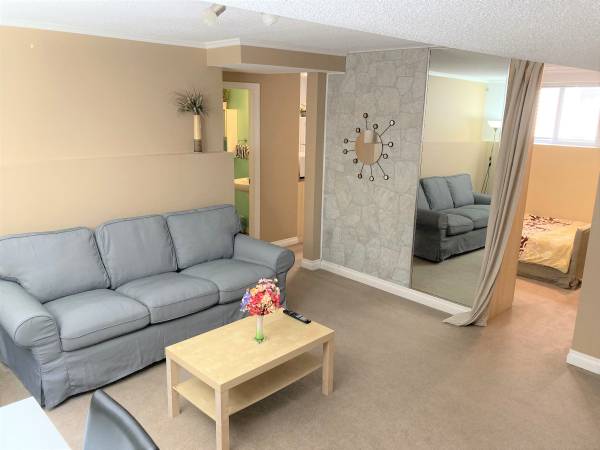

The largest below-market housing programme in British Columbia has no application form
BC Housing's Housing Registry, every rent-geared-to-income unit, every co-op and every below-market unit secured through rezoning, added together, house a small fraction of this region's renters. The mechanism that delivers below-market rent to the largest number of households here is not a programme at all. It is section 43(1) of the Residential Tenancy Act, which caps what a landlord may charge the tenant already in the unit, combined with the fact that nothing in the Act caps what they may charge the next one.
Nobody administers it. There is no income test, no asset test, no residency requirement and no queue. If the Act covers your tenancy, you are in it from the thirteenth month, and the benefit compounds for as long as you stay.
Three conditions have to hold. Section 42(1) bars any increase until twelve months after rent was first payable or after the last lawful increase took effect. Section 42(2) requires at least three months' notice, and section 42(3) requires it on the approved form, RTB-7. Section 43(1) caps the amount at the figure set for the year the increase takes effect, with only two lawful ways above it: your written agreement, or an arbitrator's order. Section 22 of the Residential Tenancy Regulation ties that figure to the twelve-month average percent change in BC's all-items Consumer Price Index ending in the most recently available July, and how the cap is calculated, with every year since 2003, is worked through separately.
What the Act does not contain is any form of vacancy control. When the unit turns over it reprices to whatever the market will pay. That is why the protection is real, why it is worth more the longer you hold it, and why it is worth precisely nothing to anyone searching today.
What the protection is worth, and how fast one move destroys it
Compound the caps and the size of the discount becomes visible. Each row is what a lawfully increased rent has risen by, in total, from the start of the year named through an increase taking effect in 2026.
| Tenancy holding since | Cumulative lawful increase to 2026 | Caps applied |
|---|---|---|
| January 2026 | 2.30% | 2.3 |
| January 2025 | 5.37% | 3.0, 2.3 |
| January 2024 | 9.06% | 3.5, 3.0, 2.3 |
| January 2023 | 11.24% | 2.0, 3.5, 3.0, 2.3 |
| January 2022 | 12.90% | 1.5, 2.0, 3.5, 3.0, 2.3 |
| January 2021 | 12.90% | 0, 1.5, 2.0, 3.5, 3.0, 2.3 |
| January 2020 | 15.83% | 2.6 and the six above |
| January 2019 | 18.73% | 2.5 and the seven above |
| January 2018 | 23.48% | 4.0 and the eight above |
| January 2016 | 31.76% | 2.9, 3.7 and the nine above |
Source: annual caps published by the Residential Tenancy Branch, compounded. The 2021 freeze is the reason the 2022 and 2021 rows are identical.
Eleven years of lawful increases add less than a third. Metro Vancouver market rents did considerably more than that over the same period, and the difference is the discount.
You can put an approximate dollar figure on it using the two series set out earlier. CMHC's $1,807 measures occupied one-bedrooms across the CMA in October 2025; the Rentals.ca and Urbanation asking rent for a City of Vancouver one-bedroom in July 2026 was $2,377. Those cover different geographies and different months, so the $570 between them indicates the size of the wedge rather than a per-unit discount. But the wedge is real, it is roughly $6,840 a year on a one-bedroom, and it is created entirely by turnover.
Now the arithmetic that should govern any decision to move. Closing a gap of that proportion — a factor of 1.315 — takes about twelve years of capped increases at the 2026 rate of 2.3%. One turnover event costs roughly twelve years of the protection you were accruing. On the CMA average one-bedroom, the 2026 increase itself is $41.56 a month. The reset is $570 a month. A tenant treating the annual increase as the thing worth fighting, and the move as an inconvenience, has the two costs the wrong way round by a factor of thirteen.
That is why this route ranks first on reach and why it ranks last on usefulness to the person reading a page like this one. It pays in proportion to tenure, which means it is distributed by luck and longevity rather than by need. A household on $200,000 that signed in 2016 draws a larger implicit subsidy than a household on $28,000 that signed last spring. No programme with an application form in this province is anywhere near that regressive, and none of them is anywhere near as large.
Three events destroy it: an eviction you do not dispute, a renovation or demolition, and a move you chose. The first two have statutory compensation attached and their own deadlines, both covered further down. The third does not.
Assignment is the only lawful way to acquire someone else's protected rent
If a controlled rent can only be earned by time served, the obvious question is whether it can be transferred. It can, once, and the mechanism is narrower than most people assume.
Section 34 sets out the whole of it in three subsections:
| Subsection | What it says |
|---|---|
| 34(1) | "Unless the landlord consents in writing, a tenant must not assign a tenancy agreement or sublet a rental unit." |
| 34(2) | Where a fixed term agreement has six months or more remaining, the landlord "must not unreasonably withhold" that consent |
| 34(3) | A landlord "must not charge a tenant anything for considering, investigating or consenting to" it |
Source: Residential Tenancy Act, checked 11 August 2026.
The distinction that matters is between the two words. An assignment transfers the existing tenancy agreement to a new tenant. The agreement continues; the rent in it continues; the original tenant drops out. There is no turnover, so there is nothing for the landlord to reprice. A sublet leaves the original tenant on the agreement and legally responsible. The Act's own definition of a sublease requires the tenant to keep a right to return to the unit, which is why a sublease has to end before the head tenancy does, and section 44(1)(g) ends it on its stated date with none of the rollover an ordinary fixed term gets. Only the first of the two moves a protected rent to a new person permanently.
Three limits keep this from being a general strategy. Section 34(2) applies only to fixed-term agreements with six months or more left to run, and the overwhelming majority of Metro Vancouver tenancies are month-to-month by the time anyone wants to leave — on those, a landlord may refuse consent for a good reason, a bad reason, or no reason. Section 34(3) prohibits a fee, which is worth knowing because "assignment fee" and "lease transfer fee" clauses are common and unenforceable, but it does not create a right to consent where subsection (2) does not apply. And nothing obliges a landlord to accept a person the outgoing tenant found; consent is to the assignment, and screening the incoming tenant is still theirs. The procedure, the wording to use in the request, and what "unreasonably withheld" has meant at arbitration are in assignment and subletting in BC.
Read as a route to below-market rent, assignment has an unusual profile: no income test, no wait, and a supply of roughly zero units you can search for, because assignments are arranged privately between people who already know each other. It is the only lawful transfer that exists, not something you can plan around.
The renewal letter that quietly ends your protection
This is the commonest way a below-market tenancy is destroyed, and it is destroyed with the tenant's signature on it.
A fixed-term agreement ending does not end the tenancy. Section 44(3) says that where a fixed term ends and no new agreement has been entered into, landlord and tenant "are deemed to have renewed the tenancy agreement as a month to month tenancy on the same terms." Same rent. Same everything. The only lawful route upward from there is a section 42 notice on form RTB-7 at the section 43 cap.
A landlord may only require you to move out at the end of a fixed term in one prescribed circumstance. Section 13(2)(f)(iii.1) of the Act requires the agreement to state the vacate requirement, and section 13.1 of the Residential Tenancy Regulation prescribes the circumstance: the landlord is an individual who, or whose close family member, will occupy the unit at the end of the term — a condition the regulation requires to hold for six months afterwards. A vacate clause in a corporate landlord's standard lease is not within that. A vacate clause in an individual owner's lease where nobody moves in is not either.
So when a twelve-month lease approaches its end and a renewal arrives at a higher rent, you are being asked, not told. Signing it creates a new tenancy agreement, and a new agreement is not a rent increase, so the cap never touches it. Declining to sign leaves you exactly where section 44(3) puts you: month-to-month, same rent, three months' notice and 2.3% before anything changes. Diarise the date your fixed term ends, and treat any document presented in the weeks before it as an offer to give up a statutory position.
Three cash subsidies pay you while you rent on the open market
Everything above is about a tenancy you already hold. The next tier of routes pays money to households renting privately, which makes them the fastest below-market routes that exist — SAFER's subsidy begins the month your application is received, against a Registry application that may sit for years. All three are BC Housing programmes and all three are separate tests. Qualifying for one says nothing about the others.
| Programme | Who it reaches | Income gate | Rent ceiling used in the calculation | Speed |
|---|---|---|---|---|
| SAFER | Renters 60 and over, not in subsidised housing, not co-op shareholders, not in residential care, not on income or disability assistance | Gross household income under $3,333.34 a month, $40,000 a year | $1,150, singles and couples alike, every BC community | Subsidy starts the month the application is received; paid last working day of the month |
| Rental Assistance Program | Households with at least one dependent child, renting privately and not sharing a kitchen or bathroom with the landlord | Gross household income $60,000 or less; assets under $100,000 | $1,950 for families of three or fewer; $2,200 for four or more | Direct deposit, last working day of the month, in arrears |
| Canada-BC Housing Benefit | Low-income households with no children and nobody over 60 — the group the other two miss | $2,666 a month for singles and couples; $3,333.33 for families of four or fewer; $3,700 for five or more | Not published as a single figure | No public application; providers select applicants |
Source: BC Housing programme pages for SAFER, the Rental Assistance Program and the Canada-BC Housing Benefit, ceilings effective April 2025, checked 11 August 2026. A dependent child for RAP means under 19, a full-time student under 25, or a child of any age with a disability. Both applicable programmes require more than 30% of gross income going to rent, twelve months' residence in BC, and an annual tax return, and both require annual reapplication. The eligibility detail, the estimator and the reapplication trap are in subsidised housing and rent assistance in BC.
Two structural points decide where these sit in the ranking. They are the only routes on this page that pay within weeks rather than years, and the only ones that do not require a unit to exist. Against that, none of them produces housing: you still have to win the unit at market rent, at whatever the asking price is, and the money arrives afterwards.
The ceilings are where the cash programmes meet Metro Vancouver
The rent ceilings are single province-wide numbers. They do not vary by community, which means they were not set with this region's rents in mind, and in Metro Vancouver they are what binds.
Work SAFER through. Take a senior on $2,000 a month gross renting an average CMA one-bedroom at $1,807. Thirty per cent of gross is $600, so the real shortfall is $1,207 a month. But rent counts only to the $1,150 ceiling, so the gap the programme can see is $550. Fifty-four per cent of the actual shortfall is invisible to the calculation before any percentage is applied to it. The ceiling sits $657 below the CMA one-bedroom average and $1,227 below the July 2026 City of Vancouver asking rent. A ceiling that has not moved since April 2025, in a region where even the cheapest surveyed one-bedroom zone averages $1,426, is not a cap on generosity — it is a cap most Metro Vancouver applicants have already blown through.
The Rental Assistance Program's ceilings are set higher and still land inside the same problem. CMHC put the CMA two-bedroom average at $2,364 in October 2025 with a median of $2,295. The four-or-more ceiling is $2,200, so the median two-bedroom in this region is $95 above it and the average is $164 above it. The three-or-fewer ceiling of $1,950 sits above the CMA one-bedroom average of $1,807 and well below anything with two bedrooms.
One misreading of those ceilings is worth correcting explicitly, because it stops people applying. Rent above the ceiling does not disqualify you. The ceiling caps the rent figure used in the calculation, not the rent you are allowed to pay — so a household paying $2,600 for a two-bedroom is still eligible, it is simply assessed as though it paid $2,200. What that means in practice is that the calculation is being run against a fictional rent for a large share of applicants here, and the payment is correspondingly smaller than the shortfall. It also means the dependent-child rule, not the income line and not the ceiling, is what excludes most people from RAP.
Then the hole. A single person or a couple under 60 with no dependent child cannot apply for RAP, cannot apply for SAFER, and cannot apply for the Canada-BC Housing Benefit either, because there is no public application for it — housing benefit providers identify and select applicants from priority groups. That is the largest renter demographic in this region, and the honest answer for them is that no cash programme in British Columbia will pay them anything they can apply for directly. If you are already working with a housing worker, an outreach service or a transition house, raise the Canada-BC Housing Benefit with them by name. If you are not, there is no form, and knowing that is worth a fortnight of searching for one.
If you are on income assistance or disability assistance, the shelter portion is a different system again, paid through your assistance file rather than by BC Housing, and it turns on a form your landlord has to complete: the intent to rent form covers who fills in which half and why getting it wrong delays payment. It also explains why SAFER and RAP both exclude people on assistance — the shelter allowance is already doing that job, at a maximum of $500 a month for a single person.
One-off money moves faster than any of it
Three routes exist for a gap that is temporary rather than structural, and they are the only ones on this page measured in days.
The BC Rent Bank lends interest-free, repaid over six to 36 months, paid directly to your landlord or utility rather than to you. Average loan under $2,000, eligibility capped at arrears below $3,500, processing five to 10 business days. It is a loan, and it underwrites an event — lost shifts, a delayed benefit, a separation — not a rent that has always been beyond your income. The critical timing point is that it does not stop the eviction clock: section 46(4) gives you five days from receiving a 10 Day Notice to pay in full or dispute, against a five-to-ten business day application, so file the dispute regardless of where the loan sits. How the rent bank works and who qualifies has the operator list, the documents and the two tests that actually decide a file. One caution belongs in any ranking: its funding is confirmed only to 31 March 2027 and at about 64% of what it says it needs, so check the programme still exists before building a plan on it.
The crisis supplement is a grant rather than a loan, available only to people already on income, disability or hardship assistance, under section 59 of the Employment and Assistance Regulation or section 57 of its disability counterpart. From 1 April 2026 the shelter version is limited to one per rolling twelve months, with exceptions. If you are on assistance, this is normally the correct route to try before the rent bank.
The BC Hydro Customer Crisis Fund is also a grant: up to $800 for an electrically heated home and $700 otherwise, once per calendar year, for a residential account at least 21 days overdue or facing disconnection, where the balance owing is $1,000 or less. No income test. Take the grant before the loan.
None of the three lowers your rent by a dollar. What they do is protect the tenancy in row 1, which is a different problem from the one the rest of this page is about.
The Housing Registry is one form, not one queue
The routes from here on work the same way as each other and differently from everything above: the subsidy sits on a unit, not on you. You do not receive money. You receive the right to occupy a specific home at a rent set by a formula, and you keep that rent only as long as you keep that home. Move, and the discount stays behind.
That structure produces the same three problems every time. There is an eligibility test you either pass or fail, with no partial credit. There is a queue, and in most cases nobody will tell you where in it you stand. And there is no choosing — you take the unit that comes up, in the building where it comes up, or you go back to the end.
Against that, the money is real. A one-bedroom at the CMA average of $1,807 costs a household earning $24,596 about 88% of its gross income; the same household in a rent-geared-to-income unit pays about $615. That is a transfer of roughly $14,300 a year, which is why the queues are what they are.
BC Housing's Housing Registry is a single application considered by BC Housing and by participating non-profit and co-operative providers. That is its genuine advantage: one form reaches many landlords, and you do not have to find them individually.
What it is not is a numbered waiting list. BC Housing's own wording is that "it is not possible to predict when a unit may come available," because waits depend on the number of unit turnovers and the needs of other households applying. Read that carefully. Providers select against their own criteria and against everyone else's circumstances at the moment a unit opens. A household with acute need that applied last month can be housed ahead of a household that applied four years ago. There is no position number, no estimated date, and no seniority.
The eligibility test is narrower than most applicants expect. You must fall into one of the recognised groups — families with dependent children, seniors aged 55 or older, people with a disability who can live independently and receive a recognised disability pension, or low-income single people and couples who are homeless or at risk of it. A housed, working single person on a modest income does not obviously fit any of them, which is the commonest reason an application goes nowhere.
Then the money tests. Household income must sit below the applicable limit, and for BC Housing-managed buildings household assets must be under $100,000. The 2026 deep-subsidy income limits are $24,596 for a unit with fewer than two bedrooms and $30,745 for two bedrooms or more. Seniors' rental housing runs on a separate and much higher line — $58,000 in the Lower Mainland, against $57,000 in southern BC and on Vancouver Island and $47,000 in the north — which is the one place in the system where a moderate income does not immediately disqualify you.
The mechanics of filling the thing in are covered in the subsidised housing guide linked above. Two operational points belong here instead, because they are about strategy rather than paperwork.
First, apply anyway. There is no fee, no credit check and no downside. An application you did not file cannot be selected in a year when your circumstances change.
Second, keep it reachable. Providers contact you at the details on file, on their timetable, usually with a short window to respond. An application with a dead phone number and a two-year-old address is not an application. Update it whenever you move, whenever your income changes materially and whenever your household composition changes, and diarise a check every six months regardless.
Rent-geared-to-income is a rate, not a rent
The formula BC Housing publishes is 30% of total gross household income, subject to a minimum rent that varies with household size. Gross, not net — before tax, before deductions. A minimum rent applies, so a household with almost no income does not pay nothing.
What that produces at different incomes, set against the market:
| Gross household income | RGI rent at 30% | CMA 1-bed average, Oct 2025 | Monthly gap | Source |
|---|---|---|---|---|
| $18,000 | $450 | $1,807 | $1,357 | CMHC RMS Oct 2025; BC Housing RGI formula |
| $24,596 (2026 limit, under 2 beds) | $615 | $1,807 | $1,192 | BC Housing 2026 income limits |
| $30,745 (2026 limit, 2+ beds) | $769 | $2,364 (2-bed avg) | $1,595 | BC Housing 2026 income limits |
| $40,000 | $1,000 | $1,807 | $807 | Illustrative — above the deep-subsidy line |
| $58,000 (seniors, Lower Mainland) | $1,450 | $1,807 | $357 | BC Housing seniors' threshold |
RGI rents are rounded to the dollar and ignore the minimum-rent floor, which binds only at the very bottom. The gap column is against occupied-tenancy averages, not asking rents. Measured against a City of Vancouver one-bedroom asking rent of $2,377, the subsidy on the $24,596 household is $1,762 a month rather than $1,192.
Two consequences fall out of that table and neither is obvious.
Your rent moves with your income, at 30 cents on the dollar. A $6,000 raise costs $1,800 a year in rent before a single dollar of income tax is applied. Providers review income annually and adjust. This is not a reason to refuse a raise, but it is a reason to know the arithmetic before you plan around one, and the section on how the whole system taxes a raise sets it beside the cliffs in the cash programmes.
The bottom two rows are a different programme. A $40,000 household clears no deep-subsidy line anywhere in the province. If you are reading the 30% figure and calculating a $1,000 rent, check the income limit first, because the formula only applies once you are through the gate.
One-bedrooms in New Westminster under $1,700 while a Registry application sits
4 matches as we last checked, confirmed today. This block is rebuilt from the live feed, so it is never the list that was here when the article was written.


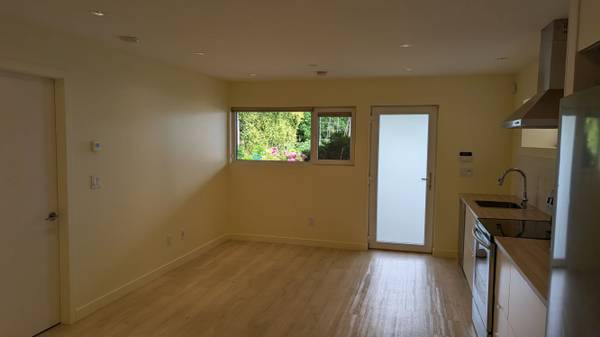


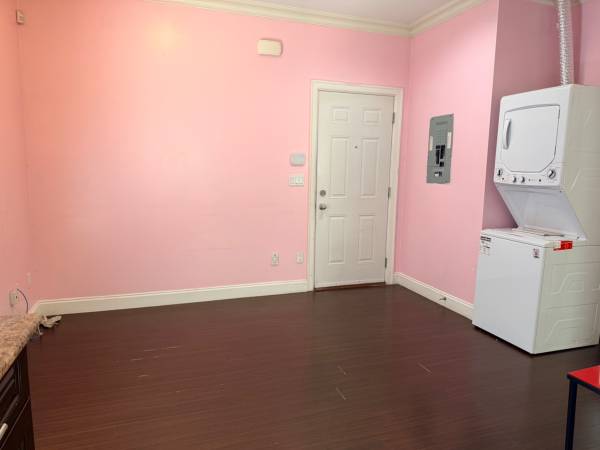

Co-ops: better economics, no income test, same wait
A housing co-operative is not a subsidy programme and it is not a landlord. You buy a refundable share, become a member of the corporation that owns the building, and pay a monthly housing charge set to cover the co-op's costs rather than what the market will bear. The Co-operative Housing Federation of BC puts the share at $1,000 to $7,000, typically around $2,000, refundable when you withdraw your membership less any damage or debt.
Ranked against the Registry, the co-op route has one large advantage and one large risk.
The advantage is that a non-subsidised co-op unit has no income ceiling. You do not need to earn under $24,596. You need to be accepted as a member and to pay the full housing charge, which is below market because it is cost-based, not because you are poor. For a household earning $50,000 to $90,000 — too much for deep subsidy, too little for a $2,377 asking rent — this is the only route in this half of the ranking that is open at all, other than BC Builds.
The risk is legal, and it is the thing people learn too late. Section 4(a) of the Residential Tenancy Act says the Act does not apply to living accommodation rented by a not-for-profit housing co-operative to a member of the co-operative. No Residential Tenancy Branch, no statutory deposit rules, no statutory notice periods, and no annual increase cap — the 2.3% ceiling for 2026 is a mechanism of the Act and it does not reach a housing charge voted on by members at a general meeting. In practice co-op charges have risen more slowly than market rents, but that is budgeting discipline, not law, and the distinction matters when you are deciding what you are buying. The rest of the trade-off, including the participation expectations, is in co-op housing in Vancouver.
On timing, CHF BC is unusually candid: the wait from applying to merely being interviewed runs from three months to three years or longer, subsidised units wait longer than full-charge units, and some co-ops are not accepting waitlist applications at all. There is no central list — CHF BC does not take applications or screen applicants, so you apply co-op by co-op, and several want you at an orientation evening before they will hand you a form. If the share is the obstacle, the province runs a share purchase supplement for people on assistance and CHF BC administers no-interest loan funds.
The one place where member spots genuinely exist rather than being inherited is new construction. A newly built co-op fills its entire membership at once, which is a different proposition from waiting for one unit in an established building to turn over, and the non-profit developers active in this region publish their pipelines. Watching those beats joining a fifth waitlist.
Metro Vancouver Housing is a separate landlord and a separate application
Metro Vancouver runs its own non-profit housing corporation, and has done since 1974. It operates 3,400 affordable rental homes in what it calls 50 communities across the region, for families, seniors and people with disabilities on low to moderate incomes, housing more than 10,000 residents. It has committed $150 million to renewing existing homes and building new ones, and says it will deliver more than 2,000 new and redeveloped non-market rental homes within ten years.
The actionable point is administrative and it costs people years. Applying to BC Housing's Registry does not apply you to Metro Vancouver Housing. They are different organisations with different application processes, and a household that filed one form in 2023 and assumed it covered everything has been waiting on a list it is not on. Only a handful of Metro Vancouver Housing sites accept applications at any given time; the list of which ones changes, so it is a page to check quarterly rather than once.
The same logic applies across the sector. Some non-profit providers participate in the Registry and some run their own lists, and there is no way to tell from outside which is which except by asking, so the correct posture is a spreadsheet of providers rather than a single application. Who your landlord actually is sets out the six kinds of operator you can end up with and how differently each behaves.
Below-market units created by rezoning
This is the fastest-growing category of below-market housing in Metro Vancouver and the hardest to find, because nothing about it is centralised.
The mechanism is a housing agreement. Under section 483 of the Local Government Act, a municipality may enter an agreement with an owner covering the form of tenure of housing units, the classes of people to whom those units must be made available, how they are managed, and — the operative part — "rents and lease, sale or share prices that may be charged, and the rates at which these may be increased over time." The municipality must then file a notice in the land title office, after which the agreement binds every person who acquires an interest in the land. Vancouver has its own equivalent power under section 565.2 of the Vancouver Charter, headed "Housing agreements for affordable and special needs housing".
Three things follow from the statutory wording, and they explain most of what is confusing about these units.
The rent is set by contract, not by the Act. The agreement can fix both the rent and the rate at which it rises. So a below-market unit may escalate on a schedule written into a document registered against the building in 2021, which is a different question from the annual increase a landlord may serve on a sitting tenant. Ask which one governs before you sign.
Eligibility is defined by the agreement, not by BC Housing. The classes of person entitled to the units are whatever the bylaw and agreement say. In practice municipalities peg them to income bands or to published rent tables, and the bands differ between Vancouver, Burnaby, Richmond, New Westminster and Coquitlam because each council wrote its own. There is no province-wide income limit for this category, and a household rejected in one municipality may qualify in the next.
The unit is let by a private operator. These are usually market-rate buildings with a below-market component, managed by the developer's property manager. You apply the way you apply to any private building, on their form, with their screening — which means the ordinary rental application packet matters here in a way it does not for the Registry.
Burnaby is the clearest case in the region because it has written the requirement into law rather than negotiating it project by project. The city runs replacement rental requirements, which give tenants displaced by redevelopment a right to return, alongside inclusionary rental requirements that oblige new projects to deliver non-market units for low and moderate income households. Those requirements began life in the city's Rental Use Zoning Policy and were carried into the Zoning Bylaw in 2026, and the tenant assistance regime attached to them gives a displaced tenant the right to return to the new building in a unit with the same number of bedrooms at their old rent plus any increases the Residential Tenancy Act would have allowed, plus a rent top-up to bridge the gap in the meantime. Where Burnaby projects have set non-market rents, they have been pegged to CMHC median market rates rather than to a deep-subsidy formula.
That last detail is the one to internalise before you get excited. A rent set at the CMHC median is below the asking rent on a new lease, sometimes substantially — that is the whole of the gap between the two series described at the top of this page. It is not a rent-geared-to-income rent. A household that needs $615 a month is not helped by a unit at $1,800, and municipal below-market programmes are aimed squarely at the moderate-income band that the Registry excludes and the market has priced out.
Finding them is the real difficulty. There is no regional list, and the units are advertised by whoever manages the building, on the same portals as everything else, sometimes flagged as below-market and sometimes not. The workable method is to identify the new secured-rental buildings completing in your municipality, contact the operators and ask whether the housing agreement includes below-market units and how they are allocated. That is tedious, and it is also why these units are less contested than their price suggests. Treat them as events rather than queues: a building leases up over a few weeks and the intake closes, so the useful behaviour is monitoring, not applying.
One-bedrooms in Surrey inside the Rental Assistance Program rent ceiling
70 matches as we last checked, confirmed today. This block is rebuilt from the live feed, so it is never the list that was here when the article was written.



How to check a below-market claim before you sign
The word "affordable" in a listing carries no legal content whatsoever. Nothing stops a leasing agent applying it to a market unit that happens to be cheaper than the one next door. Four checks separate a secured below-market unit from a marketing line, and all four can be done before a viewing.
Ask which document sets the rent, and ask for the clause. A genuinely secured unit is secured by something: a housing agreement with the municipality, an operating agreement with BC Housing, or a co-op occupancy agreement. An operator who cannot say which one applies, or who answers with a comparison to nearby listings, is describing a price rather than a protection.
Search the title. This is the check almost nobody runs and it is the most conclusive. Section 483 requires the local government to file a notice in the land title office once a housing agreement is entered into, and that notice binds every subsequent owner, so a title search on the address will show whether one is registered. If nothing is, the discount is a policy of the current owner and lasts as long as the current owner does.
Ask what the escalation clause says. A housing agreement can fix the rate at which the capped rent rises, and that rate is not necessarily the provincial cap. Some agreements peg the unit to a percentage of a CMHC figure re-published annually, which means your rent moves with the market rather than with the Consumer Price Index — over five years those produce very different numbers.
Ask whether eligibility is retested. Some agreements test income once, at move-in. Others require annual re-certification and provide for the rent to rise to market, or for the tenancy to end, if you go over the cap. That is the difference between a below-market home and a below-market probation, and it should be settled before you hand over a deposit.
If the answers are vague, ask the municipality rather than the operator. Planning departments hold the housing agreements they signed.
The new supply, and what it adds up to
Three provincial and regional programmes are adding stock. It is worth being precise about which of them a person searching this month can actually apply to.
| Programme | What it delivers | Reach so far | Source |
|---|---|---|---|
| BC Builds | In buildings receiving grants, at least 20% of homes at 20% below market rents | Launched Feb 2024; first completions projected 2026 | bcbuildshomes.ca, Aug 2026 |
| Rental Protection Fund | Buys existing rental buildings for non-profit ownership | 2,193 homes, 50+ properties, 24 BC communities since 2023 | rentalprotectionfund.ca, Aug 2026 |
| Burnaby Housing Authority | Municipal non-market and market rental | First two projects at the development application stage since Oct 2025 | City of Burnaby announcement, Oct 2025 |
BC Builds is the one genuine addition to the menu for middle incomes. Eligibility runs up to $143,900 for units with fewer than two bedrooms and $212,240 for two bedrooms or more — an order of magnitude above the Registry's $24,596. The programme is designed to move a project from concept to construction in 12 to 18 months rather than the usual three to five years. Two cautions. The discount is 20% below market on 20% of the homes in buildings that received a grant, so the number of genuinely below-market units per building is small, and the other 80% is market rent. And "first completions projected in 2026" means this is a route with a pipeline, not a stock. Check what has actually opened before you build a plan on it.
The Rental Protection Fund is the one people misread. It has secured 2,193 homes across more than 50 properties in 24 communities since 2023, providing housing security for more than 4,000 British Columbians, and it does almost nothing for a household searching today. The Fund buys existing occupied buildings and transfers them to non-profit ownership. Sitting tenants keep their tenancies. No queue is created and no unit is freed. What it does is stop those buildings repricing to market at every turnover, which matters enormously in ten years and not at all this month.
Now the reach arithmetic, which is the honest end of this section. Metro Vancouver Housing's entire existing portfolio of 3,400 homes is under nine tenths of one percent of the region's 394,710 renter households, and the Rental Protection Fund's 2,193 homes are spread across the whole province rather than this region. Every programme in this table, added to Metro Vancouver Housing's ten-year commitment and to the province's own contracting completion targets, changes the position of a low single-digit percentage of renter households here over a decade.
That is not an argument against applying. It is an argument against waiting, and the next section is what the sequencing should look like.
File everything you qualify for in one week, then search as though none of it will land
Almost none of the eleven routes exclude each other, and only one of them costs money to apply for. That combination should decide your sequencing: the correct move is not to pick the best route, it is to file every application you are eligible for inside a single week, then run a normal market search on the assumption that not one of them pays out this year. The applications sit in the background costing nothing. The search is what actually houses you.
The exclusions worth knowing before you file are narrow and specific. Living in a subsidised unit disqualifies you from SAFER outright, and disqualifies you from the Rental Assistance Program and the Canada-BC Housing Benefit on the same logic, so a household weighing a BC Housing offer against a private tenancy with a subsidy attached is choosing, not stacking. Co-op housing counts as subsidised housing for that purpose, and becoming a co-op member also takes you outside the Residential Tenancy Act under s. 4(a), which is a change in your legal position rather than a change in your rent. Everything else runs in parallel.
| Route | Cost to apply | Time to the first dollar | What it blocks, and what blocks it | Source |
|---|---|---|---|---|
| Housing Registry (rent-geared-to-income and non-market units) | $0 | Not published; treat as years | Being housed in a subsidised unit ends SAFER, RAP and CBCHB eligibility | BC Housing, Aug 2026 |
| Rental Assistance Program | $0 | Last working day of the month after approval, paid in arrears | Blocked by subsidised or co-op housing, and by income or disability assistance | BC Housing, Aug 2026 |
| SAFER | $0 | Last working day of the month after approval, in arrears | Blocked by subsidised housing, co-op share ownership, residential care and assistance | BC Housing, Aug 2026 |
| Canada-BC Housing Benefit | No public application exists; referral only | Unknown | Subsidised units, assisted living, owner-occupied homes | BC Housing, Aug 2026 |
| Housing co-operative | Application fee varies by co-op; share payable on acceptance, not on applying | Three months to three years or longer to an interview | The Residential Tenancy Act stops applying to you (s. 4(a)) | CHF BC |
| Below-market units secured through rezoning | $0, direct to the operator's waitlist | When a specific building completes | Nothing | Operator |
| BC Rent Bank | $0 | 5–10 business days | Nothing | BC Rent Bank |
| BC renter's tax credit | $0, one line on your return | At assessment, once a year | Nothing | Form BC479 |
| Staying in a rent-controlled tenancy | $0 | Immediately, every month | Nothing | RTA s. 43 |
Two rows in that table are the ones people leave unfiled. The renter's tax credit is worth up to $400, it is claimed on form BC479, and it requires only that you occupied an eligible BC rental for at least six one-month periods in the year. For 2026 it begins reducing at $66,189 of adjusted income at 2% of every dollar above that and disappears at $86,189, which means almost every household reading this page qualifies for the full amount. And the Rent Bank is the only route on the list that reliably produces money inside a fortnight, which is exactly why it is the wrong tool for a standing gap between your income and your rent.
The other habit worth adopting on day one: file a tax return every year even at zero income. The Rental Assistance Program, SAFER and the Canada-BC Housing Benefit all require it, the renter's tax credit is claimed on it, and BC Housing's annual reapplication process runs off it. A nil return takes twenty minutes and is a precondition for four of the eleven routes.
Then take rows 2 and 3 of the ranking as seriously as the applications. Renting a room or sharing a suite is the largest single discount available to anyone in this region without an income test, a form or a wait: splitting a $2,364 two-bedroom beats a $1,667 studio by $485 a month, which is more than SAFER's minimum benefit, more than most below-market discounts, and available on a fortnight's notice. Budget the search itself against what you can realistically carry rather than against a subsidy you have not been approved for.
One folder answers almost every application
The applications differ in what they test and barely at all in what they ask you to produce. Assemble this once:
- Notice of Assessment from the CRA for every adult in the household, most recent year. This is the document the income tests are actually run against.
- Proof of twelve months in BC. The Rental Assistance Program, SAFER and the Canada-BC Housing Benefit all impose a twelve-month residency requirement.
- Current tenancy agreement and proof of what you actually pay. The 30%-of-gross-income test compares your rent to your income, so the rent has to be evidenced. Section 13 requires the written agreement to state the rent and what is included in it, which is why a verbal tenancy makes these applications harder than they need to be.
- Bank and asset statements. The Rental Assistance Program applies a $100,000 asset ceiling, and BC Housing-managed buildings apply the same figure. SAFER does not.
- Documentation for dependants, including full-time study confirmation for a dependant aged 19 to 24, and CRA disability documentation where it applies. RAP's dependent-child requirement is absolute and it is the most common reason an otherwise eligible household gets nothing.
- Citizenship, permanent residence or protected-person status. All three cash programmes require the applicant and spouse to be a citizen or permanent resident not under sponsorship, a government-sponsored refugee, a refugee claimant, or the holder of a Ukrainian CUAET visa.
That folder does not transfer cleanly to the private market, and the difference matters. A benefits application tests your income against a published line. A landlord's application tests you against other applicants, and a good deal of what a Metro Vancouver landlord asks for at a viewing they have no right to receive. Keep the two document sets separate, and do not hand a landlord your Notice of Assessment because BC Housing wanted one.
Two-bedrooms in East Vancouver worth splitting two ways
39 matches as we last checked, confirmed today. This block is rebuilt from the live feed, so it is never the list that was here when the article was written.


Every route on the list taxes a raise
This is the part of the subsidy system nobody explains before you are inside it, and it changes how you should think about a pay rise, a second job, or a partner moving in.
Rent-geared-to-income means what it says. Where a unit is set at roughly 30% of gross household income, every additional $100 a month you earn raises your rent by about $30. That is a 30% marginal rate on gross income, sitting on top of income tax and every other income-tested benefit you receive. Providers recalculate on a schedule set by their own operating agreement — annually is typical — and most require you to report a material change in income in between, so the adjustment arrives whether or not you volunteer it. Check the specific provider's policy rather than assuming, because they differ.
The two cash programmes work the same way through a different mechanism. Both reimburse a share of the gap between 30% of your gross income and your actual rent. Raise the income and the gap narrows, so the payment shrinks. Both are reassessed on annual reapplication, and missing that reapplication stops the payment entirely while you remain fully eligible — a common and avoidable way to lose money you are owed.
Then there are the cliffs, which are worse than the slopes:
| Programme | The line | What crossing it costs | Source |
|---|---|---|---|
| SAFER | $3,333.34 gross monthly, or $40,000 a year | The entire benefit, minimum $50/month | BC Housing, Apr 2025 figures, current Aug 2026 |
| Rental Assistance Program | $60,000 gross household income; $100,000 in assets | The entire benefit | BC Housing, Apr 2025 figures, current Aug 2026 |
| Deep subsidy income limits | $24,596 for under two bedrooms; $30,745 for two or more | Eligibility for deep subsidy, not for the Registry as a whole | BC Housing, 2026 limits |
| BC Rent Bank | $58,000 for one bedroom or less, rising to $107,500 for four-plus | Access to the loan | BC Housing HILs, effective 1 Dec 2025 |
| Canada-BC Housing Benefit | $2,666 monthly for a single or couple; $3,333.33 for a family of four or fewer; $3,700 for five or more | The entire benefit | BC Housing, Aug 2026 |
A senior at $39,600 a year who takes on casual work that pushes them to $40,400 loses SAFER completely and keeps $800 of gross income. That is not a reason to refuse work, but it is a reason to know where the line sits before you agree to hours, and it is the single most useful number for anyone in that group to memorise. Note what is not on that list: the rent ceilings. Those cap the rent used in the calculation and never disqualify anyone, which is the misreading corrected earlier.
The scams are built for this search specifically
Fraud follows urgency, and this is the most urgent search in the region. A household searching under $1,500 is competing inside the 1.1%-vacancy bottom quartile while the market above it sits at 6.7%, and the people running rental fraud know what that does to a person's judgement. Four tells are specific to the below-market search rather than to renting generally:
A fee to join a waitlist. The Housing Registry is free. Co-op waitlists are free or carry a small published application fee paid to the co-op itself. Nobody charges for a place in a queue, and nobody can sell you a better position in one.
A fee to file a RAP or SAFER application. Both are free, both are filed directly with BC Housing, and no intermediary is required or helpful. Paid "application services" for these programmes are worthless at best.
A listing described as "BC Housing approved" or "subsidised" on a classifieds site. Non-market units are allocated by their operators from the Registry or from the operator's own list. They are not advertised to the general market with a phone number and a request for a deposit.
A co-op share demanded before an interview or an offer of membership. The share is real and refundable, but it is payable on acceptance, at the end of a process that includes meeting the members. Paid up front to someone who contacted you, it is simply a theft.
The statutory backstop is the same one that applies to any tenancy: under s. 19(1) a security deposit is capped at half of one month's rent, and s. 20(a) allows it to be collected only when the tenancy agreement is entered into. Money demanded before there is an agreement, before you have seen the unit, or to "hold" anything, is outside the Act entirely. The patterns currently running in this region, and what recovery looks like when money has already moved, are in our guide to rental scams in Vancouver.
Five situations where the below-market unit is the worse deal
Being offered something below market is not the same as being offered something better. Five cases where the honest answer is to decline:
A co-op, if you need the Residential Tenancy Branch. The trade described earlier is real security and real cost control in exchange for the province's dispute machinery, and members are governed by the co-op's own rules and the Cooperative Association Act instead. For most members it is a good trade. For someone whose likely future problem is a landlord dispute, it is not.
A below-market unit at "20% off starting market rents". That is the standard right-of-first-refusal offer to a displaced tenant in the City of Vancouver, and the discount is measured against the new building's opening rent, not against what you were paying. Twenty per cent off a $3,000 one-bedroom is $2,400. Against a sitting tenancy at $1,494 — the CMHC October 2025 average for Marpole, the cheapest zone inside the city — it is a $906 a month increase wearing the word "affordable".
A subsidised unit that costs a senior their SAFER. Run both numbers before accepting. The subsidised rent has to beat the private rent net of the SAFER payment, and where the private rent is modest and the payment is near its maximum, sometimes it does not.
A cheap unit in a building with a live rezoning or development application. The rent is low because the building is old and the owner has other plans for the land. Compensation under the City of Vancouver's Tenant Relocation and Protection Policy scales with the length of the tenancy and starts at four months' rent for a tenancy of up to five years, which is real money and is not a substitute for a home. Ask what applications are open on the address before you sign. The City's website was not reachable from our checking tools on 11 August 2026, so confirm the current schedule with the City rather than with a listing.
A cheap unit whose commute eats the saving. On the October 2025 averages, moving to Langley to save on rent buys about $3.36 an hour of commuting time once the three-zone fare is priced in, against roughly $81 an hour for a move from Downtown to Mount Pleasant. Run your own address through the area comparison before accepting anything on price alone.
Defending a below-market rent once you have one
This is the route that ranked first, and defending it is a different skill from getting it.
The compounding is the whole argument. A tenancy at $1,500 today, increased at 2.3% every year, is paying about $1,681 in five years against a July 2026 City of Vancouver asking rent of $2,377 for a one-bedroom. On those two numbers the tenancy is worth roughly $696 a month, or $8,357 a year, by year five — and that assumes the cap stays at 2.3%, which it will not, and that asking rents stay flat, which they have not either. The direction of both is uncertain; the structure is not. The gap widens for as long as you stay and closes to zero the day you leave, so the defensive rules matter more than they look.
Do not lose it to arrears. A 10 Day Notice for unpaid rent gives you five days from receipt to pay in full or dispute under s. 46(4), and paying in full within those five days cancels the notice. Because the rent bank takes five to 10 business days, the loan application and the dispute filing have to run at the same time — file the dispute first and sort the money out afterwards.
Do not accept an unlawful increase. An increase above the cap, served early, or served on something other than the approved form is not payable in the excess. The lawful amount remains payable, and paying it is not a breach.
Never assign a tenancy you intend to come back to. The distinction set out earlier is worth thousands of dollars a year to anyone leaving for a contract, a placement or a family emergency: a sublet keeps you as the tenant and returns the unit to you, and an assignment ends every claim you have to that rent.
Ask who owns the building. Section 49(6.1) bars a landlord's-use, family-corporation-use or purchaser's-use eviction where the building holds five or more rental units and is either not strata-titled or is strata-titled with every rental unit under one owner. A purpose-built rental building run by a single operator is inside that bar; an individually owned condo in a large strata is not. Since most genuinely cheap purpose-built stock in this region is pre-1980 and single-owner, the first-ranked route and the strongest eviction protection tend to arrive in the same building.
Know what a renovation actually requires. Since the 2024 amendments a landlord cannot simply serve a renoviction notice. Under s. 49.2 they must apply to the Residential Tenancy Branch and satisfy the director that the work is necessary, requires vacant possession, and is sought in good faith, and any order takes effect no earlier than four months after it is made. In a building of five or more units, s. 51.2 gives you a right to a new tenancy agreement in the renovated unit if you give written notice before leaving, and s. 51.3 makes the landlord pay twelve times the monthly rent if they then fail to offer it.
When something is refused, and the clocks that start
The Registry does not refuse anyone; it simply does not select you. Providers choose from it using the information currently on your file, which makes updating the file the only thing within your control — a change in household size, income, health or housing status is worth reporting the week it happens rather than at the next annual contact.
A refusal from one of the cash programmes usually turns on one number, and BC Housing will tell you which. Check it against the cliffs above before doing anything else, because the commonest causes are an income figure a few hundred dollars over the line, a missing tax return, the twelve-month residency requirement, or the asset test. Three of those four are fixable and one of them is fixable by waiting.
The deadlines that do not wait are the tenancy ones, and missing one generally ends the argument regardless of its merits. Five days to pay or dispute a 10 Day Notice under s. 46(4). Twenty-one days to dispute a landlord's-use, family-corporation or purchaser's-use notice, on a three-month notice period, both set by sections 42.2 and 42.3 of the Residential Tenancy Regulation. Thirty days to dispute a demolition or conversion notice under s. 49(8)(a), on four months' notice, and the landlord must hold every permit required by law before serving it. A below-market tenancy lost to a missed deadline is not recoverable at any price, so diarise the date the day the notice arrives, before you decide whether you intend to fight it.
What the ranking is actually telling you
The uncomfortable finding of this page is that the routes with an application form behind them cannot absorb the demand standing in front of them, and the route that houses the most people below market — an old tenancy the rent cap has protected while the market repriced around it — is not a programme, cannot be applied for, and is allocated entirely by luck and by not having moved. That is not a description of a housing system working as intended. It is the arithmetic of 2.3% inside a tenancy and no limit at all between them.
What follows from it is practical rather than consoling. File every application you qualify for this week, because they cost nothing and the queues only run in one direction. File a tax return whether or not you owe anything, and claim the renter's tax credit on it. Then search the private market daily rather than weekly, because at 1.1% vacancy in the cheapest quartile the good units in your band are gone before a weekly sweep finds them, and go looking in the pre-1980 purpose-built stock specifically, for the reasons set out earlier in this page.
And if you already have a below-market rent, the most valuable financial decision available to you in this region is to stay in it. Every move resets the rent to whatever the market bears that month. Nothing in the Act gets it back.
Nothing here is legal advice, and every programme figure on this page is as published at 11 August 2026 — the income limits and rent ceilings move, so check BC Housing's own pages before relying on a number. The Residential Tenancy Branch takes calls at 1-800-665-8779, the Tenant Resource and Advisory Centre runs a free tenant infoline, and the rest of our tenant guides cover the mechanics of each route in full.
Keep reading
The rest of what we have written about renting here.
Renting in Vancouver
Furnished, Short-Term and Month-to-Month Rentals in Metro Vancouver
Ninety days puts your stay outside BC's short-term rental law, 27 days ends the accommodation tax and one month ends the GST. What each threshold costs you.
Renting in Vancouver
Moving to Metro Vancouver: The Renter's Ninety-Day Plan
A ninety-day plan for renting in Metro Vancouver from out of province: the bank account, the application file, the calendar, the deposits and arrival week.
Renting in Vancouver
Pet-Friendly Rentals in Metro Vancouver
BC gives a tenant no right to keep a pet, and most apartments here sit under a strata bylaw as well as a lease. Where the one-yes stock is, and what it costs.
How to rent
Rental Applications in BC: What a Landlord Can Ask For
A landlord in BC can ask for ID, references and proof of income. They cannot require your SIN, your banking details, or a photo of your driver's licence.
How to rent
Rental Scams in Vancouver: The Patterns, and What BC Law Lets You Refuse
Fake listings follow a few patterns. What they look like, what a landlord can lawfully ask for before you sign, and how to check an address fast.
Tenancy law
Renters' Rights in BC and the Sections That Back Them Up
Quiet enjoyment, 24 hours' notice before entry, repairs, rent caps, deposits and lockouts. Every BC renter's right, the section behind it, and what to do.