Renting in Vancouver
Where to Rent in Metro Vancouver
Every Metro Vancouver survey zone compared on rent, fare zone, commute time, building age and vacancy, with the trade-offs the averages quietly hide.
Updated 2026-08-12 · 54 min read
The cheapest one-bedroom average in this region is $1,426, in Maple Ridge/Pitt Meadows. The dearest is $2,469, in the University Endowment Lands. Same unit type, same survey, same October. The gap is $1,043 a month — $12,516 a year — and it is a larger lever than any other decision you will make as a renter here, including the one about whether to keep a car.
That spread is why "where" is a bigger question than "what" in Metro Vancouver. It is also why the answer is not simply "go east until it is cheap." Marpole, inside the City of Vancouver and twenty minutes down Granville from downtown, averages $1,494 for a one-bedroom. Surrey averages $1,602. Langley averages $1,765 and is two hours from downtown by transit. The map does not sort neatly by distance, and the places that look like bargains on a map are frequently not.
What follows is one argument in three movements. First the framework: what each part of the region costs, what the commute attached to it costs in fares and hours, what the housing stock is made of, and where the supply actually is. Then the areas themselves, worked through in the order a search usually runs — the city, the inner suburbs, the North Shore, the far side of the Fraser. Then the practical part: what opens before your lease does, what the calendar does to a search, and how to test an area before you commit to it.
Every figure below is dated and attributed. Rents and vacancy are from CMHC's Rental Market Survey for October 2025, published 11 December 2025, and cover occupied purpose-built rental apartments only. Fares are TransLink's, effective 1 July 2026. Transit times are median scheduled in-vehicle minutes from TransLink's schedule for 8 June to 6 September 2026. Statute is quoted from BC Laws. Everything was checked on 11 August 2026.
The region is 23 local governments and one rental market
Metro Vancouver is a federation of 21 municipalities, one electoral area and one treaty First Nation, holding 2,642,825 people at the 2021 Census. About 394,710 households in the Vancouver census metropolitan area rent, roughly 38% of the 1,043,320 total.
Three different boundaries govern your search and none of them line up:
- The municipality decides the bylaws — whether a basement suite can be legal, what a strata may charge you to move in, what time the snow has to be off the sidewalk. Twenty-one different answers.
- The CMHC survey zone is where the rent data lives. There are about thirty of them and they are drawn for statistical convenience, so "Tri-Cities" bundles Coquitlam, Port Coquitlam and Port Moody into one number, "North Burnaby" swallows Brentwood, and "East Hastings" covers a great deal of ground.
- The TransLink fare zone decides what the address costs you every month in fares. There are three, and they follow municipal lines rather than survey ones.
The gap between the first two is where most bad decisions get made. A zone average is the only published rent figure for most of this region, and it describes an area far larger than the four blocks you are actually choosing between.
One more structural fact before the numbers. CMHC's surveyed universe in the Vancouver CMA is 129,351 purpose-built rental units, against roughly 394,710 renter households. Something like two out of three renters in this region live in a rented condo, a basement suite, a laneway house or a rented townhouse — stock that is either surveyed thinly or not at all. Every rent table on this page, including ours, describes the minority of the market that is easiest to count. What renting the other kind actually involves is a separate guide, and worth reading if house-form housing is where your budget lands you.
The rent map, cheapest zone to dearest
CMHC's October 2025 one-bedroom averages, sorted by price. These are averages across every occupied tenancy in the zone, including people who signed in 2015 and have only ever had the annual capped increase applied to them.
| Survey zone | Avg. 1-bedroom, Oct 2025 | Source |
|---|---|---|
| University Endowment Lands | $2,469 | CMHC RMS, Oct 2025 |
| North Vancouver (District) | $2,350 | CMHC RMS, Oct 2025 |
| West Vancouver | $2,153 | CMHC RMS, Oct 2025 |
| Downtown Vancouver | $2,112 | CMHC RMS, Oct 2025 |
| English Bay | $1,950 | CMHC RMS, Oct 2025 |
| North Vancouver (City) | $1,918 | CMHC RMS, Oct 2025 |
| Kitsilano / Point Grey | $1,915 | CMHC RMS, Oct 2025 |
| Westside / Kerrisdale | $1,905 | CMHC RMS, Oct 2025 |
| South Granville / Oak | $1,863 | CMHC RMS, Oct 2025 |
| West End / Stanley Park | $1,830 | CMHC RMS, Oct 2025 |
| Central Park / Metrotown | $1,813 | CMHC RMS, Oct 2025 |
| Vancouver CMA average | $1,807 | CMHC RMS, Oct 2025 |
| Langley (City and Township) | $1,765 | CMHC RMS, Oct 2025 |
| North Burnaby (includes Brentwood) | $1,710 | CMHC RMS, Oct 2025 |
| Tri-Cities | $1,708 | CMHC RMS, Oct 2025 |
| Mount Pleasant / Renfrew Heights | $1,704 | CMHC RMS, Oct 2025 |
| East Hastings | $1,692 | CMHC RMS, Oct 2025 |
| Richmond | $1,676 | CMHC RMS, Oct 2025 |
| New Westminster | $1,645 | CMHC RMS, Oct 2025 |
| Surrey | $1,602 | CMHC RMS, Oct 2025 |
| Southeast Burnaby | $1,564 | CMHC RMS, Oct 2025 |
| Delta | $1,550 | CMHC RMS, Oct 2025 |
| Marpole | $1,494 | CMHC RMS, Oct 2025 |
| White Rock | $1,435 | CMHC RMS, Oct 2025 |
| Maple Ridge / Pitt Meadows | $1,426 | CMHC RMS, Oct 2025 |
Studios averaged $1,667 across the CMA and two-bedrooms $2,364, with a two-bedroom median of $2,295.
Four things fall out of that table that most "where to live" pages get wrong.
Nothing averages under $1,426 anywhere in the region. Not in Maple Ridge, not in White Rock, not forty kilometres from downtown. There is no cheap corner of Metro Vancouver, only a less expensive one.
Leaving the City of Vancouver is worth less than people assume. Marpole at $1,494 undercuts Surrey, New Westminster, Richmond, the Tri-Cities and Langley, and it is inside the city on the Canada Line. The saving from crossing a municipal boundary is real only if you also leave the SkyTrain-adjacent tower districts, because those price like Vancouver wherever they are.
Langley is the anomaly. At $1,765 it is dearer than Surrey, New Westminster, Richmond and Southeast Burnaby, and it is further from everything than all four. That is not a data error. Langley's rental stock is unusually new, and new stock prices at market because none of its tenancies are old enough to have fallen behind.
The North Shore is not one place. North Vancouver District at $2,350 and North Vancouver City at $1,918 are $432 apart, which is a wider gap than Downtown to New Westminster.
Why the table is a floor and not a price list
Every figure above is what sitting tenants pay. It is not what you will be quoted, and the difference is the single most useful thing to understand about pricing in this province.
BC has rent control on tenancies and none between them. Section 41 of the Residential Tenancy Act says a landlord must not increase rent except in accordance with Part 3, and section 43(1) limits the increase inside a tenancy to the amount set by regulation — 2.3% for 2026, down from 3% in 2025 — with three full months' notice on the approved form and at least twelve months between increases under section 42. Nothing in the Act limits what a landlord may charge the next tenant. When a unit turns over it reprices to whatever the market bears. That is vacancy decontrol, and BC has no vacancy control of any kind.
So the survey average blends a 2016 tenancy with a lease signed last month, and the number it produces describes neither. Rentals.ca and Urbanation, measuring live listings in July 2026, put the City of Vancouver one-bedroom asking rent at $2,377 against CMHC's $1,807 for the whole CMA — a gap of $570 on the same unit type. North Vancouver asked $2,588. Surrey asked $1,794. Our guide to what the average rent figures actually measure sets the two series side by side and explains which one belongs in a budget.
The direction of travel is downward, and it is moving fastest in exactly the suburbs people move to for price. The same July 2026 report recorded year-over-year drops of 7.6% in Langley, 7.3% in Coquitlam, 6.6% in New Westminster and 6.1% in Richmond, against 4.8% in the City of Vancouver, with the national average of $2,037 down 4.0% in its 22nd consecutive month of annual decline. The suburban discount is narrowing, not widening. Anyone planning a move east on the strength of a rent gap read in 2023 is planning around a gap that has since closed by a few hundred dollars.
The other half of the picture is that the softening has not reached the bottom of the market. Purpose-built vacancy across the CMA was 3.7% in October 2025, up from 1.6% a year earlier and the highest CMHC has recorded since 1988. Split by price:
| Rent quartile, Metro Vancouver | Vacancy, Oct 2025 |
|---|---|
| Cheapest 25% of units | 1.1% |
| Second quartile | 2.2% |
| Third quartile | 5.0% |
| Most expensive 25% | 6.7% |
If your budget puts you in the bottom half of the market you are searching at 1 to 2% vacancy, which is what the whole region felt like for the past decade. CMHC's 2026 Mid-Year Rental Market Update of 9 June 2026 describes the first quartile as persistently tight and reports that landlord incentives — free months, discounted parking, move-in credits, gift cards — intensified over the preceding six months. Incentives concentrate in new buildings, which are the expensive ones. Read a "one month free" offer as evidence you are shopping in the loose end of the market, and do the arithmetic before you get excited: one month free on a twelve-month lease at $2,400 is an effective $2,200, but the rent of record is $2,400, the 2026 cap of 2.3% applies to $2,400, and in year two the incentive is gone. Your real cost rises about 9% at renewal without a single rent increase being served.
That quartile table is the fact that should govern how you read everything below. A zone average tells you where an area sits in the regional order. It does not tell you whether the units at your price exist in it.
The fare zone is the second price tag on the address
TransLink raised fares an average of 5% on 1 July 2026. Adult prices:
| Fare | 1 zone | 2 zones | 3 zones | Source |
|---|---|---|---|---|
| Monthly pass | $117.20 | $156.70 | $211.65 | TransLink, 1 July 2026 |
| Compass stored value | $2.85 | $4.20 | $5.40 | TransLink, 1 July 2026 |
| Cash or contactless | $3.50 | $5.10 | $6.70 | TransLink, 1 July 2026 |
Zone boundaries follow municipal lines. Zone 1 is the City of Vancouver plus the UBC campus and the University Endowment Lands. Zone 2 covers Burnaby, New Westminster, Richmond, the North Shore, Port Moody and Coquitlam. Zone 3 is south of the Fraser — Surrey, Delta, White Rock and Langley. On the Expo Line the first boundary sits between Joyce–Collingwood and Patterson; the second is the river crossing between Columbia and Scott Road. On the Canada Line the boundary is the North Arm of the Fraser, between Marine Drive and Bridgeport. The whole Millennium Line, including every Evergreen Extension station out to Lafarge Lake–Douglas, sits inside Zone 2, which is the single most commonly misremembered fact in this system and worth $54.95 a month to a Coquitlam renter who believes otherwise.
Two rules cut the cost of a distant address and almost nobody prices them in. All bus and HandyDART trips are a one-zone fare at all times, regardless of distance. And every trip starting after 6:30 p.m. on weekdays, plus all day Saturday and Sunday, is charged as one zone. Zones only bite on weekday-daytime SkyTrain, SeaBus and West Coast Express travel. Which station you live beside decides how much that matters, and every station with its zone, its ride to Waterfront and the rent around it is set out separately. Your evening class, your Sunday visit to friends in Kitsilano and your entire weekend cost the same wherever in the region you sleep.
So the three-zone pass at $211.65 is what a Surrey or Langley renter pays to reach a downtown office five mornings a week — $94.45 a month more than a Vancouver resident's one-zone pass, or $1,133 a year. The same Surrey renter working a Surrey job and travelling by bus pays $117.20, and the zone is irrelevant to them.
The pass itself is worth less than most people assume. Break-even against stored value is roughly 41 taps a month in one zone, 38 in two and 40 in three, which at two taps a working day means about 19 to 21 office days. A full five-day week is around 21.7 working days, so the pass pays — barely. Drop to four days in the office and stored value is cheaper in every zone: 34.7 taps at the two-zone rate is $145.86 against $156.70 for the pass. At three days a week the three-zone commuter spends about $140 against $211.65. Hybrid work has quietly cut the cost of living far out, and it is one of the few genuine changes in this region's geography since 2020.
What each hour of commuting actually buys
Put the rent saving, the fare cost and the time together and the region sorts differently. Baseline is Downtown at $2,112 plus a one-zone pass. Ride times are median scheduled in-vehicle minutes to Waterfront for weekday departures between 07:15 and 08:45.
| Area | Avg. 1-bed | Zone | Pass | Rent + pass | Ride each way | Saved vs Downtown | Hours commuting a month | Saved per hour |
|---|---|---|---|---|---|---|---|---|
| Downtown | $2,112 | 1 | $117.20 | $2,229.20 | walk | — | — | — |
| Mount Pleasant | $1,704 | 1 | $117.20 | $1,821.20 | 7 min | $408.00 | 5.1 | $80.58 |
| East Hastings | $1,692 | 1 | $117.20 | $1,809.20 | 9 min | $420.00 | 6.5 | $64.52 |
| Marpole | $1,494 | 1 | $117.20 | $1,611.20 | under 27 min* | $618.00 | 19.5 or less | $31.64 or better |
| Southeast Burnaby | $1,564 | 2 | $156.70 | $1,720.70 | 24 min | $508.50 | 17.4 | $29.29 |
| New Westminster | $1,645 | 2 | $156.70 | $1,801.70 | 29 min | $427.50 | 21.0 | $20.38 |
| Richmond | $1,676 | 2 | $156.70 | $1,832.70 | 27 min | $396.50 | 19.5 | $20.30 |
| Central Park / Metrotown | $1,813 | 2 | $156.70 | $1,969.70 | 19 min | $259.50 | 13.7 | $18.88 |
| North Vancouver (City) | $1,918 | 2 | $156.70 | $2,074.70 | 12 min SeaBus | $154.50 | 8.7 | $17.80 |
| Surrey | $1,602 | 3 | $211.65 | $1,813.65 | 39 min | $415.55 | 28.2 | $14.73 |
| Port Moody | $1,708 | 2 | $156.70 | $1,864.70 | 36 min + transfer | $364.50 | 26.0 | $14.00 |
| Coquitlam | $1,708 | 2 | $156.70 | $1,864.70 | 41 min + transfer | $364.50 | 29.7 | $12.29 |
| Langley | $1,765 | 3 | $211.65 | $1,976.65 | 104 min | $252.55 | 75.2 | $3.36 |
* CMHC's Marpole zone sits at Marine Drive, the last Canada Line station before the river, so the ride is comfortably inside Richmond–Brighouse's 27 minutes. We have used 27 as a conservative upper bound, which makes $31.64 a floor rather than an estimate.
Hours are round-trip in-vehicle time across 21.7 working days a month. They exclude walking to the station and waiting for the train, which realistically adds 10 to 20 minutes at each end and hits the long rows hardest.
The column that matters is the last one. Moving from Downtown to Mount Pleasant buys about $81 an hour of commuting time. Moving to Marpole buys at least $32, on a one-zone fare, inside the city. Moving to Langley buys $3.36 an hour — under a fifth of BC's minimum wage of $18.25, for a two-hour door-to-door trip in each direction on a bus and a train. Langley's row is the whole argument against choosing by distance: you pay more rent than Surrey, New Westminster, Richmond or Southeast Burnaby, and you travel further to do it.
Note also that four of the middle rows — New Westminster, Surrey, Richmond and the Tri-Cities — are within $63 a month of each other once fares are added. The practical choice between them is not price. It is ride time, stock type and whether the neighbourhood suits you, which is what the rest of this guide is about.
One-bedroom apartments in New Westminster
46 matches as we last checked, confirmed today. This block is rebuilt from the live feed, so it is never the list that was here when the article was written.


Building age decides the bill you cannot see
The share of purpose-built rental stock predating 1980 varies from 98% to 34% across this region, and it changes your monthly cost more than a $50 difference in advertised rent.
| Area | Purpose-built stock built before 1980 | Source |
|---|---|---|
| West End / Stanley Park | 98% | CMHC RMS, Oct 2025 |
| Southeast Burnaby | 88% | CMHC RMS, Oct 2025 |
| Central Park / Metrotown | 86% | CMHC RMS, Oct 2025 |
| Kitsilano / Point Grey | 79% | CMHC RMS, Oct 2025 |
| North Burnaby | 78% | CMHC RMS, Oct 2025 |
| New Westminster | 73% | CMHC RMS, Oct 2025 |
| Vancouver CMA | 66% | CMHC RMS, Oct 2025 |
| North Vancouver (City) | 65% | CMHC RMS, Oct 2025 |
| Downtown | 59% | CMHC RMS, Oct 2025 |
| East Hastings | 58% | CMHC RMS, Oct 2025 |
| Richmond | 54% | CMHC RMS, Oct 2025 |
| Mount Pleasant / Renfrew Heights | 52% | CMHC RMS, Oct 2025 |
| Surrey | 49% | CMHC RMS, Oct 2025 |
| Tri-Cities | 47% | CMHC RMS, Oct 2025 |
| Langley | 34% | CMHC RMS, Oct 2025 |
Pre-1980 wood-frame and concrete stock was built with one boiler and one account, so heat and hot water are usually inside the rent, and there is usually coin laundry, no dishwasher and no in-suite ventilation. Post-2000 stock is individually metered, so heat lands on your BC Hydro account, and in-suite laundry and a dishwasher come as standard. Neither is strictly better, and the posted rent will not tell you which is cheaper.
The metered bill is knowable. BC Hydro's residential rate, effective 1 July 2026, is a basic charge of $0.2344 a day, then $0.1187 per kWh up to 1,376 kWh in a two-month billing period and $0.1408 above it. One person in a one-bedroom at 300 kWh a month pays about $44.88 including GST. That is the easy case. An electric-baseboard unit with single glazing in January is a different number entirely, and it is the reason a 1968 West End one-bedroom with heat included and a 2019 Brentwood one-bedroom at the same posted rent are not the same monthly cost.
Ask three questions of any listing before comparing it with another: what is included in the rent, what heats the place, and what parking costs. Section 13 of the Residential Tenancy Act requires the written agreement to state which services and facilities are included, so the answer belongs on paper rather than in a viewing conversation. A $1,900 listing with heat and hot water included beats a $1,850 listing without, and a $150 parking stall makes a $2,200 unit a $2,350 unit.
For the income side of the same calculation — what your take-home actually supports and what landlords screen on — see how much rent you can afford in Vancouver.
Where the supply is, and where you are competing
Rent tells you what an area costs. Vacancy tells you whether you can get in.
| Area | Vacancy, all units, Oct 2025 | Source |
|---|---|---|
| West End / Stanley Park | 1.7% | CMHC RMS, Oct 2025 |
| Kitsilano / Point Grey | 1.7% | CMHC RMS, Oct 2025 |
| Mount Pleasant / Renfrew Heights | 2.5% | CMHC RMS, Oct 2025 |
| North Vancouver (City) | 2.9% | CMHC RMS, Oct 2025 |
| Langley | 3.0% | CMHC RMS, Oct 2025 |
| Richmond | 3.1% | CMHC RMS, Oct 2025 |
| Southeast Burnaby | 3.6%* | CMHC RMS, Oct 2025 |
| Vancouver CMA | 3.7% | CMHC RMS, Oct 2025 |
| East Hastings | 3.8% | CMHC RMS, Oct 2025 |
| Downtown | 4.3% | CMHC RMS, Oct 2025 |
| Surrey | 4.3% | CMHC RMS, Oct 2025 |
| North Burnaby | 5.6%* | CMHC RMS, Oct 2025 |
| New Westminster | 5.8%* | CMHC RMS, Oct 2025 |
| Rented condos, CMA-wide | 1.5% | CMHC RMS, Oct 2025 |
* CMHC flags these three estimates as poor reliability. Treat them as directional. The Central Park/Metrotown and Tri-Cities zones were suppressed entirely for want of a reliable estimate, which means nobody can tell you honestly how tight those two markets are.
Two readings. The West End and Kitsilano are not expensive areas with some competition; they are areas where the purpose-built stock effectively does not turn over, and where vacancy in the cheapest quartile of units was 0.0% and 0.5% respectively. Searching there on a modest budget is waiting for an unusual event, not running a search.
And the rented-condo line at 1.5% is the one that catches people out in tower districts. Metrotown and Brentwood look affordable on the purpose-built averages, but a large share of what you will actually be shown there is a rented condo, let by an individual owner, at a two-bedroom average of $2,900 against $2,364 in purpose-built buildings. That is a premium of about 23%, and it comes with a landlord who can decide to move in. The reason that matters legally is set out in the Downtown section below, and it applies everywhere condos dominate the listings — Yaletown, Coal Harbour, the Cambie corridor, No. 3 Road in Richmond, Brentwood and Metrotown alike.
Inside the city limits, the spread is $618
The City of Vancouver is not one rental market. The gap between its most expensive survey zone and its cheapest was $618 a month on a one-bedroom in October 2025. Both ends of that gap are in the same municipality, on the same transit system, paying the same city taxes and the same one-zone fare.
| Survey zone | Avg. 1-bed | Vacancy, all units | Built before 1980 | Weekday peak ride to Waterfront |
|---|---|---|---|---|
| Downtown | $2,112 | 4.3% | 59% | walk |
| English Bay | $1,950 | — | — | walk |
| Kitsilano / Point Grey | $1,915 | 1.7% | 79% | 12 min bus, 4th & Macdonald to Burrard Stn |
| Westside / Kerrisdale | $1,905 | — | — | — |
| South Granville / Oak | $1,863 | — | — | — |
| West End / Stanley Park | $1,830 | 1.7% | 98% | walk |
| Vancouver CMA average | $1,807 | 3.7% | 66% | — |
| Mount Pleasant / Renfrew Heights | $1,704 | 2.5% | 52% | 7 min, Broadway–City Hall |
| East Hastings | $1,692 | 3.8% | 58% | 9 min, Commercial–Broadway |
| Marpole | $1,494 | — | — | under 27 min, Marine Drive |
Dashes are cells we do not hold a sourced figure for, not zeroes and not estimates. Sources are as set out at the top: CMHC's October 2025 survey and TransLink's schedule effective 8 June 2026. The same zones are compared against Burnaby, Surrey and the North Shore in our neighbourhood comparison for renters.
Two things in that table are worth staring at. Marpole averages less than Metrotown, New Westminster and the Tri-Cities while sitting on the Canada Line inside Zone 1. And Downtown, the most expensive zone, has the loosest market in the city at 4.3% vacancy, above the regional average. The conventional advice to leave Vancouver to save money is not wrong, but it is imprecise. Leaving the west side and the peninsula saves money. Leaving the city does not necessarily.
Downtown: the softest market in the city, and the eviction rule behind it
Downtown's 4.3% vacancy is the highest of any zone in the city, and it is where the incentives described earlier will actually be offered to you. It is also where the most consequential distinction in this entire guide is easiest to get wrong.
Fifty-nine per cent of Downtown's purpose-built stock predates 1980 — a fact almost nobody expects from a skyline of glass. The pre-1980 half is concrete rental on the Georgia and Hornby blocks and around the edges of Yaletown. The post-2000 half is the towers. What is not in the CMHC figure at all is the rented-condo market, which in a district like Yaletown or Coal Harbour is most of what you will actually be shown.
That distinction is not aesthetic. It decides whether you can be evicted so that someone else can move in.
Section 49(6.1) of the Residential Tenancy Act says a landlord must not give notice to end a tenancy for landlord's use, family-corporation use or purchaser's use where the building contains five or more rental units and is either not strata-titled, or is strata-titled with every rental unit owned by the same owner. A purpose-built rental tower run by one operator is squarely inside that bar. Personal-use eviction is simply not available to them.
An individually owned condo in a 300-unit strata is not. Every unit has a different owner, so the building fails the test, and the owner can end your tenancy because their son is moving back from Toronto. Under section 42.2 of the Residential Tenancy Regulation the notice period for those grounds is three months, and section 42.3 gives you 21 days to dispute. You are owed one month's rent under section 51(1), and twelve times the monthly rent under section 51(2) if the stated purpose is never carried out. Our guide to eviction notices in BC works through what a valid one has to contain and how the dispute clock runs.
So the question to ask at a Downtown viewing is not about the gym. It is: does one company own this whole building, or am I renting one unit from one owner? A leasing office with a name on the door and a maintenance ticketing system is telling you the answer. A realtor showing you a unit on behalf of an owner in another country is telling you a different one. That question is worth asking in Brentwood, Metrotown, Richmond City Centre and Lower Lonsdale too — anywhere the towers are new — and it is the one screening question that changes the risk profile of a tenancy rather than its price.
One-bedrooms in Downtown Vancouver worth a viewing
62 matches as we last checked, confirmed today. This block is rebuilt from the live feed, so it is never the list that was here when the article was written.


The West End: ninety-eight per cent of it predates 1980
No other zone in Metro Vancouver is this uniform. Ninety-eight per cent of the West End's purpose-built rental units were built before 1980, which tells you almost everything about what renting there is like before you see a single suite.
What that buys: heat and hot water included in the rent, because the building has one boiler and was never individually metered. Bigger rooms than a 2019 tower gives you at the same price. Concrete or heavy wood-frame construction that does not transmit every footstep. And a walk to a Downtown office, which is worth $117.20 a month in one-zone pass fares, or $1,406 a year, against every commuting alternative in this guide.
What it costs: coin laundry in the basement, no dishwasher, no in-suite ventilation, radiators you cannot turn down, and a building envelope from the Trudeau-senior era.
The trap is availability. West End vacancy was 1.7% across all units, but CMHC's quartile data puts vacancy in the cheapest quarter of West End units at 0.0%. Not near zero. Zero. Those suites belong to people who moved in a long time ago and are never leaving, because leaving means surrendering a rent that BC's tenancy-based rent control has protected for fifteen years and re-entering at today's asking price. If your budget is under about $1,700 for a West End one-bedroom, you are not searching a market, you are waiting for a death or a divorce. West End listings are worth watching precisely because so few appear.
One structural comfort: almost the entire zone is purpose-built rental of five or more units in single ownership, which puts it inside the section 49(6.1) bar described above. Personal-use eviction is off the table. Demolition is not, and that is a different section with different numbers — four months' notice under section 49(2)(a)(i), 30 days to dispute under section 49(8)(a), and the landlord must hold every permit and approval required by law before serving it, under section 49(6). The three-month, 21-day timeline prescribed by the Regulation applies only to landlord's-use, family-corporation and purchaser's-use notices. It does not apply to demolition. Anyone who tells you a demolition notice runs three months is a month wrong, and a month is a viewing season.
Kitsilano, Point Grey and the west side's transit problem
Kitsilano/Point Grey averages $1,915 on a one-bedroom, 79% of the stock predates 1980, and vacancy was 1.7% overall with 0.5% in the cheapest quartile. It is the West End's problem with a slightly newer building stock and a worse commute downtown.
The commute is the part people get wrong. Kitsilano is not on rapid transit and will not be for the life of any lease you sign now. The Broadway Subway extends the Millennium Line 5.7 km from VCC-Clark to an interim terminus at Arbutus with six underground stations, and the Province says it opens to the public in fall 2027. Arbutus is the end of the line. Everything west of it — Kits Point, West Point Grey, the whole of 4th Avenue past Macdonald — stays bus territory, and TransLink says B-Line service continues between Arbutus and UBC both before and after the subway opens.
For anyone heading to campus rather than downtown, that changes the calculus in Kitsilano's favour and then takes some of it back. The 99 B-Line is scheduled at 11 to 16 minutes from Alma at 10th Avenue to UBC Exchange, against 33 to 48 minutes from Commercial–Broadway. But the 99 was TransLink's busiest bus route in 2025 with 10,655,000 boardings, and boarding at Alma means boarding a bus that has already loaded the entire Broadway corridor. UBC's own off-campus guide warns that buses near campus "are usually very full and sometimes too full to stop." A rider starting at Commercial–Broadway gets on at the terminus, on an empty bus. Thirty-three minutes you can board beats eleven minutes that drives past you, and our breakdown of every UBC commute has the scheduled times from ten starting points.
Marpole is the west side's outlier and the cheapest zone in the city at $1,494. It sits at the south end of the Canada Line, it is a twenty-minute run down Granville from Downtown, and it averages $618 less than Downtown and $421 less than Kitsilano. The reasons are unglamorous — older three-storey walk-ups, aircraft noise on some blocks, a retail strip nobody writes about — and they are worth $5,000 a year before the fare zone is even counted.
The Broadway Plan is the largest single thing happening to renters in this city
If you are looking at a 1960s walk-up anywhere between Vine Street and Clark Drive, between 1st Avenue and 16th Avenue, read this section before you sign. That rectangle is the Broadway Plan area, approved by Council in June 2022 with a thirty-year horizon, and it covers parts of Kitsilano, Fairview and Mount Pleasant. Council approved a further set of updates on 12 December 2024.
The plan's purpose is to put housing and jobs around the new subway, and the capacity it creates is substantial — the City has not published a single settled headline figure we were able to confirm, so treat any number you see quoted for it, including ours in earlier drafts, with suspicion and check the current City report rather than a blog. What is not in doubt is the arithmetic underneath: the homes the plan replaces are mostly older purpose-built rental, and those blocks hold the cheapest secure rental stock on the west side and in Mount Pleasant. That is the whole tension.
What protects you is a combination of provincial law and a municipal policy, and the municipal half is unusually generous. Under the City's Tenant Relocation and Protection Policy, an applicant seeking a rezoning or development permit that permanently displaces tenants must file a Tenant Relocation Plan, and every tenant resident for one year or more when the application is opened is eligible. The compensation scale the City publishes rises with the length of the tenancy:
| Length of tenancy | Compensation owed |
|---|---|
| Up to 5 years | 4 months' rent |
| Over 5 to 10 years | 5 months' rent |
| Over 10 to 20 years | 6 months' rent |
| Over 20 to 30 years | 12 months' rent |
| Over 30 to 40 years | 18 months' rent |
| Over 40 years | 24 months' rent |
| Moving costs, bachelor or 1-bed | $750 |
| Moving costs, 2+ bedrooms | $1,000 |
| Right of first refusal on the new building | 20% discount off starting market rents |
Source: City of Vancouver Tenant Relocation and Protection Policy. The City revises this schedule from time to time and its website was not reachable from our checking tools on 11 August 2026, so confirm the current version with the City before relying on a figure. The structure has been stable for years; the exact brackets are what move.
That compensation can be paid as free rent, a lump sum, or both, and it stacks on top of the one month's rent the Residential Tenancy Act requires. Tenants who move out before receiving a notice to end tenancy are still entitled to it.
Now the blunt part about the 20%. The discount is off the starting market rent in the new building, not off what you were paying. Twenty per cent off a $3,000 one-bedroom in a 2031 tower is $2,400. If your walk-up rent was $1,450, the right of first refusal is a real entitlement and it is still a $950 a month increase. Treat it as a cushion, not a return ticket.
The provincial layer runs alongside it. Demolition follows the section 49(6) route already described: four months' notice, 30 days to dispute, and no notice at all until every permit is in hand. Renovation is stricter. Since the 2024 amendments a landlord cannot simply serve a renoviction notice; under section 49.2 they must apply to the Residential Tenancy Branch and satisfy the director that the renovations are necessary, require the unit to be empty, and are being sought in good faith, and any order granted takes effect no earlier than four months after it is made. In a building of five or more units, section 51.2 gives you a right to a new tenancy agreement in the renovated unit if you give written notice before you leave, and section 51.3 makes the landlord pay twelve times your monthly rent if they then fail to offer it.
Mount Pleasant, meanwhile, remains one of the better-value zones in the city on the current numbers: $1,704 on a one-bedroom, 2.5% vacancy, only 52% of stock predating 1980, and a seven-minute scheduled ride from Broadway–City Hall to Waterfront. That is the shortest transit commute to Downtown of any zone outside the peninsula. What you are buying alongside it is a neighbourhood in the middle of being rebuilt.
East Vancouver splits at Nanaimo Street
The East Hastings zone averaged $1,692 on a one-bedroom with 3.8% vacancy — looser than Kitsilano, the West End and Mount Pleasant, and marginally above the regional average. Fifty-eight per cent of its purpose-built stock predates 1980. Commercial–Broadway to Waterfront is a nine-minute scheduled ride.
Two features make East Vancouver behave differently from every zone above it.
The first is that a large share of its rental housing is not in the CMHC survey at all. East Van is house-form territory — secondary suites, upper floors of suited houses, laneway houses behind them. None of it is purpose-built rental, so none of it is counted, and there is no published average rent for any of it. Anyone quoting you a confident figure for "average basement suite rent in East Vancouver" scraped it off asking prices. The cost structure is also different: one hydro meter for the whole house usually means utilities are folded into the rent, and the person who controls the thermostat lives above you. The house-form guide linked earlier sets out the section 4 question that decides whether the Act covers you at all — sharing a kitchen or bathroom with the owner puts you outside it entirely, with no deposit cap, no notice period and no access to the Residential Tenancy Branch.
The second is transit geography that splits sharply at Nanaimo Street. Anything within walking distance of Commercial–Broadway, Nanaimo, 29th Avenue or Joyce–Collingwood is on the Expo or Millennium Line and downtown in under fifteen minutes. Hastings-Sunrise, Renfrew Heights north of 1st, and the blocks between Victoria and Boundary above 12th are bus-only, on routes that share road space with traffic. Two addresses eight blocks apart can differ by twenty-five minutes each way, and the rent will not reflect it, because the CMHC zone averages them together. That is the clearest single illustration of why a zone average is a ranking tool rather than a quote: "East Hastings" covers everything from Strathcona to Boundary Road, and "Mount Pleasant / Renfrew Heights" bundles two areas eight kilometres apart into one figure.
Burnaby: one city, three rental markets
Burnaby's three CMHC survey zones sit about $250 apart on a one-bedroom, and the cheap one is not where anyone expects. Central Park/Metrotown is the dearest at $1,813, North Burnaby — which bundles Brentwood, Burnaby Heights, Capitol Hill and SFU into one number — is $1,710, and Southeast Burnaby around Edmonds and Highgate is $1,564, the lowest average of any zone north of the Fraser and inside two fare zones.
Metrotown being the priciest zone while holding the oldest stock looks like an error until you see what CMHC counts. Eighty-six per cent of purpose-built units in that zone predate 1980: 1960s and 1970s wood-frame walk-ups along Kingsway with baseboard heat and coin laundry. The glass towers you see in a listings search are overwhelmingly rented condominiums, which CMHC surveys separately at that 1.5% vacancy rate. Two markets, one postcode, and a listings site shows you both without labelling either. In Burnaby the choice between them is essentially the choice between south and north of Kingsway, and it decides more than price: a purpose-built walk-up gives you a landlord who owns the building, heat and hot water usually inside the rent, and no strata bylaws, while a rented condo gives you an individual owner, a strata council whose rules you never voted on, in-suite laundry and a dishwasher, and the personal-use exposure set out earlier.
Transit is the other axis. Metrotown and Edmonds are on the Expo Line with no transfer — 19 and 24 minutes to Waterfront respectively, and Edmonds is the best saved-per-hour figure in the region outside Zone 1. Brentwood and Gilmore are on the Millennium Line, and as of the 8 June 2026 schedule Millennium Line trains still terminate at VCC-Clark, so every Brentwood commute downtown includes a transfer at Commercial–Broadway onto a platform that is already full at 8 a.m. Do not sign a lease on the strength of a rapid transit line that is not carrying passengers yet.
North Burnaby recorded 5.6% vacancy, flagged as a poor-reliability estimate, largely because a wave of Brentwood condo completions landed at once. That is the softest corner of the Burnaby market and the one place in the inner suburbs where a renter has genuine bargaining room on a new building.
Burnaby also layers its own Tenant Assistance Policy on top of the Act for tenants displaced by rezoning applications, which goes further than the province requires. It is worth asking whether a building you are viewing sits inside a rezoning application, because that determines which set of protections applies if it comes down. Which town centre suits which kind of renter is worked through in Burnaby neighbourhoods, compared for renters.
One-bedrooms renting in Burnaby under $2,000
50 matches as we last checked, confirmed today. This block is rebuilt from the live feed, so it is never the list that was here when the article was written.




New Westminster: the shortest commute you can still afford
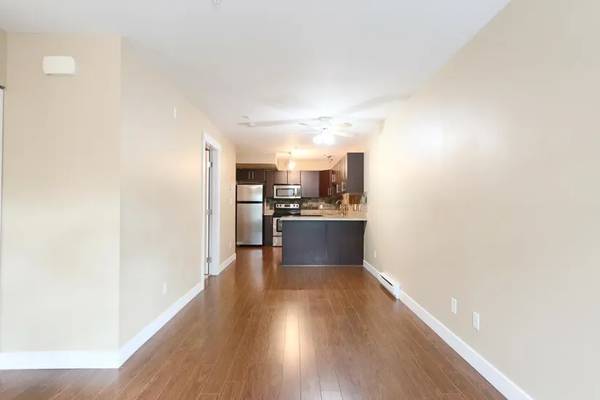
New Westminster is one of the best-priced two-zone addresses in the region on the combined number — $1,645 average one-bedroom, $1,801.70 with the pass, 29 minutes of riding from New Westminster station to Waterfront with no transfer. It is a small city, roughly 15 square kilometres, and five Expo Line stations sit inside it: 22nd Street, New Westminster, Columbia, Sapperton and Braid.
Columbia is the fork. Trains split there, one branch running south across the Fraser to Surrey and the other north-east to Production Way–University and Lougheed. If you commute sideways across the region rather than downtown, that makes New West one of the two or three best-connected places to live in Metro Vancouver, and it is why the city punches above its size for people whose office moved to Burnaby or Surrey.
Seventy-three per cent of its purpose-built rental stock predates 1980, second only to Burnaby's older zones among the inner suburbs. Practically, that means cheap walk-ups with heat included and no in-suite laundry, concentrated Uptown around Sixth and Sixth, alongside a newer tower cluster along Columbia Street and at the Quay. Sapperton is the redevelopment story, driven by the Royal Columbian Hospital expansion, and it is where new purpose-built rental is actually being delivered rather than promised. Queensborough sits across a bridge on Lulu Island with no SkyTrain at all, which is why it is cheaper and why the commute is a bus.
The topography is a genuine daily fact and nobody mentions it in listings. The city drops steeply from Uptown to the river, and a flat on Columbia Street that is a ten-minute walk from Sixth Avenue on the map is a fifteen-minute climb coming home with groceries.
One piece of local history is worth correcting because it is still repeated. New Westminster added a renoviction provision to its business licensing bylaw in 2019, and it was repealed once the province amended the Residential Tenancy Act to cover the same ground. The protection you have against a renoviction in New Westminster today is provincial, not municipal: a landlord must first obtain an order from the director under section 49.2, as set out above, before any notice can be given. What the city does still have is residential rental tenure zoning, a power granted to local governments by section 481.1 of the Local Government Act, which lets a zoning bylaw limit the form of tenure in a zone to rental. That is a supply protection rather than a tenant protection, and it is the reason the city's rental stock has not been converted out from under it. Current listings are on the New Westminster page.
The Tri-Cities: the newest buildings and a fare zone people get wrong
CMHC publishes one number, $1,708, for Coquitlam, Port Coquitlam and Port Moody together, and it hides more than most zone averages do. Port Moody's newer waterfront stock sits above it; Port Coquitlam's older walk-ups sit below it. Vacancy for both Tri-Cities zones was suppressed in the October 2025 survey, so there is no published measure of how tight the market is out there — which means nobody can tell you honestly whether you will have competition on a viewing.
What the Tri-Cities do have, measurably, is the newest rental stock of any sub-region north of the Fraser: only 47% of purpose-built units predate 1980, against 78% to 88% across Burnaby's zones. If in-suite laundry and a dishwasher are hard requirements rather than preferences, that single statistic explains why your search keeps landing out here.
The Evergreen Extension opened in December 2016 and put six stations into the Tri-Cities: Burquitlam, Moody Centre, Inlet Centre, Coquitlam Central, Lincoln and Lafarge Lake–Douglas. All six are in fare zone 2, not zone 3 — the zone boundary out here is the Fraser, not the Burnaby city line — so the Tri-Cities cost a Coquitlam commuter $156.70 a month rather than the $211.65 that a Surrey commuter pays. Every downtown commute from them is still a Millennium Line ride plus a transfer at Commercial–Broadway: 36 minutes of riding from Port Moody, 41 from Coquitlam, before you count the transfer or the walk. Burquitlam is the closest to Vancouver and has absorbed most of the new tower construction; Coquitlam Central and Lincoln put you at the town centre, Lafarge Lake and Douglas College.
Port Moody is the anomaly in the group. Moody Centre and Inlet Centre serve Suter Brook and Klahanie, Rocky Point Park is at the end of the street, and the brewery row along Murray Street is the only walkable evening economy in the Tri-Cities. Rent behaves accordingly. Port Coquitlam has no SkyTrain station at all — the commute is a bus to Coquitlam Central, or the West Coast Express.
The West Coast Express deserves a warning rather than a recommendation. It runs weekdays only, five trains inbound in the morning peak and five outbound in the afternoon, and nothing else: no midday service, no evening service, no weekends, and its own fare structure separate from the three-zone system. It is faster and more comfortable than SkyTrain from the same station and it is useless the first time you have to stay late. Treat it as a bonus on top of a commute that works without it, never as the commute itself. That applies with equal force in Pitt Meadows and Maple Ridge, where it is the only rail service of any kind.
Anmore and Belcarra round out the sub-region and have effectively no rental market — large lots, no apartment stock, and what exists is a suite in somebody's house.
The North Shore: a boat, two bridges and the second-dearest rent in the region
The District of North Vancouver averaged $2,350 for a one-bedroom, the second-highest zone in Metro Vancouver behind the University Endowment Lands at $2,469 and well above Downtown at $2,112. The City of North Vancouver, the dense strip around Lonsdale, averaged $1,918 with 2.9% vacancy and 65% of its purpose-built stock built before 1980. West Vancouver came in at $2,153. There is no cheap North Shore.
There is also no SkyTrain, and there will not be one. Everything crosses Burrard Inlet by one of three routes, and the difference between them is the whole decision.
The SeaBus is the good one: 12 minutes from Lonsdale Quay to Waterfront, running through the day at roughly ten to fifteen minute headways, dropping you directly onto the Expo, Canada and Millennium lines and the downtown bus network. It is a two-zone trip at peak because the inlet is the zone boundary. A flat within walking distance of Lonsdale Quay has, on the clock, a better downtown commute than most of Burnaby.
The bridges are the bad ones. The Lions Gate Bridge carries three lanes with a counterflow arrangement, and the Ironworkers Memorial Second Narrows crossing carries the highway. Neither has a scheduled time in any meaningful sense. If your commute depends on a bus over either one, the number that matters is not the timetable but the variance, and the variance is bad enough that North Shore residents plan around it rather than through it.
That splits the North Shore in two for renting purposes. Lower Lonsdale and Central Lonsdale are a transit city: apartments, the Shipyards, groceries at street level, and the boat. Lynn Valley, Edgemont, Deep Cove, Capilano and the upper slopes are a car city with occasional bus service, mostly houses, and mostly suites in houses rather than purpose-built units — which is where the District's $2,350 average comes from and also why that average describes very few of the units actually available.
Elevation is the North Shore's unadvertised cost, and it is not unique to the North Shore. Burnaby Mountain, Westwood Plateau and Burke Mountain all get real snow several times a winter while the flat parts of the same municipality get rain. The rent is often lower up the hill; the bus is less frequent, the walk is steeper, and the days you cannot get down are real days. Ask what the street does in snow, and ask who shovels — in most Metro municipalities the bylaw puts snow clearing on the owner or occupier, and the ticket goes to whoever lives there. West Vancouver runs its own municipal bus service, the Blue Bus, which is inside the TransLink fare system but is a separate operator with its own service levels. Listings are on the North Vancouver page.
Richmond: flat, newer and priced under Burnaby
Richmond averaged $1,676 for a one-bedroom with 3.1% vacancy, which puts it below Metrotown, below North Burnaby and $31 above New Westminster, in the same fare zone as all three. Richmond–Brighouse to Waterfront is 27 minutes on the Canada Line with no transfer, and Bridgeport, Aberdeen and Lansdowne are each closer.
Fifty-four per cent of Richmond's purpose-built stock predates 1980 — the newest profile of any inner suburb except the Tri-Cities. Most of the recent supply is concentrated in the City Centre towers along No. 3 Road, and a large share of what shows up in a rental search there is a rented condominium rather than purpose-built rental, with the individual-owner and strata-bylaw consequences that carries.
Two physical facts about Richmond shape daily life more than the rent does. It is almost entirely flat and sits at or just below sea level behind roughly fifty kilometres of dyke, which makes it the one part of the region where cycling is genuinely effortless year-round and where the dyke trail network is a serious amenity. And it is under an airport. The flight paths run over the western and northern parts of the island, and the difference between a flat in Brighouse and one closer to the middle arm of the Fraser is audible. View a unit with the windows open.
Richmond is also where the fare rules bite in an unusual way. A journey that starts at YVR–Airport, Sea Island Centre or Templeton carries a $6.50 AddFare at all times, on top of the ordinary fare. If you live in Richmond and work at the airport, your morning trip is clean and your evening trip is not, which is $6.50 a working day that no rent comparison shows you.
Steveston at the south-west corner is the other Richmond, a former cannery village with a working fishing dock, and it is a bus ride from the Canada Line rather than a walk. Rents there behave like a desirable small town, not like a suburb.
One thing to plan around before committing: Richmond permits no entire-home short-term rentals of any kind. The only lawful under-90-day accommodation is a bed-and-breakfast in a single detached house with the owner in residence, or a boarding arrangement. New Westminster is the same. If your plan was to land in a furnished place for six weeks while you search, those two municipalities cannot supply it legally, whatever a listing claims — our guide to furnished and short-term rentals across the region has the municipality-by-municipality table. See what is renting long-term on the Richmond page.
South of the Fraser: Surrey, Delta, White Rock and the Langley problem
Everything past the Pattullo, the Alex Fraser and the Port Mann is fare zone 3, and that single fact reshapes the arithmetic more than anything about the housing itself. It is also where most of the region's cheap stock sits, where most of its family-sized rental sits, and where the only rapid transit expansion of the next decade is being built.
Surrey is the one that works. At $1,602 it is the cheapest zone with a SkyTrain station in it, 4.3% vacancy makes it one of the looser markets in the region, and only 49% of its purpose-built stock predates 1980, so in-suite laundry is common rather than a luxury. Surrey Central to Waterfront is 39 minutes of riding. Rent plus the three-zone pass comes to $1,813.65, which is $12 more than New Westminster and ten minutes further out, and $202 more than Marpole. That is the honest summary: Surrey is not cheaper than the cheap parts of Vancouver once you price the fare, but it is cheaper than most of the region, and it is the only zone-3 address where the transit works properly today.
The city figure hides most of what matters, though, because Surrey is enormous and its town centres are not alike. City Centre is towers and a SkyTrain station; Newton and Guildford are bus territory with real bus networks; Cloverdale and South Surrey are car-dependent in a way that is easy to underestimate from a map. Our Surrey neighbourhoods comparison breaks the one number into six.
Langley is the problem case, and it is worth being precise about why, because the mistake is common and expensive. Langley averages $1,765, which is $163 more than Surrey, $120 more than New Westminster, $89 more than Richmond and $201 more than Southeast Burnaby. It is also further from all four. The reason is not that Langley is desirable in some way the others are not; it is that only 34% of Langley's purpose-built stock predates 1980, the lowest share in the region by a wide margin. New buildings have no long tenancies in them, so nothing in the average has fallen behind the market. You are looking at a zone where the survey average and the asking rent are unusually close, which is exactly why the July 2026 asking-rent data recorded Langley's 7.6% annual drop — the steepest in the region. It is the zone with the most to give back.
Delta at $1,550 and White Rock at $1,435 are the quiet ones. Neither has rapid transit and neither will. Delta is three separate communities — Ladner, Tsawwassen and North Delta — with almost nothing in common; North Delta is a bus ride from Scott Road station and functions as an extension of Surrey, while Ladner and Tsawwassen are effectively car-required. White Rock is a small seaside city with an older population, a genuinely walkable waterfront, and a bus-only connection to the rest of the region that takes about as long as Langley's. Both price accordingly, and both are places where the bus-is-always-one-zone rule matters more than the pass, because most trips people actually make from them are local.
Maple Ridge and Pitt Meadows anchor the bottom of the rent table at $1,426. They also have the region's thinnest transit: buses, plus the West Coast Express with its five trains each way on weekdays. If your work is local or fully remote, the rent is real money. If it is downtown five days a week, the West Coast Express warning above applies with full force, and the alternative is a bus to Coquitlam Central and a Millennium Line ride with a transfer.
The other reason people cross the Fraser is space rather than price, and what a family-sized rental costs across the region is its own question. Two-bedroom purpose-built stock averaged $2,364 across the CMA and three-bedroom purpose-built barely exists; the region's family-sized rental is mostly houses, suites and rented townhouses, and most of it is south and east of the river. That is a stock constraint rather than a preference, and it is why the zone-3 conversation is unavoidable for families in a way it is not for a single person.
What opens before your lease does
Three projects will move rents in specific corridors, and only one of them is close enough to plan a tenancy around.
| Project | What it is | Status as of 11 August 2026 |
|---|---|---|
| Broadway Subway | 5.7 km Millennium Line extension, VCC-Clark to an interim terminus at Arbutus, six underground stations, 11 minutes end to end | Under construction, scheduled to open fall 2027 |
| Surrey Langley SkyTrain | 16 km Expo Line extension along Fraser Highway, King George Station to 203 Street in Langley City, eight stations | Under construction; anticipated in service late 2029 |
| Millennium Line UBC Extension | Arbutus to the UBC trolley loop | Not funded, not under construction, no opening date published |
The eight new Surrey and Langley stations are Green Timbers, 152 Street, Fleetwood, Bakerview–166 Street, Hillcrest–184 Street, Clayton, Willowbrook and Langley City Centre. Late 2029 is three or more lease cycles away, and large transit projects in this region have slipped before.
Two practical rules follow. Do not pay a premium today for a station that opens after your tenancy ends — the rent premium arrives with the station, not with the announcement, and you have no protection against it arriving on your renewal. But note the mirror image of that: a lease you sign in Fleetwood today is protected by the annual cap for as long as you stay in it, which is a genuine argument for signing before the station rather than after, provided the commute works in the meantime. It is not an argument that three years of construction along Fraser Highway will be pleasant to live beside.
One-bedrooms on the Canada Line in Richmond
48 matches as we last checked, confirmed today. This block is rebuilt from the live feed, so it is never the list that was here when the article was written.


Whether the area lets you not own a car
This is the largest single financial consequence of where you rent, and it does not appear on any listing.
There is no honest average cost of running a car in Metro Vancouver, because ICBC's Basic premium is territory-rated with Metro Vancouver in the dearest territory, and the rest of the number is your record, your vehicle and how much optional coverage you buy. What is knowable is the direction of the difference: a household that can drop from two cars to one, or from one to none, is saving several hundred dollars a month, which is larger than nearly every rent gap in the tables above. Fuel is dearer inside TransLink's service region than outside it, because a regional motor fuel tax is charged there and not in the Fraser Valley — and note that BC's consumer carbon tax was removed on 1 April 2025, so any fuel-cost comparison written before then is stale.
Three things to establish before you sign anywhere car-dependent:
- Is a parking stall included, and is it in the agreement? A parking space is a "service or facility" under section 1 of the Residential Tenancy Act. Under section 27 a landlord may only restrict or terminate a non-essential service on 30 days' written notice in the approved form and with a rent reduction equal to its value. Losing the stall in month seven of a tenancy where the listing said "parking included" is a rent reduction, not a shrug.
- What does a second stall cost, and does the building have one? In newer towers the answer is frequently that it does not exist at any price.
- Is street parking permit-controlled? Large parts of Kitsilano, Mount Pleasant, the West End and the west side are, and the permit is issued against the address rather than against your wanting one.
The comparison to run is total transport cost against total housing cost, not rent against rent. If a move to a cheaper zone requires buying a car, the arithmetic reverses immediately: insurance, fuel, maintenance and parking swamp a $400 rent saving. Our full cost-of-living breakdown has the line items — hydro, groceries, insurance — that move with the same decision.
What the calendar does to the search
Metro Vancouver's rental supply arrives in monthly waves, and the reason is statutory rather than cultural. Section 45(1) requires a tenant ending a month-to-month tenancy to give notice effective no earlier than one month after the landlord receives it, and on the day before rent is next due. Almost every tenancy in the province therefore ends on the last day of a month, and almost every vacancy is advertised in the three or four weeks before that. The pool of homes available for 1 October is substantially known by the first week of September, and thin by the third.
Two months are structurally different. September is the largest turnover of the year, driven by post-secondary intake across UBC, SFU, BCIT, Langara, Douglas and Capilano; supply is high and so is competition, and the competition concentrates in exactly the cheap, transit-adjacent stock everyone else wants. May is the second peak. December and January are the thinnest months for listings and the least contested — a worse selection, but the best negotiating position you will have all year.
Within a month, the useful habit is to search daily rather than weekly. At 1.1% vacancy in the cheapest quartile, the good units in that band are gone before a weekly sweep finds them, and by the time you are viewing something that has sat unlet for three weeks there is usually a reason it has. Have your documents assembled before you view rather than after, because the difference between a prepared applicant and an unprepared one at 1% vacancy is the tenancy itself.
Moving is the expensive part, and BC makes it more so
The location decision is stickier than it feels on the day you sign, for the reason set out at the top of this guide: BC caps what your landlord can charge you and caps nothing at all when the unit turns over. Every move resets your rent to the market rate, and a below-market tenancy you walk away from cannot be recovered. Staying put in a flat you merely tolerate is frequently worth more per year than any other line in your budget.
The cash cost of a move is roughly two months' rent leaving your account inside a week — first month, plus a security deposit capped at half a month under section 19(1), plus a pet damage deposit of up to another half month under section 20, before movers. The old deposit comes back within 15 days of the later of the tenancy ending and the landlord receiving your forwarding address in writing, which is to say after you have already paid the new one.
If you get the area wrong on a fixed term, you have three routes and none of them is free. Serving notice mid-term does not end your liability; you remain on the hook for the landlord's actual loss, reduced by their duty under section 7(2) to do what is reasonable to minimise it, which in a 3.7% vacancy market means re-renting rather than sitting on the loss. The better route is usually a sublet or an assignment, which needs the landlord's written consent — and section 34(2) says consent must not be unreasonably withheld where six months or more remain on the fixed term. Below that threshold, or on a month-to-month tenancy, the landlord's discretion is much wider. Our guide to ending a tenancy in BC sets out which of the three routes applies to a given tenancy, and what a landlord may lawfully refuse.
One offset worth claiming: BC's renter's tax credit is up to $400 and income-tested. For the 2025 tax year it begins reducing at $64,764 of adjusted income, at 2% of every dollar above that, and disappears entirely at $84,764; for 2026 the thresholds move to $66,189 and $86,189. You need to have occupied an eligible BC rental for at least six one-month periods in the year, and you claim it on form BC479 with your return. It is not based on how much rent you paid, and a startling number of renters never file for it.
Four situations, four different answers
Working downtown five days a week, one income, no car. The rent-plus-pass table decides it, and it points at Zone 1 and Zone 2 stock on a rapid transit line: Marpole, Mount Pleasant, Southeast Burnaby, New Westminster. Zone 3 costs you money and time in this scenario, and the only defensible reason to be there is that you could not get anything in the first two.
Hybrid, two or three office days. The zone premium collapses to roughly $66 a month, and the pass stops being worth buying at all. This is the profile that makes the Tri-Cities, Langley and outer Surrey genuinely rational, because you are paying for the commute a dozen times a month rather than forty-three. Spend the saving on a second bedroom or a home-office corner, since you are now living in the place you work.
A couple with one car and one non-downtown workplace. Model both commutes before either rent figure. The trap is optimising for the SkyTrain commuter and stranding the other person on a 55-minute cross-region bus trip that a car would do in 20 — at which point you are running the car anyway and the transit advantage of the location has evaporated. Remember that a bus trip is a one-zone fare however far it goes, so a cross-suburb bus commute never touches the zone premium at all.
A household that needs a third bedroom. The stock constraint described in the south-of-the-Fraser section is the whole story here, and it means the honest comparison is not between apartment zones but between an apartment and a house-form home. Those are different products with different landlords, different utilities arrangements and different eviction exposure.
Testing an area before you commit to it
An afternoon of fieldwork beats a week of reading, and the things worth checking are all free.
Do the commute at the hour you would do it. Not at 2 p.m. Stand on the platform at Surrey Central or Brentwood at 8:15 a.m. and find out whether you can board the first train. A 45-minute scheduled trip that starts with two full trains is a 55-minute trip, and every in-vehicle figure in this guide excludes exactly that.
Walk from the unit to the station and time it. Listings measure this generously and in a straight line. Ten minutes on a map across a six-lane arterial with one signalised crossing is not ten minutes.
Find the last train. Service on the SkyTrain lines winds down somewhere around 1 a.m. depending on line and direction, and the Canada Line stops earlier than the Expo Line; after that you are on the NightBus network, which is real but slow. If you work evenings or go out, look this up for your specific station before you sign, not after.
Find the groceries. A full supermarket within a ten-minute walk is worth more per month than most amenities a building will advertise, and large parts of the region's newest tower districts still do not have one.
Stand on the street at 10 p.m. and again at 7 a.m. Arterial traffic, a nightclub two doors down, a compressor on the roof next door, a school drop-off line — none of these appear in photographs and all of them are audible for free.
Ask what the previous tenant paid in December and February, and what heat runs on. If the building is electrically heated with older glazing, a "cheap" unit is not cheap between November and March.
Ask who owns the building. One operator across five or more units puts you inside the section 49(6.1) bar. One owner of one condo does not. This is the question with the largest consequence and the shortest answer.
What nobody can decide for you
The region's rental map has one usable rule in it: measure total cost and total time from your own front door to your own workplace, not rent against rent. On the published October 2025 averages, the cheapest way to live in Metro Vancouver and work downtown is a modest one-bedroom in the southern half of the City of Vancouver or the older parts of Burnaby and New Westminster — not Langley, and not the Tri-Cities, both of which cost more all-in once the fare zone and the hours are priced. Crossing the Fraser buys space and a house-form home. It does not reliably buy a lower monthly outlay for a single person commuting into the core.
Where it does pay is under two conditions: you work locally, in which case every bus trip you take is a one-zone fare and the entire premium vanishes; or you are in the office two or three days a week, in which case the premium is around $66 a month and the extra square footage is the better buy. Both of those are true for far more people in 2026 than in 2019, and neither shows up in a rent comparison table.
Then be realistic about the constraint underneath all of it. The softening in this market is happening in new glass towers and it is not happening in the cheapest quarter of the stock, which CMHC still describes as tight at a 37-year vacancy high. If your budget is under about $1,600 for a one-bedroom, the choice of area is being made for you by what you can actually get, and the useful advice stops being about neighbourhoods: search daily, keep your documents ready, and know which of the four screening questions above you are willing to answer badly.
Nothing here is legal advice. The Residential Tenancy Branch takes calls at 1-800-665-8779, the Tenant Resource and Advisory Centre runs a free tenant infoline, and the rest of our tenant guides cover the parts of a BC tenancy this page deliberately leaves alone.
Keep reading
The rest of what we have written about renting here.
Renting in Vancouver
Affordable Housing in Metro Vancouver
Eleven routes to below-market rent in Metro Vancouver, ranked by how many households each one reaches and how long the wait runs, with every income test.
Renting in Vancouver
Furnished, Short-Term and Month-to-Month Rentals in Metro Vancouver
Ninety days puts your stay outside BC's short-term rental law, 27 days ends the accommodation tax and one month ends the GST. What each threshold costs you.
Renting in Vancouver
Moving to Metro Vancouver: The Renter's Ninety-Day Plan
A ninety-day plan for renting in Metro Vancouver from out of province: the bank account, the application file, the calendar, the deposits and arrival week.
Tenancy law
Renters' Rights in BC and the Sections That Back Them Up
Quiet enjoyment, 24 hours' notice before entry, repairs, rent caps, deposits and lockouts. Every BC renter's right, the section behind it, and what to do.
Tenancy law
Renting a Room in Vancouver: One Question Decides Your Rights
Share a kitchen or bathroom with the owner and the Residential Tenancy Act does not cover you. Share with other tenants and it does. Here is the test.
Tenancy law
Renting With a Pet in BC: When a Landlord Can Say No, and When They Cannot
A BC landlord can ban pets outright, and most do. What that clause really does to your tenancy, when it stops being enforceable, and where the ban does not apply.